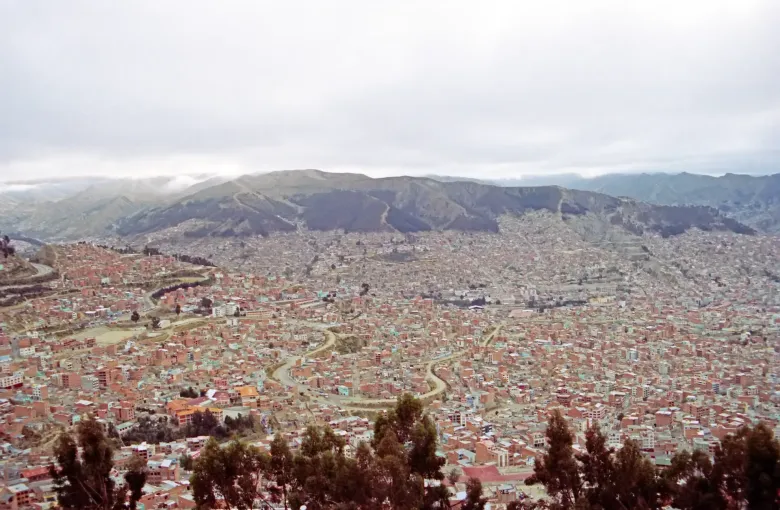
The packing problem in Bolivia is that a single trip routinely crosses more than two thousand meters of elevation. La Paz is cold at night; Santa Cruz is hot and humid; the Salar at three in the morning is colder than either. One set of clothes will not do, and the answer is layers rather than bulk.
Layers, in order
- A base layer. Merino or synthetic, long sleeved. This is the piece that makes the altiplano bearable and it packs to nothing.
- A warm mid layer. Fleece or a light down jacket. You will wear it every evening in the highlands and never once in Santa Cruz.
- A windproof, water resistant outer layer. The wind on the plateau does more of the damage than the temperature.
- Lightweight shirts and trousers for the valleys and the east.
- A hat that covers your ears for the highlands and a hat with a brim for the sun. These are not the same hat.
- Gloves and warm socks if a Salar overnight or the southern lagoons circuit is in the plan. This is the part people skip and regret.
⚠ Sun protection is a serious item here, not a toiletry
At this elevation the atmosphere filters far less ultraviolet than you are used to, and on the salt flat the light comes back up at you off a white surface. People burn on overcast days, and they burn in places that are normally shaded, under the chin and the nose and inside the ears.
Bring high factor sunscreen and more of it than seems reasonable, lip balm with sun protection, and proper sunglasses. On the Salar, sunglasses are closer to safety equipment than to an accessory.
Feet
Colonial towns here are cobbled, steep and uneven, and Potosi and La Paz are both hard on ankles. Comfortable shoes with grip matter more than anything technical. If the trip includes the Yungas, the Isla del Sol stairways or any walking in the lowlands, bring something you can get wet and dry again.
Altitude
The altitude itself is not something you can pack your way out of, but two things help. A reusable water bottle, because you will drink more than usual and should. And whatever a travel health professional has advised for you personally, obtained before you leave, together with enough of any regular medication to cover delays. Nothing on this page names a medicine.
Practical items that earn their space
- A power bank. Long bus journeys, few sockets, and cold weather shortens battery life.
- A plug adapter. Check the plug type and the voltage before you travel; Bolivia uses more than one socket type and supply varies by city.
- A headtorch, for power cuts, night arrivals and the basic refuges on the southern Salar circuit.
- Toilet paper and hand sanitiser for road travel and rural stops.
- A dry bag or strong plastic bags, for the wet season and for boat crossings.
- Small denomination notes, which the money guide explains at length.
Documents
Carry your yellow fever certificate where you can reach it rather than in checked baggage, since it is a condition of entry rather than a formality. Keep a photograph of your passport and your insurance policy somewhere you can reach without your bag, and leave a copy with somebody at home. The entry requirements guide covers what has to be in order before you fly.
What to expect from each region's weather is in the weather guide.
Sources
- UK Foreign, Commonwealth and Development Office: Bolivia travel advice: the index to the entry, safety, regional and health pages this cluster draws on, the advice against all but essential travel to the Chapare region of Cochabamba Department, the State of Emergency under which police and armed forces may detain a person who does not comply for up to eight hours without charge, and the standing guidance that no travel can be guaranteed safe. Accessed 17 September 2026.
- Centers for Disease Control and Prevention: Bolivia traveler health: a yellow fever vaccination certificate required for all arriving travelers aged one year and over, and separately a vaccine recommendation limited to travelers aged nine months and over going to areas below 2,300 meters east of the Andes, namely the entire departments of Beni, Pando and Santa Cruz and designated areas of Chuquisaca, Cochabamba, La Paz and Tarija, with the vaccine not recommended above 2,300 meters; malaria risk recorded in areas below 2,500 meters and none recorded in the city of La Paz. Accessed 17 September 2026.
Other Articles
Bolivia Weather Guide
Getting Around Bolivia