Bolivia describes itself in its own constitution as a plurinational state. It recognizes thirty six official languages alongside Spanish, of which Quechua, Aymara and Guarani have the most speakers, and a majority of the population identifies as Indigenous. Visitors who arrive treating Indigenous culture as a picturesque layer over a Latin American country have the relationship the wrong way round.
Language
Spanish will get you through cities and tourism. In rural highland communities, Aymara around La Paz and Titicaca and Quechua around Cochabamba, Sucre and Potosi are the languages of daily life, and Spanish may be a second language spoken with varying confidence. A few words of greeting in the local language are received warmly and are worth the small effort.
The pollera is not a costume
The layered skirt, shawl and bowler hat worn by Aymara and Quechua women, and the woman who wears it, are ordinary present day Bolivia rather than a survival or a performance. The word chola and its diminutive cholita carry a long history of being used dismissively, and have been reclaimed with pride in recent decades, but they are not a visitor's words to use casually about a stranger.
Dress is a statement of identity here, it is expensive, and it is worn with care. Treating it as a photo opportunity is the commonest way a well meaning visitor gives offense.
⚠ Photography
Ask before photographing a person, and accept no as an answer without negotiating. This applies with particular force to women in traditional dress, to children, and at religious or community events. If you are asked for payment, either pay it or do not take the photograph.
At a fiesta, remember the event is not being staged for you. It is a community's own occasion that you are being allowed to stand at the edge of.
Greetings and manners
- A handshake on meeting is standard; a single kiss on the cheek between women, and between a man and a woman who know each other, is common in cities.
- Use usted rather than the familiar form with people you have just met, with anyone older, and in any official setting.
- Señor and señora, and doña with a first name for an older woman, are normal and appreciated.
- Bolivians are generally indirect and courteous in disagreement. A blunt complaint lands harder here than in the United States, and rarely gets a better result.
- Time is held loosely for social arrangements and firmly for buses. Plan accordingly.
Belief, and the Pachamama
Catholic practice and Andean belief are not two separate systems here, and the fusion is everywhere: in the offerings made to the Pachamama, the earth, before a building goes up or a journey begins; in the challa, the ritual sprinkling of drink on the ground before people drink; in the shrines on mountain passes. When a drop is poured out before a toast, it is not spillage.
If you are offered coca leaves, taking a few politely is the right response whether or not you chew them.
Things worth not doing
- Do not photograph police, military installations or protests.
- Do not treat a market stall's crafts as an opportunity to bargain hard for sport. The money guide puts this in proportion.
- Do not describe the country as poor to the people who live in it, however statistically you mean it.
- Do not assume a ruin, a church or a mountain is unowned. Many are actively used, and several are sacred.
Sources
- UK Foreign, Commonwealth and Development Office: Bolivia travel advice: the index to the entry, safety, regional and health pages this cluster draws on, the advice against all but essential travel to the Chapare region of Cochabamba Department, the State of Emergency under which police and armed forces may detain a person who does not comply for up to eight hours without charge, and the standing guidance that no travel can be guaranteed safe. Accessed 17 September 2026.
- UNESCO World Heritage Centre: Bolivia States Party record: the properties Bolivia has inscribed on the World Heritage List, and separately the Tentative List of sites it may nominate in future. Accessed 17 September 2026.
Other Articles
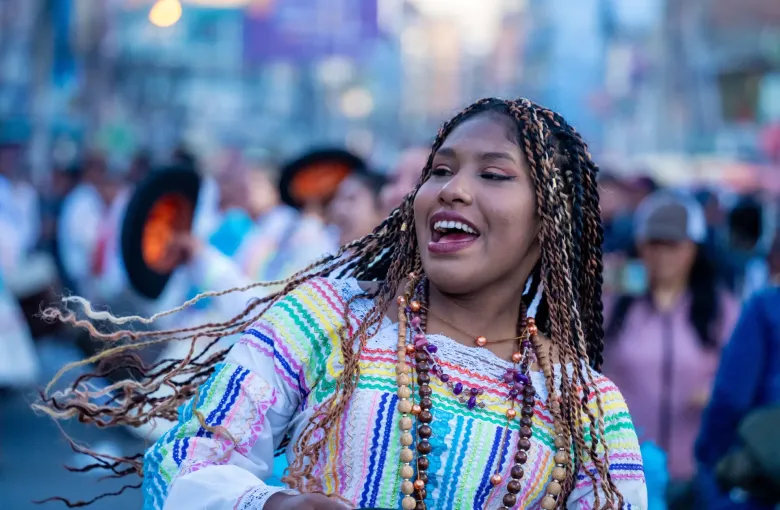
Bolivia and Diaspora Reconnection
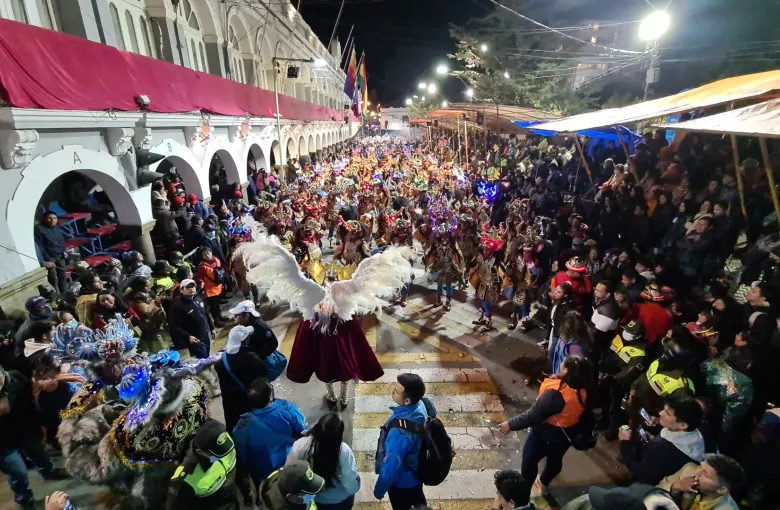
Festivals in Bolivia