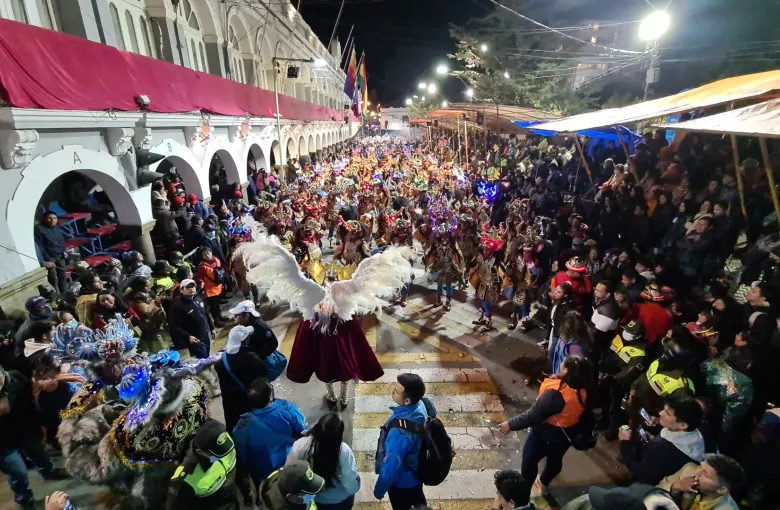
Ask most visitors what Bolivia is and they will describe an Andean, Indigenous country, and they will be largely right. What that description leaves out is that Bolivia also has an African diaspora, several centuries old, with its own communities, its own music and its own institutions, and that its origin lies in the same mountain that made the country famous.
It begins at Potosi
From the sixteenth century, the Spanish administration brought enslaved Africans to Potosi in large numbers, to work in the mines of the Cerro Rico and in the royal mint. The altitude and the conditions killed people at a catastrophic rate. Those who survived, and their descendants, were over time moved down into the warmer valleys of the Yungas, north east of La Paz, where they were put to work on coca and later on other agriculture.
The Yungas is where the Afro-Bolivian community lives today, in and around towns such as Tocaña, Chicaloma, Mururata and Coroico. The Potosi guide takes up the other end of the same story.
The saya
The saya afroboliviana is the community's music and dance: drums, a call and response vocal line, the cajas and the gangingo, and a step and a rhythm that are audibly West African in ancestry and audibly nothing else in Bolivia. It is danced at Afro-Bolivian festivals and, increasingly, in the big folkloric processions in La Paz.
One thing worth knowing, because it is a live issue for the community: the saya is frequently confused with, and commercially displaced by, the caporales, a much more widely performed dance that was derived from Afro-Bolivian forms but is not the saya and is largely not performed by Afro-Bolivians. Groups in the Yungas have campaigned for years about the difference. Knowing that there is a difference is a good starting point.
The Afro-Bolivian monarchy
The community recognizes a hereditary king, whose line is traced to a royal lineage from West Africa, and who is based at Mururata in the Yungas. The title was formally recognized by the Bolivian state in the twenty first century, and the community's rights were named in the 2009 constitution, which recognizes the Afro-Bolivian people alongside the Indigenous nations.
Visiting
The Yungas is a few hours from La Paz by road, down a spectacular descent from the plateau into humid green valleys. Coroico is the usual base and has ordinary tourist accommodation; the Afro-Bolivian villages are smaller and are not set up as attractions.
- Go with someone from the community if you can, and arrange it in advance rather than arriving and asking. Community tourism initiatives exist in the Yungas and they are the right route in.
- Do not turn up expecting a performance. A saya group rehearses and performs on its own occasions, and being present at one is a thing to be invited to.
- Buy directly from the people making and playing, and pay what is asked.
- The culture and etiquette guide applies here in full, and the photography section of it applies with particular force.
Where else the thread shows
In La Paz, Afro-Bolivian troupes dance in the Gran Poder and in the city's large processions, and that is a public and accessible way to encounter the tradition without arriving uninvited in somebody's village. The festivals guide has the dates.
And in Potosi, at the Casa de la Moneda, the question of who worked the mint is not a hypothetical one. Ask it while you are there.
Sources
- UNESCO World Heritage Centre: City of Potosi, inscribed 1987, recording the industrial monuments of the Cerro Rico where water came down through aqueducts to drive the silver mills, together with the colonial town, the Casa de la Moneda, the church of San Lorenzo and a number of patrician houses. Accessed 17 September 2026.
- UNESCO World Heritage Centre: Bolivia States Party record: the properties Bolivia has inscribed on the World Heritage List, and separately the Tentative List of sites it may nominate in future. Accessed 17 September 2026.
- UK Foreign, Commonwealth and Development Office: Bolivia travel advice: the index to the entry, safety, regional and health pages this cluster draws on, the advice against all but essential travel to the Chapare region of Cochabamba Department, the State of Emergency under which police and armed forces may detain a person who does not comply for up to eight hours without charge, and the standing guidance that no travel can be guaranteed safe. Accessed 17 September 2026.
Other Articles
Lake Titicaca and Isla del Sol: Visitor and Heritage Guide
Culture and Etiquette in Bolivia