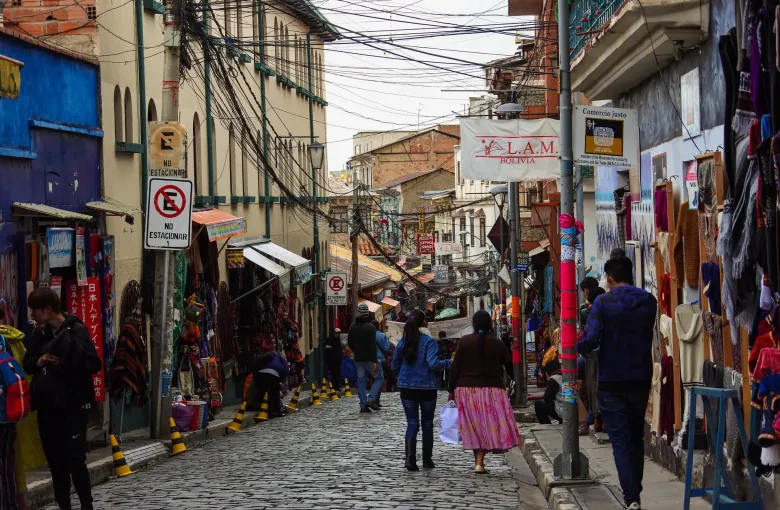
Distances in Bolivia are long and the terrain makes them longer. A journey that looks like a morning on the map is frequently a full day, and an overnight bus is a normal way for adults to travel between cities rather than a budget compromise.
⚠ The cable cars in La Paz
La Paz is built in a canyon with El Alto on the rim above it, and the city's answer is a network of urban cable cars, Mi Teleferico, which functions as ordinary public transport rather than as a tourist ride. Multiple color coded lines connect the valley floor to El Alto and to the southern districts.
It is cheap, it runs to a timetable, it is largely free of the traffic that clogs the city, and the views are extraordinary by accident rather than design. For most visitors it is both the most useful and the most enjoyable way to move around La Paz, and it is also the most step free option in a city with very few of them, which the accessibility guide discusses.
Long distance buses
Buses connect everywhere and quality varies enormously, from cramped older coaches to cama and semi cama services with reclining seats on the main intercity routes. Between the major cities, paying for the better class of service is worth it.
- Buy from the company's counter at the terminal, or online for the larger operators, rather than from someone approaching you on the concourse.
- Keep your valuables physically on you, not in the overhead rack and not in the hold.
- Overnight buses on mountain roads are common. If you would rather not travel a mountain road in the dark, choose a daytime departure and say so when you book.
- Heating is unreliable and the altiplano at night is cold. Take a warm layer into the cabin.
Domestic flights
Flying is the sensible answer for the long hauls, particularly La Paz to Santa Cruz, which is a long and demanding road journey and a short flight. Uyuni, Sucre, Cochabamba, Tarija and Trinidad all have airports. Schedules change, weather affects the highland airports, and a domestic flight connecting to an international departure needs a generous margin.
Taxis and city transport
- Use radio taxis booked by phone or an app rather than hailing one at random, especially at night and especially from a terminal or airport. This is the specific advice the source this cluster cites gives.
- Agree the fare before you set off where there is no meter.
- Trufis and micros, shared minibuses running fixed routes with the destination called from the door, are how most people move around cities. Cheap, crowded and perfectly usable once you have worked out the system.
Driving, and the roads
Self driving is not the default recommendation here. Mountain roads are narrow and exposed, unsealed surfaces are common, conditions in the wet season change fast, and other drivers may not behave as you expect. Hiring a vehicle with a driver is widespread and usually the better answer.
Two things will close a road without notice: weather, and blockades. Neither is unusual. The travel safety guide covers the second, including the instruction never to attempt to cross a blockade. The planning consequence is the same in both cases: keep a spare day between the last overland leg and any flight home.
Crossing the lake
The road from La Paz to Copacabana crosses the Strait of Tiquina on a ferry, with passengers and vehicles carried separately. It is brief, it is part of the journey, and it stops in bad weather.
Sources
- UK Foreign, Commonwealth and Development Office: Bolivia travel advice: the index to the entry, safety, regional and health pages this cluster draws on, the advice against all but essential travel to the Chapare region of Cochabamba Department, the State of Emergency under which police and armed forces may detain a person who does not comply for up to eight hours without charge, and the standing guidance that no travel can be guaranteed safe. Accessed 17 September 2026.
- UK Foreign, Commonwealth and Development Office: Bolivia safety and security: the crime picture, the guidance on protests and roadblocks and the instruction not to try to cross one, and the standing guidance that no travel can be guaranteed safe. Accessed 17 September 2026.
Other Articles
Staying Safe in Bolivia
Best Time to Visit Bolivia