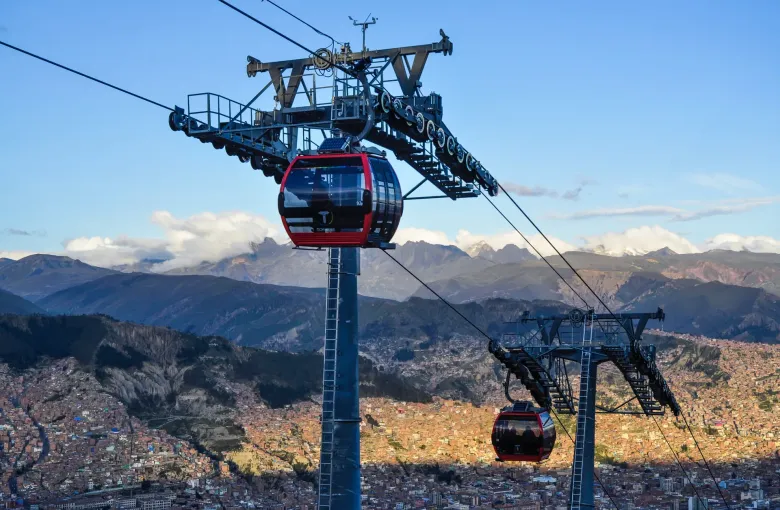
This guide is written to be useful rather than encouraging. Accessible infrastructure in Bolivia is limited, legal requirements are not consistently enforced, and the terrain in the places visitors most want to go is steep, cobbled and uneven. A trip is possible and can be very good. It needs more planning than the same trip elsewhere, and it needs specific questions asked in advance.
⚠ Altitude is an accessibility question before it is anything else
Before terrain, surfaces or transport, the first question is elevation. La Paz, Potosi, Oruro, Lake Titicaca and the Salar all sit high enough that reduced lung or heart function, or any condition affected by low oxygen, needs medical advice specific to you before the trip is booked, not after.
Ask your own doctor, be specific about the elevations involved, and ask about supplementary oxygen, which hotels in La Paz can often supply and which is worth arranging rather than assuming. An itinerary built around the lower cities, Santa Cruz, Sucre, Cochabamba, Tarija and Samaipata, is a genuinely good Bolivian trip that avoids the extremes entirely.
What works
- The cable car network in La Paz. Mi Teleferico is the most step free way to move around the city, with level boarding at most stations and staff present. For many visitors it transforms what is otherwise a very difficult city. The transport guide has more.
- Newer hotels in Santa Cruz, La Paz and Sucre, some of which have lifts, accessible rooms and level entrances. Confirm details directly with the property.
- Santa Cruz generally, which is flat, low and modern in a way the highland cities are not.
- Private vehicle with a driver, which removes the hardest part of most days and is affordable here by the standards most visitors are used to.
What is genuinely hard
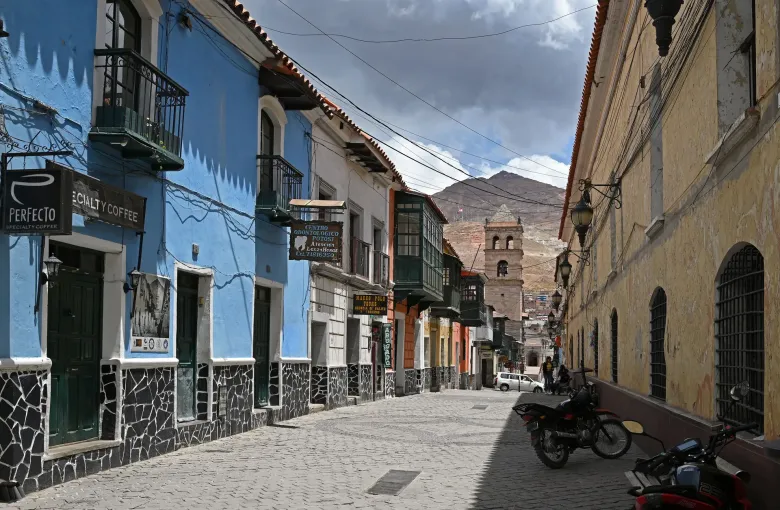
- Colonial town centers. Potosi and Sucre are cobbled, steep and kerbed without ramps.
- Public minibuses, which involve steps and no space.
- Archaeological sites, including Tiwanaku, which are uneven ground.
- Isla del Sol, which has no vehicles at all and is reached and crossed on foot up stone stairways.
- The Salar circuit, which means long days in a four wheel drive on rough ground with basic facilities.
- Public toilets, which are rarely adapted.
Questions worth asking before you book
- Ask for photographs and measurements rather than the word accessible, including door widths and whether the bathroom has a step.
- Ask whether a lift exists and whether it reaches the floor of the room offered.
- Ask the airline about assistance at both El Alto and the connecting airports, and reconfirm it.
- Ask a tour operator directly what the vehicle transfer involves, how many steps, and how far from the vehicle to the site.
- If you use a wheelchair, ask about repair and spares. Availability is limited outside the largest cities.
Health cover and emergencies
Travel insurance that covers your existing conditions, and that covers medical evacuation, is essential rather than advisable. The cited health guidance records that public healthcare in Bolivia can be inconsistent in response time and quality and that serious cases may require evacuation.
For an ambulance, call 118. Keep it written down with your insurer's emergency line, the address of your accommodation in Spanish, and a note of any medication and condition in Spanish as well.
Traveling with a group
A well organized group trip can carry a lot of this load: a private vehicle, a fixed and checked itinerary, and somebody whose job is to have made the phone calls. If that is the shape you want, tell us what you need and we will be specific about what is and is not possible.
Sources
- UK Foreign, Commonwealth and Development Office: Bolivia travel advice: the index to the entry, safety, regional and health pages this cluster draws on, the advice against all but essential travel to the Chapare region of Cochabamba Department, the State of Emergency under which police and armed forces may detain a person who does not comply for up to eight hours without charge, and the standing guidance that no travel can be guaranteed safe. Accessed 17 September 2026.
- UK Foreign, Commonwealth and Development Office: Bolivia health: the emergency medical number 118, and the advice on insurance, on medical evacuation and on the inconsistency of public healthcare response times and quality. Accessed 17 September 2026.
Other Articles
Bolivia for Senior Travelers
Potosi: Visitor and Heritage Guide