The short version
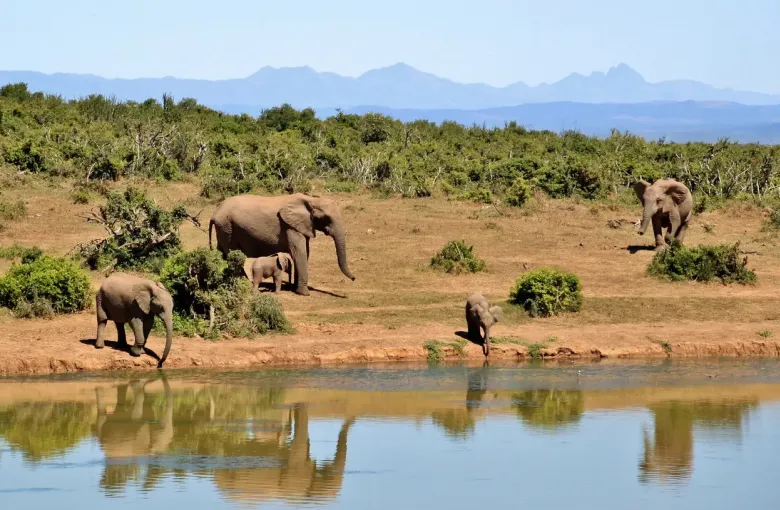
The Lower Zambezi is Zambia’s river park: a strip of floodplain, woodland and channels on the north bank of the Zambezi, backed by a steep escarpment, where most of the game viewing happens from the water. It is the most relaxed of Zambia’s major parks and the easiest to reach from Lusaka.
⚠ About the far bank
Directly across the river lies Mana Pools National Park in Zimbabwe, which is a UNESCO World Heritage Site — inscribed in 1984, together with the Sapi and Chewore Safari Areas.
The Lower Zambezi National Park itself is not. We state it that precisely because the two parks face each other across the same water and share the same ecosystem, and it would be easy — and wrong — to let the designation drift across the river. Zambia has exactly one inscribed World Heritage Site, and it is Victoria Falls.
What the pairing does mean is that you are looking at one of the best-protected stretches of the Zambezi anywhere, managed from both banks.
What makes it different
In most parks you sit in a vehicle. Here the river is the road.
- Canoe safaris. Paddling the side channels with a guide, at eye level with the water, drifting past elephant feeding on island grass and hippo pods that you give a very wide berth. It is quiet in a way a vehicle never is, and it is the signature activity of the park.
- Boat cruises. Motorized and less strenuous, superb for birds and for watching game come down to drink in the late afternoon.
- Game drives, including night drives, on the floodplain and into the woodland.
- Walking safaris, in the Zambian tradition, from most camps.
- Tiger fishing. The Zambezi is famous for it, and it is generally catch and release.
The setting
The park runs along the river beneath the Zambezi Escarpment, which rises sharply behind the floodplain and effectively fences the park on its landward side. The result is a narrow, intensely productive corridor: winterthorn woodland where elephants feed on fallen pods, open floodplain, and a braided river full of islands and channels.
Elephants swimming and wading between the islands, sometimes with only trunks showing, is the image most visitors take home.
Wildlife
Elephant and buffalo in large numbers, hippo and crocodile throughout, lion and leopard, and excellent birding — fish eagles, carmine bee-eaters, skimmers and a long list of waterbirds. Wild dog are present and, as everywhere, a matter of luck.
You will not see rhino here.
When to go
The park is at its best in the dry season, roughly May to October, with game concentrating on the river as the interior dries. As in South Luangwa, many camps close during the rains, broadly November to April, when access roads fail. Some river-based camps operate longer on boat access.
Getting there
Most visitors fly from Lusaka to Jeki or Royal airstrip, roughly half an hour in a light aircraft, then transfer by road and often by boat to camp. Road access from Lusaka via Chirundu is possible and much slower, and the final stretch requires a proper four-wheel-drive vehicle.
Because it is so close to the capital, the Lower Zambezi combines unusually well with a short trip — it is the most practical Zambian park to reach if you have only a few days.
On the water: safety
Hippo and crocodile are the genuine hazards of this park, and canoeing puts you in their environment. The guides are highly trained, the rules about spacing and lines are strict, and the briefing is not a formality. Follow it exactly — see our Zambia travel safety guide.
Visiting with LABUSA Travel
The Lower Zambezi pairs naturally with South Luangwa for a wildlife-led trip, or with Livingstone for a river-and-falls itinerary that is gentler on the schedule. We will tell you which combination fits the time you actually have.
Other Articles
South Luangwa National Park: Visitor and Heritage Guide
Best Time to Visit Zambia