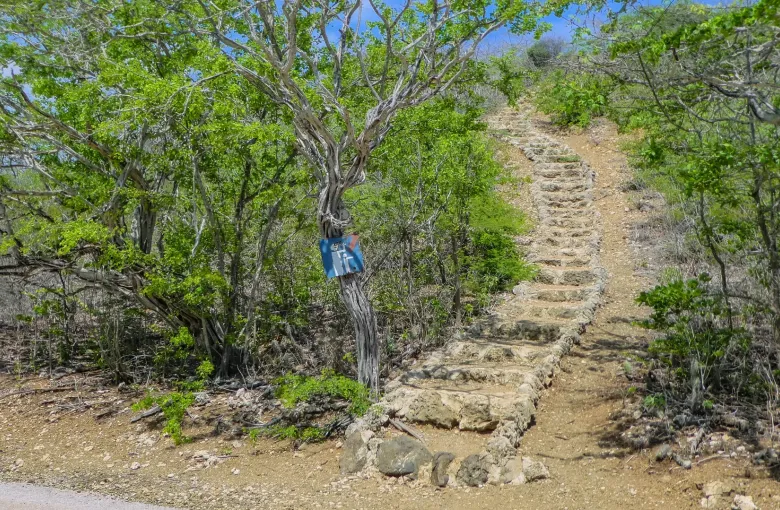
Driving: your license probably already works.
The published position is straightforward. The Foreign, Commonwealth and Development Office says a UK photocard driving license may be used to drive in Curaçao. No permit, no translation, no application. The qualification is about the older document: a paper license may need updating to a photocard, or the correct version of the international driving permit as well.
So an international driving permit is a fallback for a paper license, not a requirement for everyone. A page that tells you to get one regardless is telling you to buy something you do not need.
Hire companies set their own bar, and it is higher than the law's: they often have stricter requirements for their customers, such as a year of driving experience and a higher minimum age. That is a booking-time question, not an arrival-time surprise, and it is worth asking before you pay.
Taxis: check the plate, agree the price.
Two facts do most of the work here, and both are unusually checkable. Registered taxis have number plates that start with TX. And most taxis do not have meters, so the advice is to check that a taxi is registered and agree the price before taking the ride.
A two-letter prefix on a plate is the kind of verification a visitor can actually perform, in a second, from the pavement. Use it. Agreeing the fare first is not haggling; with no meter it is the only moment the price is fixed.
The Queen Emma bridge, which is transport and not scenery.
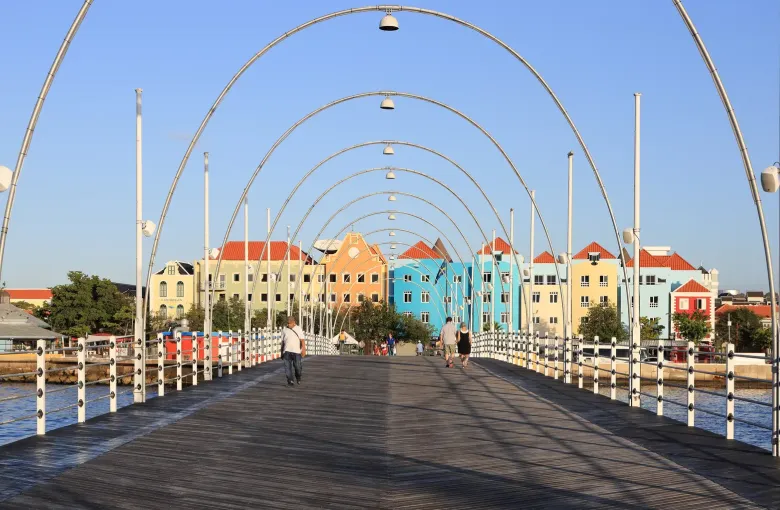
Willemstad is split by Sint Anna Bay into Punda on one side and Otrobanda on the other, and the Queen Emma pontoon bridge is how people cross on foot. It floats, and it swings open to let shipping through, which means it is periodically not there. A free ferry runs when it is open. Plan a crossing with that in mind rather than treating the bridge as a fixed road.
It is also the single most photographed object on the island, which is why the hub page's own card shows it. Walking it is the ordinary way to move between the two halves of the old town.
Arriving.
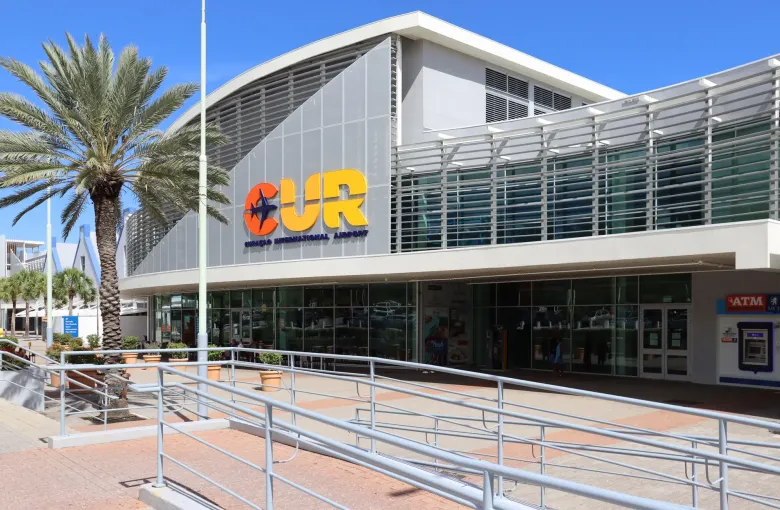
Curaçao International Airport is the point of entry, and the thing to have done before you reach it is the digital immigration card, which must be completed 48 hours before you arrive. That applies even if you are only passing through.
One departure-side instruction is a security rule rather than a transport one, and it belongs here because it happens at the airport: never leave luggage unattended when departing the country. The reason is set out in the safety guide.
If you would like transfers, hire or a driver arranged rather than improvised, tell us the itinerary and we will build it in.
Sources
- UK Foreign, Commonwealth and Development Office: Curaçao travel advice, safety and security: that although there is no recent history of terrorism in Curaçao attacks cannot be ruled out; that petty theft and street crime are a concern and that there are violent crimes related to the illegal drugs world but the main tourist areas are generally safe; the listed precautions of avoiding isolated areas including beaches after dark, keeping valuables secure and out of sight, and being on the look-out for bag snatchers; that criminals continue to use the islands of the Dutch Caribbean to smuggle illegal drugs from South America to Europe and North America, that luggage should never be left unattended when departing the country, that a traveler should not discuss or agree to carry a package for anyone, that a body scan may be asked for at some airports and that Dutch authorities generally screen all baggage and passengers from the Dutch Caribbean; that a copy of the photo page of a passport must always be carried; that a UK photocard driving license may be used to drive in Curaçao and that a paper license may need updating or the correct version of an international driving permit; that hire car companies often have stricter requirements such as a year of driving experience and a higher minimum age; that a taxi should be checked as registered and the price agreed before the ride, that most taxis do not have meters and that registered taxis have number plates starting with TX; and that the hurricane season in the Dutch Caribbean normally runs from June to November, that most hurricanes pass well to the north of Curaçao which has no record of a recent major hurricane, and that there are occasional tropical storms. Accessed 21 September 2026.
- UK Foreign, Commonwealth and Development Office: Curaçao travel advice, entry requirements: that the authorities in Curaçao set and enforce entry rules; that a passport must be valid for the duration of the stay; that a traveler will be denied entry without a valid travel document or with a passport reported lost or stolen; that a digital immigration card must be completed 48 hours before arrival and must also be completed by anyone traveling through Curaçao; that a visitor may stay for up to 90 days in a calendar year without a visa and may request an extension beyond 90 days at immigration on showing travel insurance for the duration of the extended stay; that a certificate proving yellow fever vaccination is required to enter from a country listed as a transmission risk; and that there are strict rules about goods taken into or out of the country and anything prohibited or subject to tax or duty must be declared. Accessed 21 September 2026.
Other Articles
Curaçao Visa and Entry Requirements
The Historic Area of Willemstad: Visitor and Heritage Guide