Chile rewards the way experienced travelers generally prefer to move: fewer bases, longer in each, someone else driving. The one thing that undermines it is the map. A country four thousand kilometers long invites an itinerary that tries to see all of it, and that itinerary is exhausting at any age.
Pacing
- Two regions, not four. The Atacama and the Lake District, or Santiago and Patagonia. Adding the third costs a day of flying and gains a blur.
- Three nights minimum per base. Two means a day arriving and a day leaving.
- Fly the long legs. Santiago to Calama or to Punta Arenas is a couple of hours; the same trip by road is days. The transportation guide covers the options.
- Keep a day in hand in the south. Patagonian weather cancels boats and flights, and a schedule with no slack turns that into a real problem.
- Build in a settling day after arrival. Santiago is a long flight from almost anywhere.
Altitude, which is the main health consideration
This is the part of a Chilean itinerary that deserves a conversation with your own doctor before you book, particularly with any heart or lung condition.
Altitude sickness is a risk in parts of Chile, and the high country of the north is where visitors meet it. San Pedro de Atacama sits well above sea level and the excursions from it climb considerably higher again, often before dawn.
- Acclimatize before you go higher, never during. Arrive, rest, and give the altitude a day before taking on a high excursion.
- Drink far more water than feels necessary, eat lightly at first, and go easy on alcohol for the first day or two.
- Know the symptoms, tell your guide immediately, and treat descent as the answer rather than as a failure.
- Some high excursions start at three or four in the morning. That combination of altitude, cold and lost sleep is harder than it sounds; decide honestly whether it is the right day out.
This page publishes no medication and no dose. Anything of that kind is your clinician's decision, made in advance.
Two places with real physical demands
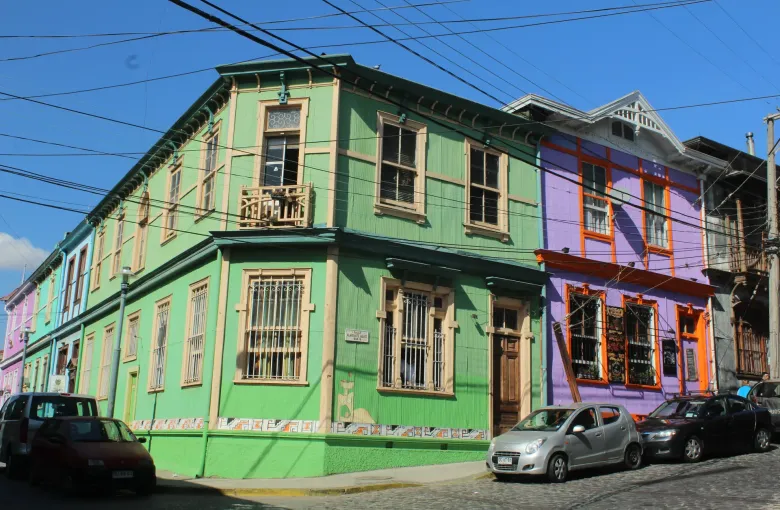
Valparaiso. The hillside quarters are stone stairways and steep lanes, and they are what the visit is. The flat ground around Plaza Sotomayor and the port is part of the same inscribed quarter and is walkable; the funiculars help where they are running. Plan the day around one or two hills rather than a circuit of them.
Patagonia. Wind rather than gradient is the difficulty, and it is constant. It makes an easy walk tiring and an exposed viewpoint unpleasant. Windproof outer layers matter more here than warmth, as the packing list explains, and boat excursions are often the better way to see the glaciers.
Medical cover, and the number
For an ambulance in Chile, call 131. Put it in your phone before you leave home.
- Travel insurance covering pre existing conditions, treatment and evacuation is essential. Facilities in Santiago and the major cities are good, but private clinics and hospitals are expensive, and evacuation from Patagonia or Rapa Nui is a serious undertaking. Rapa Nui has one hospital with limited facilities.
- Declare conditions honestly on the policy. An undeclared condition is the usual reason a claim fails.
- Carry medication in original labeled packaging with a copy of the prescription, in hand luggage, in more than one bag if you can. Check the legal status of anything unusual before you travel.
- Carry a written summary of your conditions, medications and allergies, and a Spanish translation of it.
- Check recommended vaccinations with your own clinic well before departure. The cached public health guidance for Chile records no yellow fever requirement and no malaria risk area.
Everyday safety
The risks here are opportunistic rather than violent. Pickpocketing, mugging and thefts from vehicles are common throughout Chile, including inside airports, churches, hotels and bus stations, and at viewpoints and petrol stations. Distraction robberies and liquid spill scams are named in central Santiago and Valparaiso specifically.
Carry one card and a little cash, leave the rest in the hotel safe, and keep a bag in front of you in a crowd. The safety guide has the detail, including the demonstration dates worth avoiding and what to do in an earthquake.
Comfort
- Lunch is the main meal and restaurant dinner starts late. Eating well at midday suits most visitors better than waiting until nine.
- The daily temperature swing in the north and the south is large. Layers, always.
- Chile is a courteous country and older people are treated with real deference. Ask for help; it is given readily.
Sources
- UK Foreign, Commonwealth & Development Office: Chile health: the emergency ambulance number 131, the eight week lead time for vaccine advice, altitude sickness as a risk in parts of Chile, confirmed cases of dengue fever on Rapa Nui, and hantavirus as present in Chile. Accessed 16 September 2026.
- UK Foreign, Commonwealth & Development Office: Chile safety and security: the advice to avoid all demonstrations, that peaceful protests can become violent and that the largest are in central Santiago where police can use tear gas and water cannon, that involvement in violent acts can lead to deportation under Chilean law, the significant dates on which nationwide protests often occur, and the distraction robbery, liquid spill and tire puncture techniques used in central Santiago and Valparaiso. Accessed 16 September 2026.
- Centers for Disease Control and Prevention: Chile traveler health: the yellow fever vaccine recorded as neither recommended nor required, updated 23 April 2025. Accessed 16 September 2026.
Other Articles
Accessible Travel in Chile
Getting Around Chile