Most packing advice for Chile fails for one reason: it treats the country as a destination rather than as a line drawn through several of them. The bag that works is the one built in layers, so the same clothes serve a desert night and a Patagonian afternoon.
The layer system, and the piece people skip
Three layers, and the outer one is where trips go wrong.
- Base. Merino or synthetic. Cotton holds sweat and then holds cold, which matters in the far south and on the altiplano.
- Insulation. A light down or synthetic jacket that packs to nothing. This is what handles the Atacama after sunset.
- Shell. Waterproof and windproof, with a hood that stays on. A warm jacket that is not windproof does almost nothing in Patagonia, and that is the single commonest packing failure in the region.
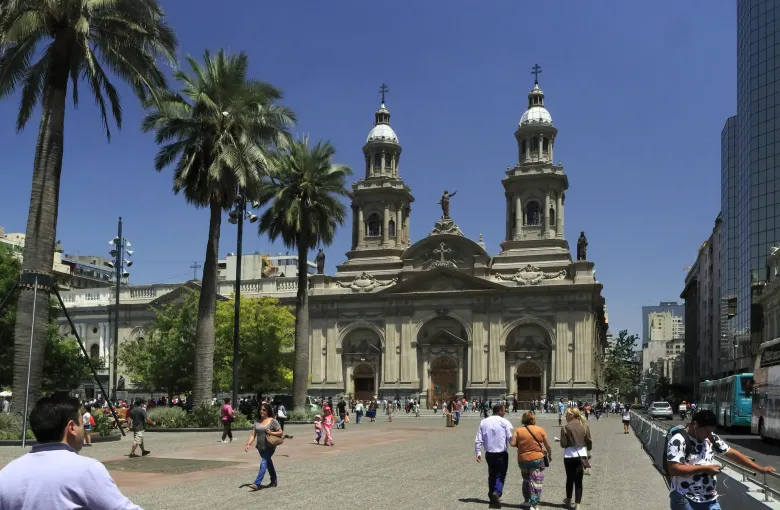
Add trousers you can walk and sit down in, a warm hat and gloves if the south or the altiplano is on the itinerary, and one set of clothes you would be comfortable eating dinner in. Santiago and Valparaiso are city places and people dress accordingly.
For the north
The Atacama is the hyper-arid coastal desert UNESCO describes, so the planning problem is sun and dryness rather than rain.
- High factor sunscreen, and more than you think. The light is direct and the air is thin.
- A brimmed hat and real sunglasses.
- Lip balm and a moisturizer. The dryness is relentless.
- A refillable water bottle, used constantly. Altitude and dry air dehydrate you quietly.
For the south
- The windproof shell above, and waterproof footwear that is already broken in.
- A dry bag or a couple of sealable bags for electronics on boat days.
- Insect repellent for the lakes and forests in summer.
For Rapa Nui
Subtropical and humid, so light clothing plus rain cover. Insect repellent belongs here too: there are confirmed cases of dengue fever on Rapa Nui, which is mosquito borne, so covered evenings and repellent are the sensible precaution whatever the season.
Documents, and the one Chile asks you to keep
Your passport should have an expiry date after the day you plan to leave Chile.
At immigration you are given a tourist card, the tarjeta de turismo, an A5 sized white form. Keep it. You hand it back to immigration when you leave. Put it with your passport on arrival rather than in a pocket, because it is exactly the size and weight of a receipt and that is how it gets thrown away. The entry requirements guide explains what to do if it goes missing, which is a recoverable problem rather than a disaster.
Carry identification at all times: your passport, or a copy of it.
Health items
Bring any prescription medication in its original labeled packaging, with a copy of the prescription. The legal status and regulation of some medicines prescribed or bought in one country can differ in another, so check before you travel rather than at the border. This page publishes no medication and no dose.
A small first aid kit earns its space, and travel insurance covering medical treatment and evacuation is not optional here: facilities in Santiago and the major cities are good, but private clinics and hospitals are expensive, and Rapa Nui has one hospital with limited facilities.
What to leave behind
Chile has strict rules about goods you can take into or out of the country, and you must declare anything that may be prohibited or subject to tax or duty. Fresh food, seeds, plants and animal products are the usual culprits. Eat the fruit before you land, or declare it.
Leave the obvious valuables at home as well. Pickpocketing and theft from vehicles are common across Chile, and the safety guide is specific about where.
Sources
- UK Foreign, Commonwealth & Development Office: Chile entry requirements: that the Chilean authorities set and enforce the rules, that a passport should have an expiry date after the day you plan to leave, and that immigration issues a tourist card, the tarjeta de turismo, an A5 sized white form which must be kept and given back on departure, with a duplicate obtainable from the investigations police if it is lost. Accessed 16 September 2026.
- UK Foreign, Commonwealth & Development Office: Chile health: the emergency ambulance number 131, the eight week lead time for vaccine advice, altitude sickness as a risk in parts of Chile, confirmed cases of dengue fever on Rapa Nui, and hantavirus as present in Chile. Accessed 16 September 2026.
- UNESCO World Heritage Centre: Settlement and Artificial Mummification of the Chinchorro Culture in the Arica and Parinacota Region, inscribed 2021 under criteria (iii) and (v), recording a society of marine hunter-gatherers on the northern coast of the Atacama Desert from approximately 7400 BP to 2840 BP. Accessed 16 September 2026.
Other Articles
Chile Weather Guide
Getting Around Chile