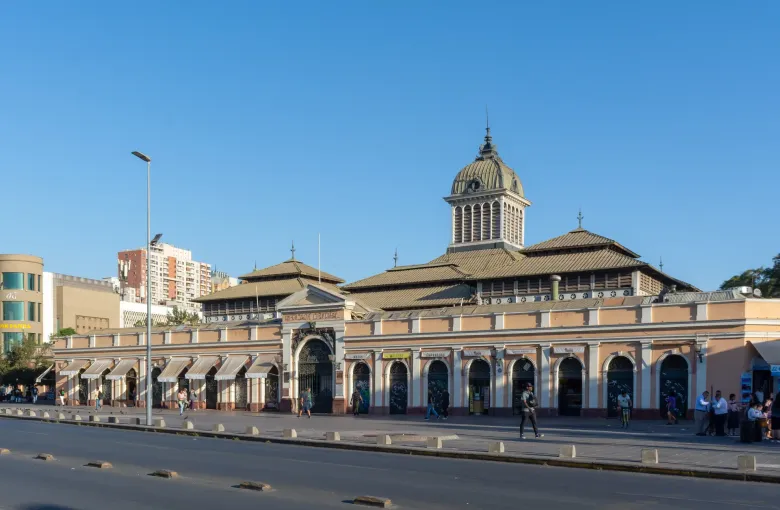
The first thing to accept about Chilean transport is the shape of the country. It is about four thousand kilometers from the Peruvian border to the far south and rarely more than a couple of hundred wide. Nothing about that is convenient, and it is why domestic flying is normal here rather than indulgent.
Arriving in Santiago, and the one thing to get right
Do not take an unlicensed taxi at the airport. The cited advisory records that unlicensed drivers at Santiago Airport add extra digits to the fare, charging 5,000,000 pesos in place of 50,000, and that some have persuaded passengers to enter a PIN into a card reader whose display cannot be read.
The defense is simple and takes one minute. Use the official taxi and transfer desks inside the terminal, agree the fare or confirm the meter before the car moves, and never enter a PIN into a device whose screen you cannot see. A pre booked transfer or a licensed airport shuttle removes the decision entirely. There are also scheduled airport buses into central Santiago, which are cheap and straightforward if you are not carrying much.
Santiago: the Metro
The Metro is the best urban transport system in the country by a distance: extensive, clean, frequent and cheap. Buy a Bip! card at a station, load it with credit, and use it on the Metro and on city buses alike.
- It is crowded at peak, and crowded is where pickpocketing happens. Bag in front, phone away. The cited advisory names pickpocketing and mugging as very common throughout Chile.
- Fares vary by time of day rather than by distance.
- Service can be suspended around demonstrations in the center, which is one more reason the three dates in the events guide are worth knowing.
Ride hailing apps operate and are widely used. Street taxis are metered black cars with yellow roofs; agree that the meter is running before setting off.
Between cities: the bus
Chilean long distance buses are genuinely good and are how most Chileans move. The seat classes matter more than the operator:
- Clasico or semi cama. Reclining, fine for a few hours.
- Salon cama. Wide seats reclining a long way. Comfortable overnight.
- Premium or cama total. Nearly flat. Worth it on the long northern runs.
Book ahead in January, February and around the September holidays. Keep your bag with you rather than at your feet on the aisle, and keep valuables on your person overnight: the advisory names bus stations among the places where theft is common.
Between regions: flying
Santiago to Calama for the Atacama, or to Punta Arenas for Patagonia, is a matter of hours; by road it is a matter of days. Fly the long legs. Book early for the best fares, and watch baggage allowances, which are tighter than on international tickets.
Rapa Nui is reached only by air from Santiago and the flight schedule is the real constraint on any island itinerary.
The south: ferries and the Carretera Austral
South of Puerto Montt the land breaks into fjords and islands, and boats become part of the road network rather than an excursion. Vehicle and passenger ferries link sections of the Carretera Austral, and longer passages run down through the channels toward the far south.
Two rules here. Book ferries well in advance in summer, especially with a vehicle. And build slack into the itinerary: sailings are weather dependent and a cancellation in this part of the country does not mean a short delay.
Driving
Driving is the right answer in the Atacama, the Lake District and parts of Patagonia, and unnecessary in Santiago.
- Bring your home license and an International Driving Permit; rental companies and police may ask for both.
- Main highways are toll roads and in good condition. Away from them, gravel is normal and punctures are the usual failure. Check that the spare and the jack are actually in the car.
- Fuel is the constraint in the north and the far south. Fill up whenever you can rather than when you need to.
- Do not leave anything visible in a parked car. The advisory specifically names viewpoints and petrol stations as places where thefts from vehicles occur, often with one person distracting the driver while a second empties the car.
- Crossing into Argentina or Bolivia in a rental car requires paperwork arranged in advance. Ask the rental company early, not at the border.
Routes through the south, and a check to make
If you are driving or busing through the southern regions, look at the map by province and not only by scenery. The cited advisory records ongoing civil unrest in the Araucania Region, especially around Temuco, and an ongoing state of emergency in the provinces of Biobio, Arauco, Cautin and Malleco, where the military are assisting regional police.
That does not make a southern road trip unwise. It makes it a trip to plan with the region and province of each stop confirmed, and with local advice taken on the day rather than assumed from a guidebook. The safety guide sets out the reasoning in full.
Sources
- UK Foreign, Commonwealth & Development Office: Chile safety and security: the advice to avoid all demonstrations, that peaceful protests can become violent and that the largest are in central Santiago where police can use tear gas and water cannon, that involvement in violent acts can lead to deportation under Chilean law, the significant dates on which nationwide protests often occur, and the distraction robbery, liquid spill and tire puncture techniques used in central Santiago and Valparaiso. Accessed 16 September 2026.
- UK Foreign, Commonwealth & Development Office: Chile regional risks: ongoing civil unrest in the Araucania Region, especially around Temuco, including attacks by groups of demonstrators against people and property, and an ongoing state of emergency in the provinces of Biobio, Arauco, Cautin and Malleco with the military assisting regional police. Accessed 16 September 2026.
Other Articles
Chile Travel Safety Guide
Best Time to Visit Chile