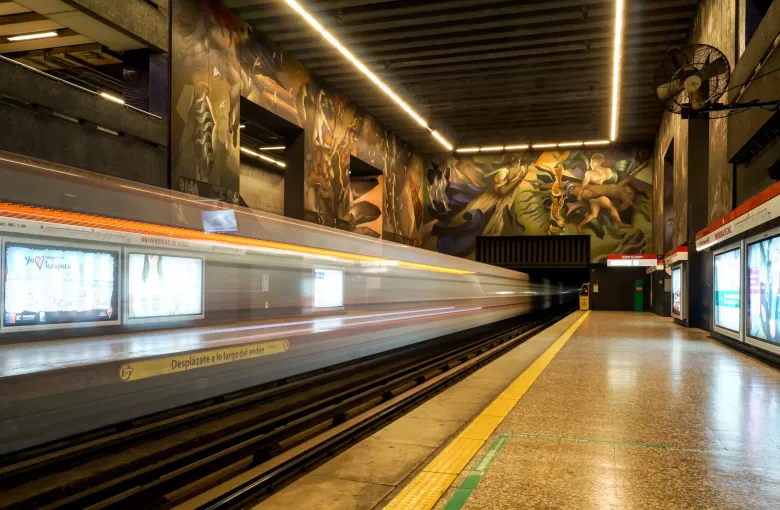
Chile is a middle ground. It is neither a country where accessible travel is routine nor one where it is impractical, and the difference falls along a line you can plan around: things built recently tend to work, and things that are the reason you came often do not.
This guide is specific about the hard parts. A page that said Chile is broadly accessible would be more pleasant to read and would leave somebody stranded on a hillside in Valparaiso.
Santiago
The capital is the most workable part of the country.
- The Metro. Newer stations and newer lines have lifts and level access; older ones frequently do not. Coverage is genuinely mixed rather than uniformly good, so check the specific stations on your route before relying on them, and have a plan for the ones that fail.
- Buses. Much of the city bus fleet is low floor with a ramp. Drivers are generally willing; the obstacle is usually the pavement rather than the vehicle.
- Taxis and transfers. Wheelchair accessible vehicles exist but are not plentiful. Book in advance rather than hailing.
- Pavements. Good in the newer eastern districts, uneven and frequently obstructed in the older center. Dropped curbs are inconsistent.
- Museums and larger hotels. Newer and larger venues are usually well equipped. Confirm directly rather than trusting a booking site's icon.
Valparaiso, which needs saying plainly
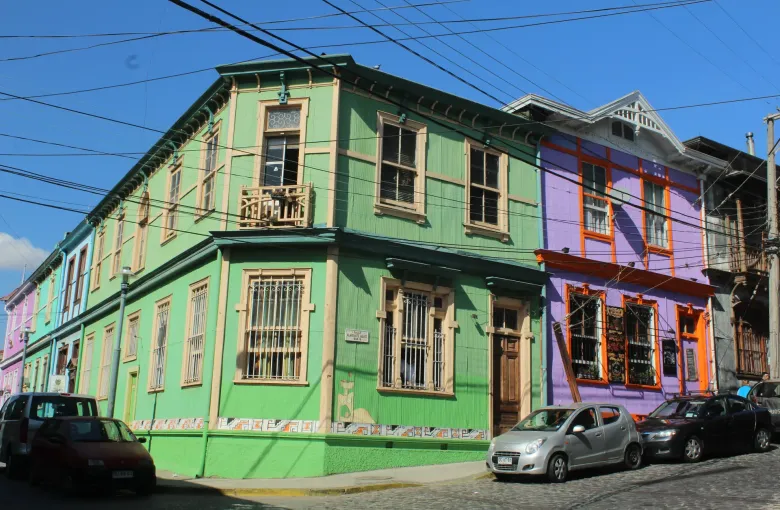
Valparaiso is built up an amphitheater of hills and the historic quarter UNESCO inscribed sits across them. The experience visitors come for is a network of stone stairways, steep lanes, uneven surfaces and long climbs.
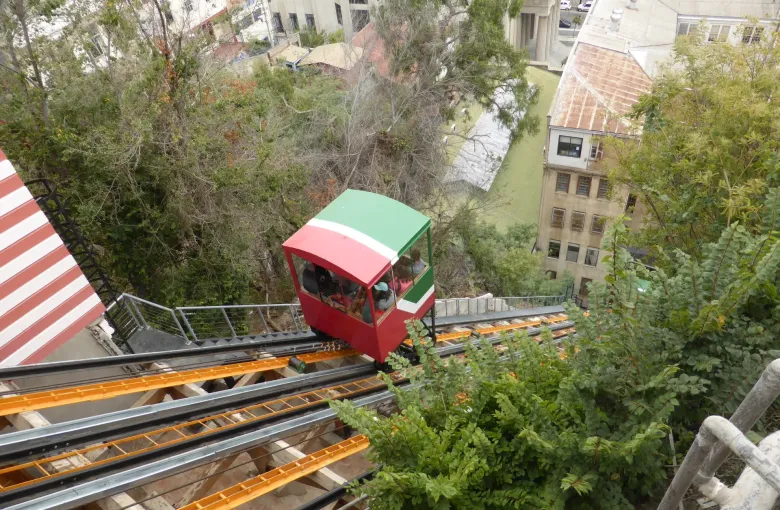
For a wheelchair user or anyone with significant mobility limits, the hillside quarters are largely not navigable independently. What is workable is the flat ground: Plaza Sotomayor, the port area, Prat Pier and the streets around them, all of which are part of the inscribed quarter. The ascensores, the historic funiculars, are the other route up, but they are nineteenth century machines with steps at one or both ends and their availability varies. Treat a specific one as accessible only if you have confirmed it on the day.
The Valparaiso guide describes the quarter itself.
National parks and the outdoors
Chile's parks vary enormously. Some of the busier ones have accessible visitor centers, boardwalk sections and viewpoints reachable without a hike; many have no surfaced path at all.
The realistic approach is to plan around specific viewpoints and short surfaced trails rather than around a park as a whole, and to ask the park administration directly. Guided tours with adapted vehicles exist in the Atacama and in the Lake District, arranged through specialist operators rather than found on the day.
Rapa Nui
The main sites are open ground with uneven volcanic surfaces, and several require walking from a parking area. Some, including the principal platforms, can be seen from close to a vehicle. Accommodation on the island is small scale and adapted rooms are limited, so book directly and ask precisely what is meant by accessible.
There is one hospital on the island and its facilities are limited, with serious cases evacuated to the mainland. That is a planning fact for anyone traveling with a condition that may need care.
Practical arrangements
- Book direct and ask specific questions. How many steps to the entrance? What is the door width? Is there a lift, and does it reach that floor? A yes to accessible means very different things in different places.
- Bring what you depend on. Spare parts, chargers, adapters and a repair kit. Replacement equipment can be hard to source outside Santiago.
- Airlines. Notify assistance requirements when booking and again before departure, including for domestic legs.
- Travel insurance covering your condition, medical treatment and evacuation. Chile has good facilities in Santiago and the major cities, but private clinics and hospitals are expensive and you will be expected to pay or prove cover.
Medical, and the number
For an ambulance in Chile, call 131. Write it down. It is a short number that is hard to recall under pressure.
Bring prescription medication in its original labeled packaging with a copy of the prescription, and check the legal status of anything unusual before you travel: what is routine in one country is regulated in another. This page publishes no medication and no dose.
If altitude is on your itinerary, discuss it with your own clinician before booking. Altitude sickness is a risk in parts of Chile, the response is to acclimatize gradually rather than to push through, and for some conditions the sensible answer is to stay low. The weather guide explains which parts of the country this affects.
Sources
- UK Foreign, Commonwealth & Development Office: Chile health: the emergency ambulance number 131, the eight week lead time for vaccine advice, altitude sickness as a risk in parts of Chile, confirmed cases of dengue fever on Rapa Nui, and hantavirus as present in Chile. Accessed 16 September 2026.
- UNESCO World Heritage Centre: Historic Quarter of the Seaport City of Valparaiso, inscribed 2003 under criterion (iii), a property of 23.2 hectares with a buffer zone of 44.5 hectares. Accessed 16 September 2026.
Other Articles
Chile for Senior Travelers
The Historic Quarter of Valparaiso