There is no single packing list for this country, because a two week trip can easily include a humid coastal city, a desert at altitude and a mountain evening that drops below freezing in the same week. Pack for the range rather than the average, which in practice means layers and a small number of things that handle the extremes.
Layers, and the one thing everyone forgets
The reliable approach is a light base, an insulating mid layer and a wind and rain shell. That combination covers a surprising amount of the country in a surprising number of months. The item most often left at home is a warm layer in summer, and the places that punish the omission are exactly the ones people visit in July: the high country of the interior West, where evenings are cold at elevation whatever the valley did all afternoon, and the interiors of buildings almost everywhere, which are air conditioned to a degree that visitors find comic until they are sitting in one for three hours.
Sun, water and feet
Sun at elevation and in the desert is stronger than it feels, and the shade that would take the edge off it is often absent. A hat with a brim, sunglasses and sunscreen are not optional in the Southwest. Carry more water than seems reasonable and start drinking before you are thirsty; heat is the weather hazard that causes the most trouble here and it does its work gradually. Comfortable broken in shoes matter more than any other single item, because American sightseeing involves far more walking than the car culture suggests, and national park distances are longer than the map implies.
Read the screening list before you pack, not in the line
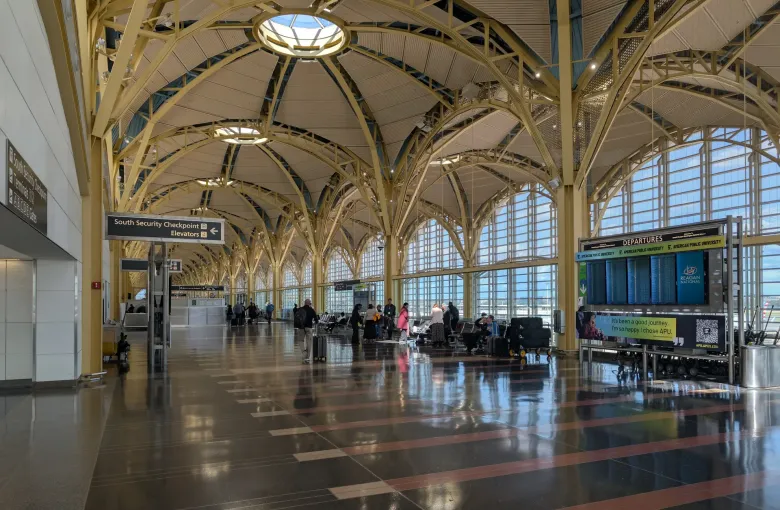
The Transportation Security Administration publishes a searchable list covering what may travel in a carry on bag, what must be checked and what may not fly at all. It resolves most questions quickly, and the ones it resolves are rarely the ones people expect: the awkward items are usually tools, sporting goods, camp stoves, batteries, aerosols and anything with a blade, rather than liquids.
The important caveat is in the source itself. That list is guidance, and at the checkpoint the officer makes the final decision, so an item shown as permitted may still be refused. Treat the list as a way to avoid obvious problems rather than as a guarantee, keep medication in its labeled container in a carry on, and put nothing you could not replace into a bag you will not be carrying.
What long distances add to the bag
- A physical map or offline maps. Cell coverage fails across large parts of the interior West, in canyon country and in many national parks, and it fails exactly where a wrong turn is expensive.
- Water in the vehicle. More than the day needs, on any desert or mountain drive.
- A charger that works in the car, and a battery pack for the days the car stays parked.
- Layers within reach rather than in the trunk, because the weather changes during the drive rather than before it.
- Some cash in small denominations, for the handful of places that still need it.
Laundry, not luggage
Almost every hotel and motel chain in the country either has a laundry or is next to one, and so does almost every campground of any size. Packing for a week and washing once is the difference between a bag you can carry up a flight of stairs and one you resent from the second day. That matters more here than in most places, because domestic itineraries tend to involve several hotels rather than one base.
Sources
- Transportation Security Administration: What Can I Bring: the searchable list of items and their carry on and checked baggage status, and the standing note that the final decision on whether an item may pass the checkpoint rests with the TSA officer. Accessed 17 September 2026.
- National Weather Service: Safety: the hazard by hazard public safety material covering heat, lightning, flooding including flash flooding on roads, winter storms, tornadoes, hurricanes and wildfire smoke, and the standing advice to know the forecast and the alerts for where you are going. Accessed 17 September 2026.
Other Articles
United States Weather Guide
United States Travel Safety Guide