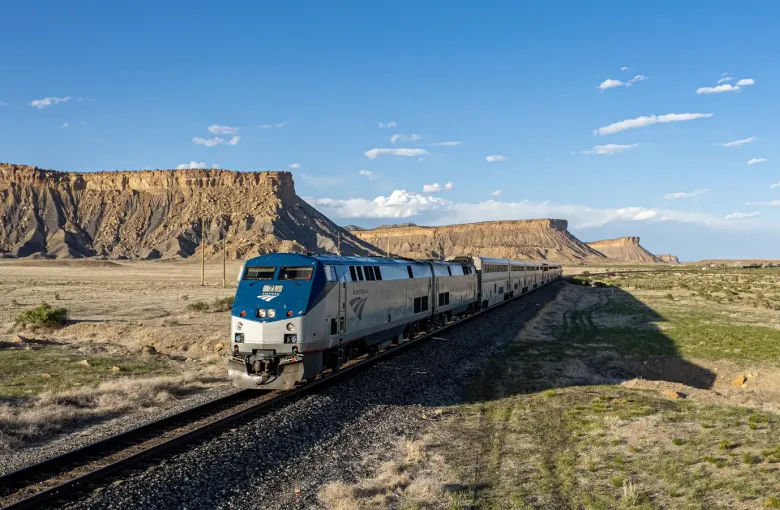
Most destination guides answer the season question with a month. This one cannot, and the reason is worth saying plainly: at any point in the calendar some part of the United States is at its best and some other part is at its worst. In late January the Sonoran Desert is perfect and the northern plains are brutal. In August the Rockies are open to their highest passes and the Gulf Coast is in hurricane season. The useful question is not when to come but which region you are coming for.
Work from the region, then the month
Four rough patterns cover most of the country. The Northeast and the Upper Midwest have a short, reliable summer, a spectacular and brief fall, and a winter that genuinely closes things. The South and the Gulf Coast are comfortable from late fall through spring and heavy with heat and humidity in the middle of the year. The desert Southwest inverts the whole idea: its pleasant season is the one everywhere else calls winter, and its summer is a safety consideration rather than a comfort one. The Pacific Northwest is mild and wet for most of the year with a dry, bright window in the middle of it.
Alaska and Hawaii are their own cases and this cluster treats Alaska as a destination in its own right. If a trip is built around the national parks of the interior West, the practical season is set less by temperature than by elevation: high roads and passes open late and close early, and a park that is fully open in August may have half its road network closed in May.
The weeks when everyone travels
Four periods move the whole country at once, and they are the single biggest influence on what a trip costs and how it feels. Memorial Day at the end of May opens the summer season. Independence Day in early July is the busiest single holiday for domestic travel. Labor Day at the start of September closes the summer. Thanksgiving, in late November, produces the heaviest concentrated travel of the year, and the days on either side of it are the ones to avoid if you have any choice about it.
The week between Christmas and New Year is its own phenomenon: ski country and the warm south are full, and much of the rest of the country is quiet. Spring break is not one week but a rolling six, because school systems set it independently, which is why a Florida beach or a Utah canyon can be crowded on a date that looks arbitrary.
Shoulder season is the real answer
For most of the country the best value and the best experience are in the weeks just outside the peak. Late April and May in the Southeast and the mid Atlantic, September and early October almost everywhere, and the first half of November in the desert Southwest all deliver open facilities, workable weather and a fraction of the crowding. The national parks in particular change character entirely: the same trail that needs a dawn start in July is unhurried in late September.
What the season does to the parks
Park entrance fees are published per site rather than as a single national figure, and they differ by park and by whether you arrive in a vehicle, on a motorcycle or on foot. They are not seasonal, but almost everything else about a park visit is. Campgrounds, visitor centers, shuttle systems, high roads and ranger programs all run on seasonal schedules that vary by park, and the shuttle that makes a busy park workable in July may not be running in October. Look up the individual park rather than assuming a national pattern, because there is not one.
Plan around weather, not just temperature
Season in this country is a hazard calendar as much as a comfort one. Hurricane season runs through the second half of the year on the Atlantic and Gulf coasts. Tornado activity peaks in spring and early summer across the center of the country. Wildfire smoke can affect air quality in the West through late summer, sometimes far from any fire. Winter storms close interstate highways across the plains and the mountain West with little notice. None of this is a reason to avoid a season; all of it is a reason to know the forecast and the alerts for the specific places you are going, which the National Weather Service publishes hazard by hazard.
Sources
- National Weather Service: Safety: the hazard by hazard public safety material covering heat, lightning, flooding including flash flooding on roads, winter storms, tornadoes, hurricanes and wildfire smoke, and the standing advice to know the forecast and the alerts for where you are going. Accessed 17 September 2026.
- National Park Service: Entrance fee prices: the per park schedule of entrance fees, which differ by park and by whether a vehicle, an individual or a motorcycle is being admitted, and which are published per site rather than as one national figure. Accessed 17 September 2026.
Other Articles
United States Weather Guide
Yellowstone: Visitor and Heritage Guide