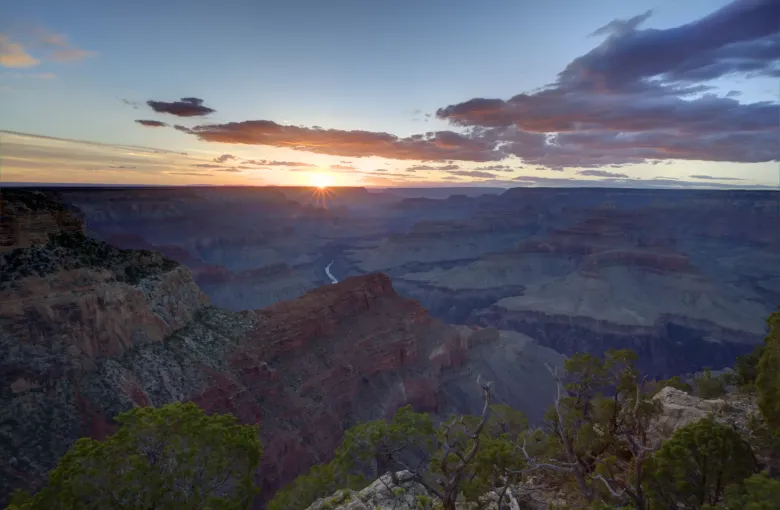
Most safety advice written for international destinations does not transfer to a domestic trip, and the parts that do transfer are rarely the parts people worry about. What actually sends American travelers home early is heat, a road, an altitude they did not plan for and an animal they got too close to.
Health: there is nothing to arrange
No vaccination is required to travel within the United States and there is no travel specific medication to take. The public health advice for the country is routine: keep ordinary vaccinations up to date, and take the same precautions you would at home. Tap water is safe in public supplies across the country. What the absence of a health checklist hides is the one health question that does matter, which is money.
Medical cover is the domestic blind spot
Americans are used to being covered at home and assume that coverage travels with them. It often does, but not always in the way people expect: a plan may be in network in one state and out of network in the next, urgent care and emergency room pricing differ by an order of magnitude, and an air ambulance from a remote park is a bill that has ruined people. Understanding what your own plan does away from home, and whether a trip policy is worth adding, is the single most useful piece of preparation for a domestic trip. Travel insurance is not unnecessary because the trip is domestic; it is simply covering a different risk.
Heat, and water over a road
Heat is the weather hazard that causes the most harm in this country and it works slowly enough to be dismissed. In the desert Southwest and the southern summer, plan strenuous activity for early morning, carry more water than the distance suggests, and treat an afternoon hike in July as a decision rather than a default.
The other hazard is flash flooding, and it is the one that kills people in vehicles. Water across a road is deeper and faster than it looks, and desert washes and canyon roads flood from rain falling somewhere out of sight. The standing advice from the National Weather Service is unambiguous and worth following without exception: do not drive into it. The same service publishes hazard by hazard guidance for lightning, winter storms, tornadoes, hurricanes and wildfire smoke, and its watches and warnings are the ones to act on.
The road
Long distances make driver fatigue the quiet risk of an American itinerary. Days of six hundred miles are normal here, which means they get planned casually. Break them, share them if you can, and avoid arriving somewhere unfamiliar after dark on the first day. Wildlife on the road at dawn and dusk is a genuine hazard in much of the country, and in the West so is the combination of an empty highway and an optimistic speed.
Altitude
Several of the places Americans fly to for a week sit high enough to matter. Denver is above five thousand feet, many mountain resorts are well above eight thousand, and park roads cross higher passes than that. Arriving from sea level and hiking hard on the first day is how otherwise fit people spend a holiday with a headache. Give it a day, drink more water than usual, go easy on alcohol at first, and treat worsening symptoms as a reason to go down rather than to push on.
Wildlife, and the distance rule
Wildlife is one of the reasons to come and the rules around it exist because people ignore them. National parks set minimum approach distances, typically far larger for bears and wolves than for other animals, and those distances are the difference between a good photograph and an incident. Store food as the park instructs, never feed anything, and remember that the animals which injure the most visitors in the American parks are not predators: they are large herbivores that people walked up to.
Cities
American cities are safe for visitors doing ordinary things, and their reputations are generally worse than the experience. The sensible precautions are the ones that apply everywhere: know which neighborhoods you are heading into after dark, do not leave anything visible in a parked car, and be alert at transit stations late at night. Car break ins in tourist parking areas, including at trailheads and scenic overlooks, are the most common property crime a traveler here encounters, and the prevention is simply an empty vehicle.
Emergency numbers
Dial 911 for police, fire or medical emergency anywhere in the country. For mental health crisis support, 988 connects to the Suicide and Crisis Lifeline. In a national park, cell coverage may be absent, so note the location of the nearest ranger station or visitor center when you arrive rather than when you need it.
Sources
- National Weather Service: Safety: the hazard by hazard public safety material covering heat, lightning, flooding including flash flooding on roads, winter storms, tornadoes, hurricanes and wildfire smoke, and the standing advice to know the forecast and the alerts for where you are going. Accessed 17 September 2026.
- Centers for Disease Control and Prevention: United States traveler health: a destination record with no entry vaccination requirement, built around routine vaccines being up to date and ordinary precautions rather than travel specific prophylaxis. Accessed 17 September 2026.
- National Park Service: Entrance fee prices: the per park schedule of entrance fees, which differ by park and by whether a vehicle, an individual or a motorcycle is being admitted, and which are published per site rather than as one national figure. Accessed 17 September 2026.
Other Articles
United States Weather Guide
Yellowstone: Visitor and Heritage Guide