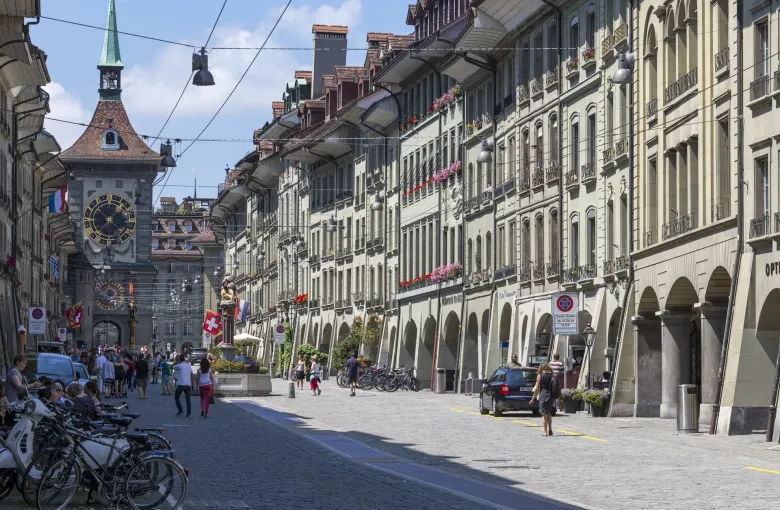
The short version
Switzerland uses the Swiss franc. It is not in the European Union and it does not use the euro, and those two facts together are the reason this page exists as something other than a formality.
The franc is fully convertible, you can obtain it before you travel or from a machine on arrival, and cards work essentially everywhere. Take cash out of a bank machine rather than from a person: you get the interbank rate rather than a tourist one.
⚠ What being outside the EU actually changes
Three things, and each of them is a sentence that is correct on our Dutch, German, Austrian, French, Italian, Spanish and Greek guides and wrong here.
There is no EU cash declaration threshold. The other countries in this program require a declaration at or above a set euro amount. That is an EU rule. We checked the Swiss entry page rather than assuming: it carries no cash figure at all, and the word cash does not appear on it. Swiss declaration requirements are Swiss, and the Swiss customs administration is where to check them.
The EU food prohibition does not apply either. The animal-products restriction that sits on every EU member's entry page is absent from the Swiss one, because Switzerland is not an EU country. What the page says instead is that there are strict rules about goods you can take into and out of Switzerland, and that you must declare anything that may be prohibited or subject to tax or duty.
You are crossing a customs border, not just a Schengen one. If you drive in from France, Germany, Italy or Austria there is no passport check, because Schengen, and there may very well be a customs check, because not the EU. Those are two different borders in the same place, and Switzerland is the only country in this guide where they come apart.
⚠ The one figure on the entry page
Switzerland may ask you to prove that you have enough money for your stay, which the advisory puts at around 100 Swiss francs a day. It is the only proof-of-funds figure published anywhere in this eight-country program.
Two things about it. It is a threshold you may be asked to demonstrate, not a fee and not something anybody takes from you: a card and a hotel booking satisfy it. And it comes as part of a set, because the same page may also ask for proof of accommodation, proof of insurance and a return or onward ticket. In practice a tourist arriving by air is rarely asked for any of it, and having it available costs nothing.
⚠ Why this guide publishes almost no prices
Switzerland is one of the most expensive countries in Europe and the honest thing to say about that is that we cannot usefully quantify it here. Nothing we read for this build publishes a Swiss price, fare, lift pass or meal cost, and the only two franc figures on the record are the proof of funds above and the face-covering fine below.
So we publish those two and nothing else. A fare or a lift pass written on a travel page a year ago is worse than no figure at all, particularly in a country where the rail and mountain operators each set and publish their own. Check them on the operator's own site when you book, and budget generously: the reputation is deserved.
The other franc figure, which is a fine
In Ticino and St Gallen it is illegal to cover your face in public, including for tourists, and the fine is 100 to 10,000 Swiss francs. It is the only other franc amount in this guide, and our travel safety guide sets out what the law covers.
Cards, cash and tipping
Cards are accepted widely, including on the railways and in mountain restaurants. Keep some cash anyway: a small mountain hut, a farm shop or an honesty stall beside a hiking path is exactly where a card reader will not be, and those are among the better things about the country.
Service is included and tipping is modest and discretionary rather than expected at a set percentage. Rounding up, or leaving a small amount for good service, is normal and sufficient.
One habit worth carrying from our safety guide: petty theft is the one crime the advisory does record, with increased reports in larger cities, at Geneva airport and on trains to and from Geneva. Keep the wallet on your person rather than in a bag on that particular route.
Verify Before You Travel
- The UK Foreign, Commonwealth & Development Office Switzerland entry requirements page, for the proof of funds figure and the Swiss customs sentence.
- The Swiss customs administration, for import allowances and declaration requirements, which are Swiss rather than EU rules.
- Each rail, lift and mountain railway operator, for current fares, which we do not publish.
- Your own bank, for what each transaction will cost you in a non-euro country.
Sources
- UK Foreign, Commonwealth & Development Office: Switzerland travel advice. Accessed 16 September 2026.
- UK Foreign, Commonwealth & Development Office: Switzerland entry requirements: Schengen area rules, the two passport tests, the proof of accommodation, insurance, onward ticket and funds, the Entry/Exit System, and the Swiss customs rules. Accessed 16 September 2026.
- UK Foreign, Commonwealth & Development Office: Switzerland safety and security: the terrorism assessment, the crime picture, the drug penalties, the face-covering ban in two cantons, the adventure-sport insurance requirement and the year-round alpine hazards. Accessed 16 September 2026.
Other Articles
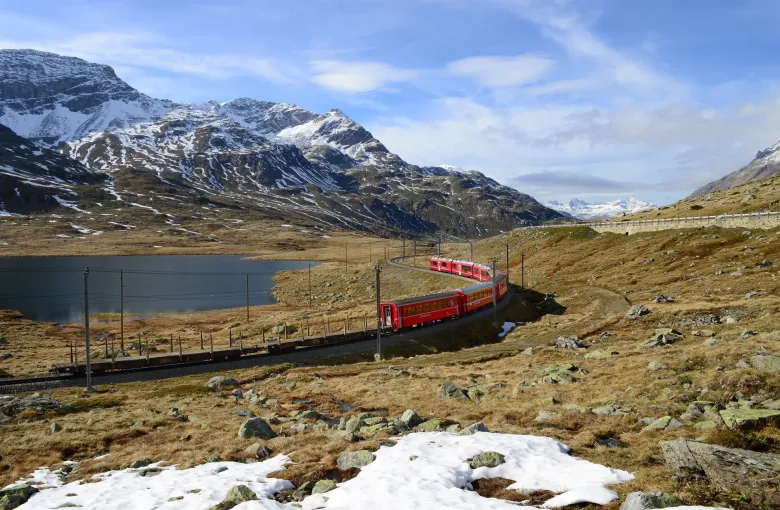
Getting Around Switzerland
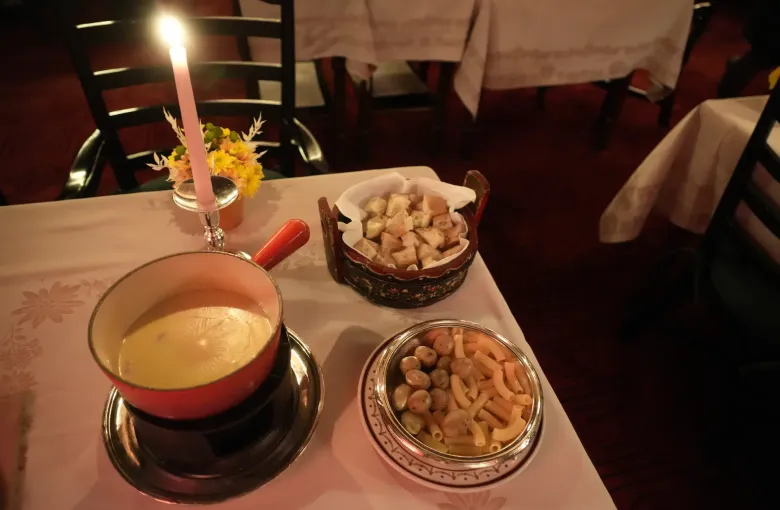
Switzerland Food Guide