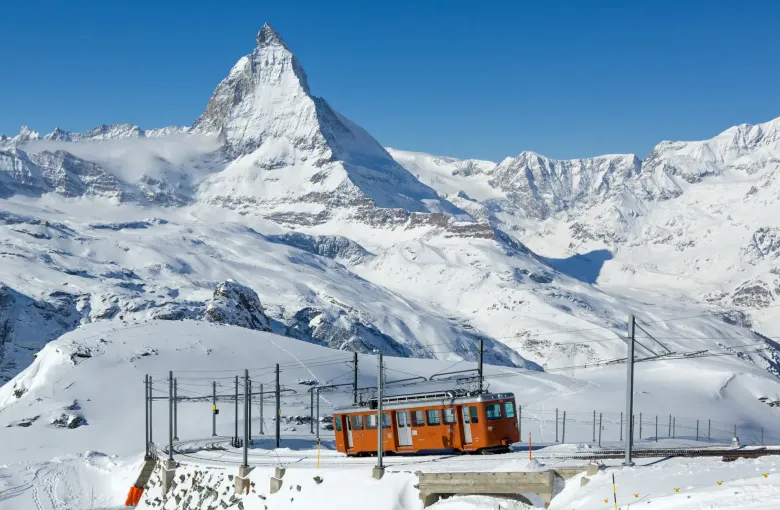
The short version
Switzerland is one of the safest countries a visitor can travel in, and the UK Foreign, Commonwealth & Development Office says so in one line: there is a low rate of serious crime in Switzerland. We cite that office throughout this guide because its assessment is detailed and public, and because the facts it records are facts about Switzerland rather than advice aimed at any one nationality.
Its terrorism assessment is the mildest of the countries this guide covers: terrorist attacks in Switzerland cannot be ruled out. That is deliberately weaker wording than the same office uses for Germany, where attacks are very likely to be attempted, or the Netherlands, where they are likely. We print the difference rather than levelling it.
So the real content of Swiss safety is not crime. It is the mountains, a specific insurance clause, and one law most visitors have never heard of.
⚠ Eight alpine hazards, and the advisory says they run all year
This is the part of the page to read twice. The office lists these hazards and states plainly that they exist throughout the year:
- avalanches and snowdrifts
- landslides and flooding
- glacial crevasses and hollows
- rockfalls
- thunderstorms
- altitude sickness
- sun exposure
- sudden weather changes
Not one of those is a winter hazard only. Crevasses do not close in July, rockfall is a summer event as much as a spring one, and a thunderstorm on an exposed ridge in August is a genuine emergency. A visitor who thinks of the Alps as dangerous in winter and pleasant in summer has the risk profile wrong.
The advice that goes with the list is practical and worth following exactly. Check weather forecasts and conditions, and be equipped for the worst case rather than the forecast. When traveling outside urban areas, always carry a map, a compass, a GPS and a fully charged mobile. Do not undertake any activity alone, and consider hiring a guide for expert advice. And always leave a copy of your itinerary with someone, which is the single cheapest safety measure available to anyone going into a mountain.
Avalanches, specifically
Avalanches are a risk particularly during heavy snow, and off-piste skiing is very dangerous because of them. Follow safety instructions and warnings, and consider carrying search equipment.
The office is unusually specific about what that equipment is: avalanche beepers, which are receivers, are the most common rescue devices, and when properly used they are the fastest way of locating an avalanche victim. If you are going off-piste or ski touring, that sentence is the argument for carrying one and knowing how to use it.
Roads in mountainous areas can become difficult quickly in winter. If you are driving them, carry water, food and warm clothing. A closed pass with a car full of people and no food in it is an ordinary Swiss winter event.
⚠ The insurance clause, which is the most useful paragraph on this page
The advisory records that British nationals in the Swiss Alps have been involved in accidents and have been hospitalized or have died. It follows that with a requirement rather than a suggestion, and the three components are named:
- mountain rescue services
- helicopter costs
- repatriation to your home country, or transfer to a neighboring country for treatment
That applies to skiing, potholing and mountaineering, and to sports classed as particularly dangerous, for which the office names off-piste skiing, mountain biking, climbing, paragliding and BASE jumping. Check the company you are using is well established, and check your policy against that three-item list before you travel rather than after an accident.
This is not an abstract warning. A Swiss helicopter evacuation from a mountain is a real bill, and Swiss healthcare is billed rather than free to a visitor.
Crime, and the one place it concentrates
Serious crime is rare. What the advisory does record is increased reports of petty theft, especially in larger cities, at Geneva airport and on trains to and from Geneva.
That is a narrow and useful warning: it names an airport and a rail corridor rather than a city center. Take the ordinary precautions against mugging, bag snatching and pickpocketing, be particularly alert at airports, railway stations and in crowded areas, and do not leave valuables unattended. On the Geneva trains specifically, keep luggage where you can see it.
Drugs, and what we will not tell you
The advisory states that illegal drugs, including cannabis, carry severe penalties in Switzerland, and that you should expect a long jail sentence and heavy fines for possessing, using or smuggling them, including when transiting through the airport. It adds that Swiss airports have excellent detection technology and that it is also used to scan the baggage of transiting passengers.
That is worth reading carefully by anyone whose trip also includes the Netherlands, where use is tolerated in designated premises in the major cities and the rules are completely different. The two countries are a short train ride apart and the law does not travel with you.
We publish no reading of Swiss drug law of our own, and that is deliberate rather than lazy. If this matters to your trip, ask the Swiss authorities, not a travel page.
⚠ The face-covering ban, in two cantons
This one catches people because it is cantonal rather than national and because it applies to visitors explicitly. In Ticino and St Gallen it is illegal to cover your face in public, including for tourists. Do not wear a balaclava, a full veil or any other garment or mask that hides your face.
The fine is 100 to 10,000 Swiss francs. Ticino is the Italian-speaking south, which is where a great many visitors go for Lugano and Locarno, so this is not an obscure corner of the country. Note also that a balaclava is ordinary alpine winter equipment; the law is about covering the face in public, and a ski mask worn in a town is inside it.
Health, in the lines that matter
The emergency medical number is 112 or 144: dial either and ask for an ambulance. Switzerland is the only country this guide covers whose advisory publishes two. Contact your insurer quickly if you are referred for treatment.
At least eight weeks before your trip, check the current vaccine recommendations. The health risks the advisory names for Switzerland are biting insects and ticks, especially between April and October, and tick-borne encephalitis.
And the Swiss-specific one: altitude sickness is a risk in parts of Switzerland, and the advisory names the ski and hiking areas: 4 Vallées, Belalp-Blatten, Chandolin, Corvatsch, Engelberg-Titlis, Hohensaas, Lauchernalp, Matterhorn, Saas-Fee and St Moritz. That list includes the places most visitors actually go, which is why it is on this page rather than buried.
The US Centers for Disease Control and Prevention asks travelers to be up to date on all routine vaccines, notes that measles cases are rising in many countries and that all international travelers should be fully vaccinated with MMR, suggests considering hepatitis A for most travelers, and recommends hepatitis B for unvaccinated travelers younger than sixty. On tick-borne encephalitis its advice for this country is stronger than for the lowland countries next door: the vaccine is recommended for anyone who will have extensive exposure to ticks based on their planned outdoor activities, and may be considered for anyone who might be outdoors where ticks are likely.
One rabies note worth knowing before a hiking trip: dogs infected with rabies are not commonly found in Switzerland, but the CDC records that if an exposure does occur, rabies vaccines are typically not readily available there. That is a reason to discuss it with a clinic in advance rather than to worry about dogs.
Verify Before You Travel
- The UK Foreign, Commonwealth & Development Office Switzerland safety and security page, for the terrorism assessment, the crime picture, the drug penalties as that office states them, the face-covering ban and its fine, the adventure-sport insurance requirement and the year-round alpine hazards.
- The UK Foreign, Commonwealth & Development Office Switzerland health page, for the two emergency numbers, the vaccination window, the tick season and the named altitude areas.
- The US Centers for Disease Control and Prevention Travelers' Health page for Switzerland, for routine vaccines, hepatitis A and B, measles, rabies and tick-borne encephalitis.
- The Swiss avalanche and weather services, on the morning of any mountain day.
- Your own insurer, against the three-item list above, before you travel.
Sources
- UK Foreign, Commonwealth & Development Office: Switzerland travel advice. Accessed 16 September 2026.
- UK Foreign, Commonwealth & Development Office: Switzerland safety and security: the terrorism assessment, the crime picture, the drug penalties, the face-covering ban in two cantons, the adventure-sport insurance requirement and the year-round alpine hazards. Accessed 16 September 2026.
- UK Foreign, Commonwealth & Development Office: Switzerland health: the two emergency numbers, the eight week vaccination window, the April to October tick season and the named altitude-sickness areas. Accessed 16 September 2026.
- US Centers for Disease Control and Prevention: Travelers’ Health, Switzerland: routine vaccines, hepatitis A and B, measles, rabies and tick-borne encephalitis. Accessed 16 September 2026.
Other Articles
Getting Around Switzerland
Switzerland Visa and Entry Requirements