The short version
Late June through September for the mountains on foot, and December through March for the mountains on skis. Those are the two answers, and which one is right depends entirely on what you came for. Switzerland is the only country in this eight-country program with two full high seasons that do not overlap at all.
If you want one recommendation for a first trip that is not specifically a ski holiday, take September: the high routes are open, the crowds have gone home, the light is better and the Lavaux vineyards are being harvested.
⚠ Why the shoulder season is cheap, and what it costs you
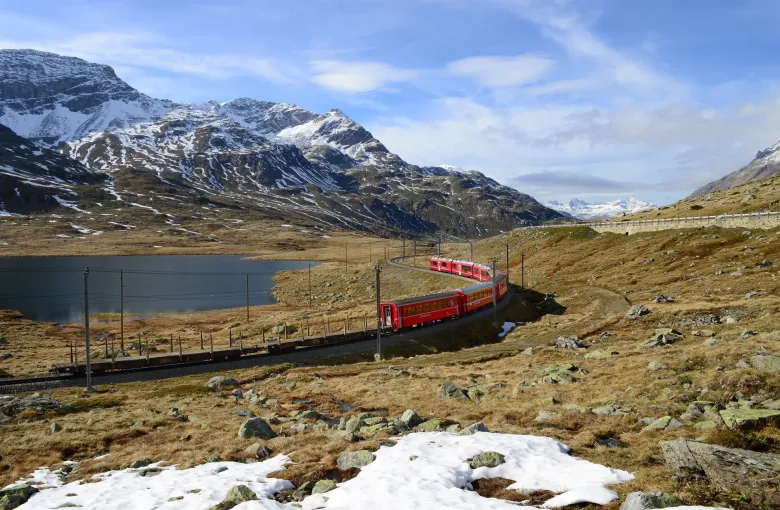
April, May, late October and November are the cheapest weeks of the Swiss year, and the reason is not weather. It is that the mountain is closed. Lifts and cog railways run seasonal timetables and many simply stop between seasons. Higher trails are under snow. And the great alpine passes, which are half the reason to drive here, open on conditions rather than on a date.
We publish no opening dates for passes, lifts or mountain railways, on this page or on any guide in this guide. They move by weeks from year to year, a date written a year ago is worse than no date, and every operator publishes its own. What we will tell you is the rule: if your itinerary depends on a pass, a lift or a high trail, check that specific operator before you book, and have a low-altitude alternative for the day.
The advisory's own framing supports this. The alpine hazards it lists, including avalanches, rockfalls, landslides and sudden weather changes, exist throughout the year. A shoulder-season trip is not a safer trip, it is a trip with fewer things open.
Winter: December through March
This is the season Switzerland is famous for and the country is superbly organized for it. It is also the most expensive stretch of the year, and school holidays in Switzerland and its neighbors make particular weeks far busier than others.
Two safety points belong in a seasonal guide rather than only in a safety one. Avalanches are a risk particularly during heavy snow, and off-piste skiing is very dangerous because of them. And a policy for a ski trip needs to include mountain rescue services, helicopter costs and repatriation or transfer to a neighboring country, which is worth checking when you book rather than when you arrive.
Summer: late June through September
The hiking season, the pass season, the lake season and the season the mountain railways were built for. Trails are clear, the cable cars and cog railways run full timetables, and the long evenings make a mountain day feel twice as long.
Three things to plan around:
- Altitude. Altitude sickness is a risk in parts of Switzerland, and the advisory names the areas, including the Matterhorn, Saas-Fee, St Moritz, Engelberg-Titlis and the 4 Vallées. Going high on your first day is how a good trip becomes a bad one.
- Ticks. The health page names biting insects and ticks especially between April and October, which is exactly the hiking season, along with tick-borne encephalitis. Long trousers and a check at the end of the day.
- Thunderstorms and sun. Both are on the year-round hazard list, and both are worse at altitude than a lowland visitor expects. Start early, and be off the ridge by the afternoon.
What each season does to the three heritage properties
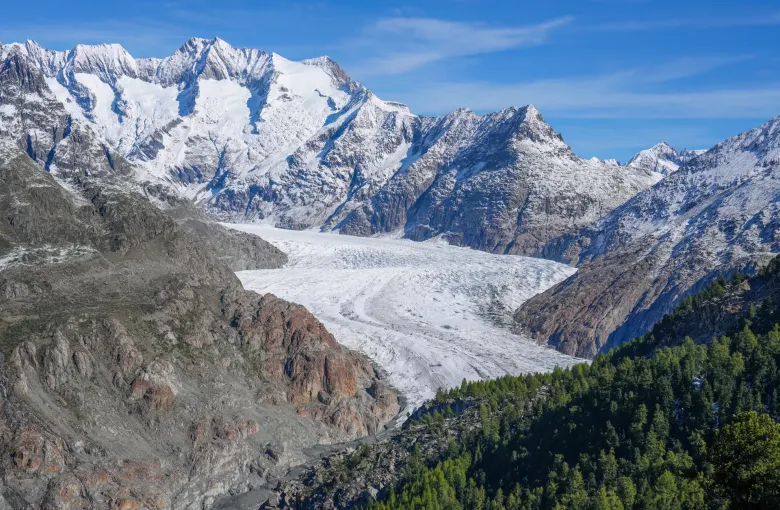
Swiss Alps Jungfrau-Aletsch is an 82,400 hectare mountain property and it is the most season-dependent thing in this guide: high summer for walking, winter for skiing, and the shoulder weeks for very little, because the railways that reach it run seasonal timetables.
Lavaux, Vineyard Terraces is best in late summer and early autumn, when the vines are in leaf and then in harvest. It is a working agricultural landscape rather than a park, so what you see is a function of the farming calendar.
The Old City of Berne is the one that works in any month of the year. It is a compact, arcaded city center, which in practice means shopping and walking under cover in the rain and in the snow: it was built that way. If your trip falls in the shoulder season when the mountains are shut, Berne is the answer.
Verify Before You Travel
- Each lift, cog railway and pass operator's own site, for its seasonal timetable and current status, which we deliberately do not publish.
- The UK Foreign, Commonwealth & Development Office Switzerland safety and security page, for the year-round alpine hazard list and the avalanche guidance.
- The UK Foreign, Commonwealth & Development Office Switzerland health page, for the tick season and the named altitude areas.
Sources
- UK Foreign, Commonwealth & Development Office: Switzerland travel advice. Accessed 16 September 2026.
- UK Foreign, Commonwealth & Development Office: Switzerland safety and security: the terrorism assessment, the crime picture, the drug penalties, the face-covering ban in two cantons, the adventure-sport insurance requirement and the year-round alpine hazards. Accessed 16 September 2026.
- UK Foreign, Commonwealth & Development Office: Switzerland health: the two emergency numbers, the eight week vaccination window, the April to October tick season and the named altitude-sickness areas. Accessed 16 September 2026.
- UNESCO World Heritage Centre: Switzerland’s State Party record: thirteen properties inscribed on the World Heritage List, nine cultural and four natural. Accessed 16 September 2026.
Other Articles
Switzerland Weather Guide
Swiss Alps Jungfrau-Aletsch: Visitor and Heritage Guide