The short version
One date is fixed and national: Swiss National Day, 1 August. Everything else in the Swiss calendar is either cantonal, communal or dependent on the weather, and this guide publishes no date for anything that moves. A date that has drifted is worse than no date.
That is not a limitation of this page, it is the shape of the country. Public holidays themselves are set largely by canton rather than nationally, so a day that closes everything in Lucerne may be an ordinary working day in Geneva.
Swiss National Day, 1 August
The one fixed national celebration, and it is a quieter affair than a visitor might expect from a national day: bonfires on hillsides, lanterns, fireworks, community breakfasts, speeches in village squares. It is celebrated locally rather than staged centrally, which is entirely in character.
Practical notes: it falls in high summer, so accommodation in the mountains and on the lakes is at its most expensive and most booked, and public transport runs holiday timetables. The lakeside cities put on the largest displays.
⚠ The Alpabzug, which is the most Swiss thing in the year and cannot be dated
In late summer and autumn the cattle come down from the high alpine pasture to the valley for the winter, and the descent is a genuine event: the animals are decorated with flowers and headdresses, they wear heavy bells, and the whole village turns out. It is not a show put on for visitors. It is the end of the working season.
We publish no date for it, and no honest guide can. The descent happens when the grass at altitude is finished and the weather turns, which varies by valley, by altitude and by year. Individual villages announce their own date, often only weeks ahead.
How to see it anyway: plan a late summer or early autumn trip to an alpine valley, ask the local tourist office when you arrive or a few weeks before, and be willing to move a day. It is worth the flexibility.
Carnival, in the German-speaking cantons, without a date
Carnival is a serious business in the German-speaking cantons, and Basel's in particular is a major event with its own rules, its own music and its own hours. It also moves every year, because it is tied to Easter, so we give no date for it. If your trip falls in the first months of the year, look up when it falls for the canton you are visiting, either to be there or to avoid it: the cities are extremely full.
Note that carnival in Switzerland is genuinely regional. What happens in Basel, Lucerne and Ticino are three different traditions on overlapping but not identical dates.
Wine, harvest and the Lavaux calendar
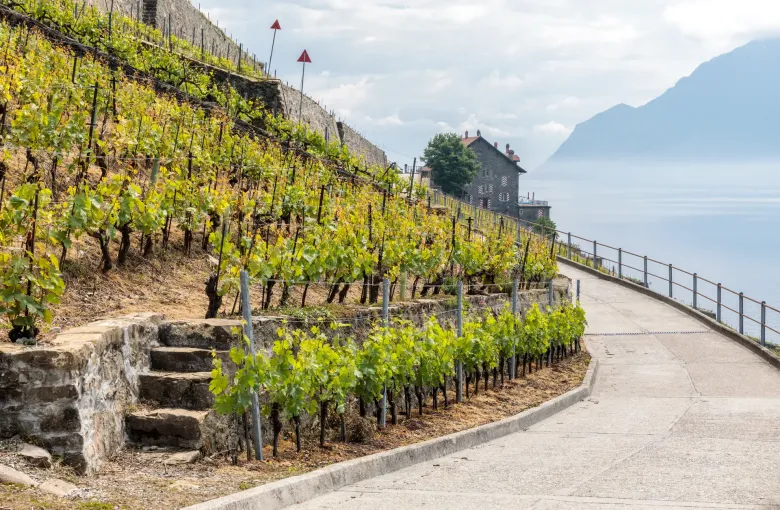
The Lavaux, Vineyard Terraces property is a working wine landscape, so its calendar is an agricultural one. Autumn brings the harvest and the cellar festivals in the lakeside villages, and those dates move with the fruit rather than with a diary.
The same applies to the chestnut festivals of Ticino and to the mountain cheese events of the alpine cantons: they are tied to a crop or a herd. Ask locally, close to the time.
Music, sport and the rest of the calendar
Switzerland runs an outsized number of music festivals for its size, particularly jazz and classical on the lakes in summer, and a winter sport calendar that fills the alpine resorts. There are also the traditional Swiss sports events, including the wrestling and alphorn gatherings that look like folklore and are competitive.
We name none of their dates, for the same reason as above: festival dates move, and the organizer's own site is the only reliable source. What we can tell you is that in summer there is something on most weeks within an hour of wherever you are staying, and in winter the mountains are the event.
Two practical warnings for a festival trip
Crowds and theft. The advisory's one crime note is increased petty theft in larger cities and on the Geneva corridor. A crowded festival is where that applies most.
The face covering law. In Ticino and St Gallen it is illegal to cover your face in public, with a fine of 100 to 10,000 Swiss francs. A carnival costume with a mask is exactly the case to think about, so check what the canton permits for its own carnival before you dress for it.
Verify Before You Travel
- The tourist office of the canton or valley you are visiting, for the Alpabzug, carnival, harvest and local holiday dates, all of which move.
- Each festival's own organizer, for current dates.
- The UK Foreign, Commonwealth & Development Office Switzerland safety and security page, for the crowd and theft advice and for the face-covering ban.
Sources
- UK Foreign, Commonwealth & Development Office: Switzerland travel advice. Accessed 16 September 2026.
- UK Foreign, Commonwealth & Development Office: Switzerland safety and security: the terrorism assessment, the crime picture, the drug penalties, the face-covering ban in two cantons, the adventure-sport insurance requirement and the year-round alpine hazards. Accessed 16 September 2026.
- UNESCO World Heritage Centre: Switzerland’s State Party record: thirteen properties inscribed on the World Heritage List, nine cultural and four natural. Accessed 16 September 2026.
Other Articles
Switzerland Culture and Etiquette Guide
Switzerland and Diaspora Reconnection