The short version
Come between November and March, fly between the cities rather than driving, keep the desert sites to the cool half of the day, and accept the hospitality. On those terms this is a comfortable and rewarding country to travel in later life.
The season is the whole decision
Heat stroke and dehydration are the named summer health risks here, and they do not fall evenly. Anyone managing blood pressure, a heart condition, kidney function or medication that affects hydration is affected sooner and harder. The cool season removes most of that, and there is no itinerary skill that substitutes for going at the right time of year.
Distances, and the case for flying
Riyadh to Jeddah, or either to AlUla, is a flight. Driving those legs is a full day in a vehicle for no reward. Inside Riyadh the metro is level, cool and quick. Between the sites, a private driver means the day bends around you rather than around a timetable, and it is how we build these trips.
Pacing the three heritage sites
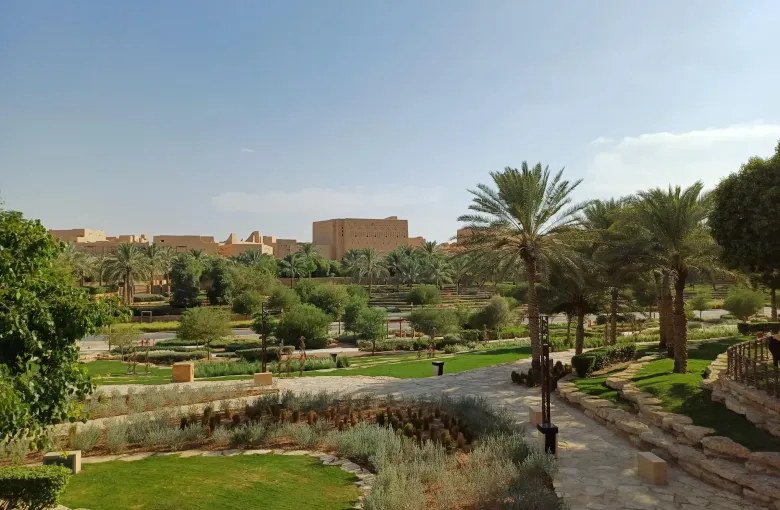
At-Turaif is the gentlest: made paths, close to Riyadh, excellent in the late afternoon. Hegra is the one that needs planning, because it is open desert ground and visited in the morning for good reason. Al-Balad in Jeddah is uneven paving and is best walked slowly in the evening, when the heat has gone and the lanes are lively.
One substantial site a day, with the middle of the day indoors, is the shape that works. Two is possible in winter and is usually a mistake.
Hospitality as a practical asset
Saudi social life is built on receiving people. Coffee and dates arrive almost immediately, sitting down is expected rather than grudged, and help is offered readily. For an older traveler that is not an abstraction: it means shade, a seat and a drink are rarely more than a few minutes away, and that asking is met well.
Health and medication
Bring everything you take in its original labelled packaging with a copy of the prescription, and carry it rather than pack it. Medical care in the major cities is good. Travel insurance that covers your existing conditions properly is the usual advice and the usual thing people skim.
What we would actually book
Ten days in February. Riyadh and Diriyah first to acclimatise, then AlUla for Hegra with a spare day in the valley, then Jeddah and Al-Balad to finish at sea level and in the evening air. Flights between, a driver throughout, and nothing that starts before breakfast except the one desert morning that is worth it.
See accessible travel and the weather guide.
Sources
- UK Foreign, Commonwealth & Development Office: Saudi Arabia health: vaccination advice, and heat stroke and dehydration in the summer months. Accessed 14 September 2026.
- UK Foreign, Commonwealth & Development Office: Saudi Arabia travel advice: the FCDO advises against all travel to parts of Saudi Arabia and against all but essential travel to further parts. Accessed 14 September 2026.
- US Centers for Disease Control and Prevention: Travelers’ Health, Saudi Arabia: the recommended vaccines, and malaria transmission confined to the Asir and Jazan regions near the Yemen border. Accessed 14 September 2026.
Other Articles
Accessible Travel in Saudi Arabia
Getting Around Saudi Arabia