The short version
Hot and dry in the interior, hot and humid on the Red Sea coast, and markedly cooler with altitude. Winter nights in the Najd get genuinely cold. The single number that matters is not a temperature but a time of day.
The interior
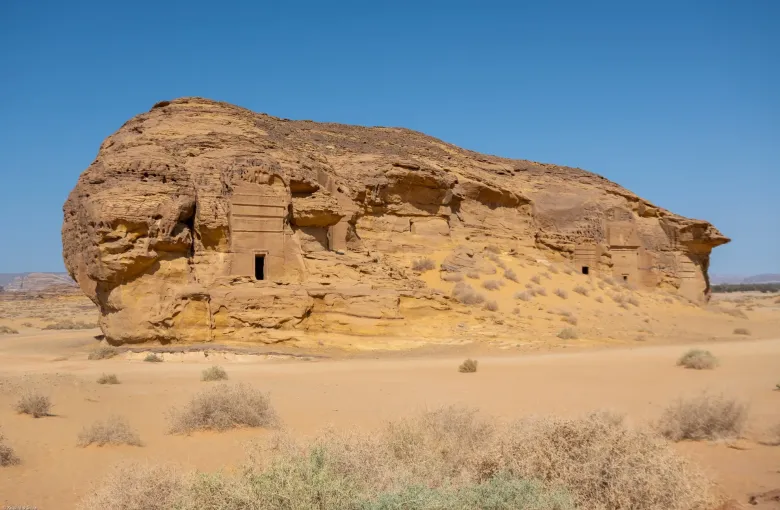
Riyadh, Diriyah, AlUla and the Najd generally are desert: very hot summers, warm winter days and cold winter nights, with a large gap between the two in any season. That daily swing is the thing to plan for. A February day at Hegra can be pleasant at noon and require a jacket by six.
The Red Sea coast
Jeddah and the coast are hotter to the body than the thermometer suggests, because humidity comes off the sea and the temperature does not drop much overnight. This is the part of the country where summer is genuinely unpleasant rather than merely hot, and where an evening itinerary works better than a morning one.
The east
Al-Ahsa and the Gulf side combine heat with humidity in summer as well, tempered by the oasis itself. The shaded clefts at Al-Qarah Mountain are several degrees cooler than the ground outside them, which is exactly why people have used them for so long.
Heat, treated as a real risk
The FCDO names heat stroke and dehydration in the summer months as a health risk for Saudi Arabia, and that is the correct framing. The working rules are unglamorous and they work: drink before you are thirsty, keep the middle of the day for interiors, cover up rather than strip off, and treat a headache or a stopped sweat as a signal to get out of the sun rather than to push on.
A health point the weather decides for you
There is no malaria in the places this guide sends you. The US Centers for Disease Control and Prevention records transmission only in the Asir and Jazan regions near the Yemen border (the same ground the FCDO advises against travelling to) and records no transmission in Jeddah, Mecca, Medina, Riyadh or Ta'if. An itinerary that respects the advisory has settled the question.
What this means for a day
In the good season, a full day works: desert site in the morning, a long lunch, a city or a museum in the afternoon, and dinner late, which is when Saudi cities come alive anyway. In summer the same day has to be cut in half and rebuilt around the dark.
See what to pack and when to go.
Sources
- UK Foreign, Commonwealth & Development Office: Saudi Arabia health: vaccination advice, and heat stroke and dehydration in the summer months. Accessed 14 September 2026.
- US Centers for Disease Control and Prevention: Travelers’ Health, Saudi Arabia: the recommended vaccines, and malaria transmission confined to the Asir and Jazan regions near the Yemen border. Accessed 14 September 2026.
- UK Foreign, Commonwealth & Development Office: Saudi Arabia regional risks: the ten and eighty kilometre bands along the border with Yemen, and the Houthi attacks on Abha, Yanbu and Jazan. Accessed 14 September 2026.
Other Articles
Best Time to Visit Saudi Arabia
Saudi Arabia Packing List