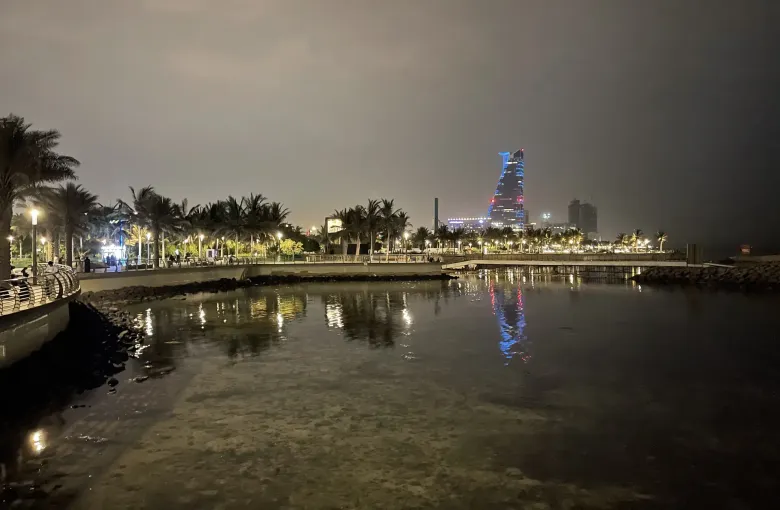
The short version
At-Turaif is a district of ad-Dir'iyah, on the edge of an oasis north west of Riyadh. UNESCO inscribed it in 2010 under criteria (iv), (v) and (vi). It was the first capital of the Saudi dynasty, and it is the reason the country's story starts where it does.
What it is
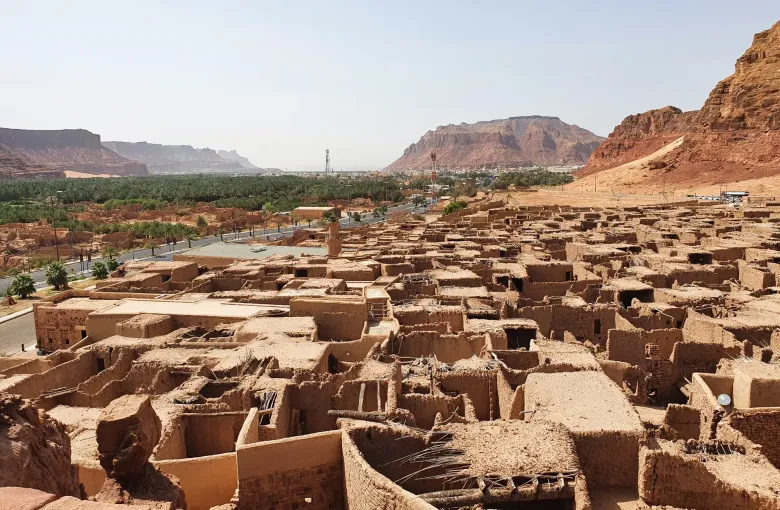
Founded in the fifteenth century, At-Turaif bears witness to the Najdi architectural style particular to the centre of the Arabian Peninsula. In the eighteenth and early nineteenth centuries its political and religious weight grew until the citadel became the seat of the temporal power of the House of Saud. What survives is the remains of many palaces and a whole fortified urban ensemble built on the oasis edge.
Why the architecture matters
UNESCO's reasoning under criterion (iv) is worth reading, because it is about building rather than about politics. At-Turaif is an outstanding example of a diversified, fortified urban ensemble inside an oasis, and of a construction method well adapted to its environment: adobe used at palatial scale, finished with what the inscription calls a remarkable sense of geometrical decoration. Mud brick is usually thought of as modest. Here it is monumental.
What to expect
The site is walkable and close to Riyadh, which makes it the easiest of Saudi Arabia's three inscribed properties in this guide to fit into a short trip. Late afternoon into the evening is the sensible window: the walls take low light extremely well, and the temperature becomes reasonable. The surrounding district has been extensively developed for visitors, so expect a managed experience rather than an empty ruin.
What it is used for now
At-Turaif is also a performance setting. The Najdi ardha, the sword dance that is the country's best known formal ceremony, is regularly staged against these walls, and seeing it here rather than in a hall is a different thing entirely. See festivals and celebrations.
Read this with Hegra, which is two thousand years older, and getting around, since this one is a short drive rather than a flight.
Sources
- UNESCO World Heritage Centre: the inscription of the At-Turaif District in ad-Dir’iyah in 2010 under criteria (iv)(v)(vi). Accessed 14 September 2026.
- UNESCO World Heritage Centre: Saudi Arabia’s State Party record: eight properties inscribed on the World Heritage List. Accessed 14 September 2026.
Other Articles
Best Time to Visit Saudi Arabia
Accessible Travel in Saudi Arabia