The short version
Dress loosely and cover elbows and knees. Do not bring alcohol. Accept the coffee. Ask before you photograph a person. Most of the rest is ordinary courtesy, applied in a country that is more formally polite than most.
Dress
The FCDO states it as a requirement for both sexes: men and women must wear loose-fitting clothing that covers the elbow and below the knees. Women are not required to cover their hair in public generally, though a scarf is useful to carry for religious sites and more conservative settings. The rule applies to men too, which is the half most visitors have not heard.
Hospitality, and how to receive it
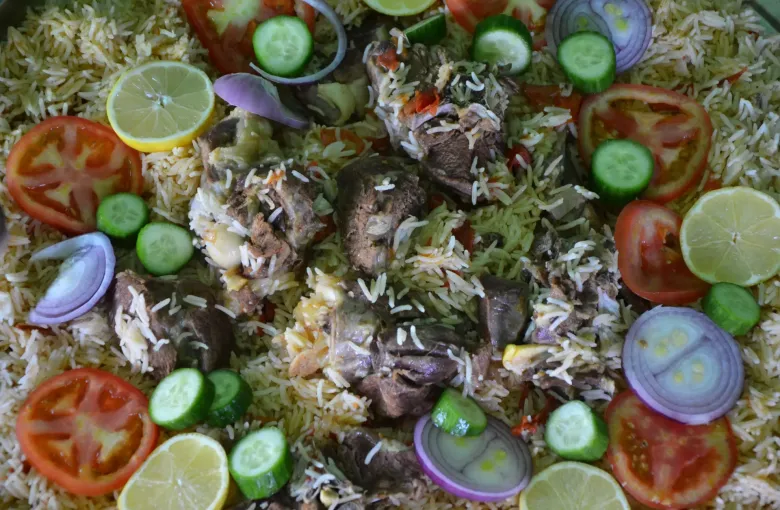
Hospitality here is a formal thing with a shape to it. Coffee and dates are offered almost immediately; accepting is the polite move, and refusing outright reads as a rebuff rather than as restraint. Use the right hand for giving, receiving and eating. Expect to be asked about your family and expect the conversation to move slowly toward business rather than starting with it.
Prayer
Five daily prayers structure the day, and some shops and offices close around them. This is not an inconvenience to work around so much as a rhythm to plan with: it is entirely predictable, and a sensible itinerary simply has a coffee in it at the right moments.
Ramadan
If your trip falls in Ramadan, eating, drinking and smoking in public during daylight are not acceptable, including for visitors. Hours shift, the evening comes alive, and the country is genuinely at its most hospitable after sunset. It is a fascinating time to travel and it requires you to adjust rather than to be accommodated.
Photography
Ask before photographing people, and take a no as final. Do not photograph military or security installations, government buildings or checkpoints. Be particularly careful about photographing women, which is the single most common way a visitor causes genuine offence here.
The laws, stated plainly
Alcohol is illegal. Same-sex relations are illegal, although the FCDO notes that legal action is uncommon. We report those as the laws they are. We do not tell anybody whether to travel on the strength of them, and we will answer a direct question directly rather than comfortably.
What this country is not
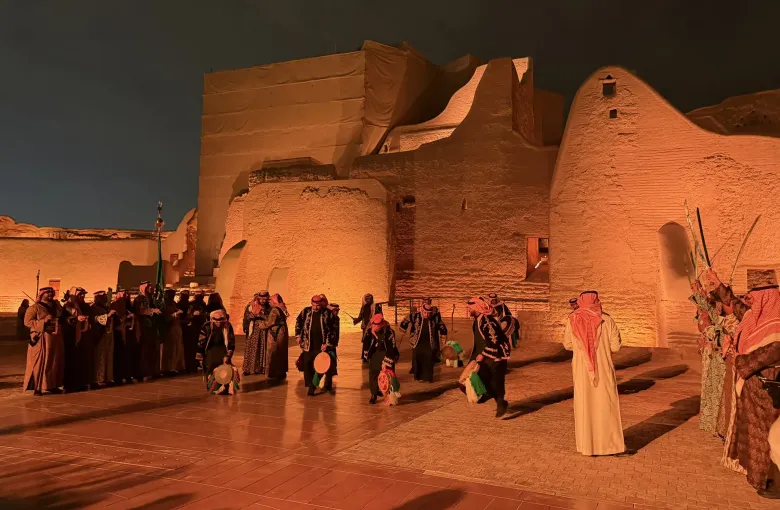
It is not a place where a visitor is expected to guess. The expectations are explicit, they are applied to residents as well as guests, and people are generally pleased rather than suspicious that you came. At-Turaif's evening ardha is a good example of what that looks like in practice: a formal ceremony performed for an audience that includes you.
See what to pack and festivals and celebrations.
Sources
- UK Foreign, Commonwealth & Development Office: Saudi Arabia safety and security: terrorism, the dress code, the alcohol ban and the law on same-sex relations. Accessed 14 September 2026.
- UK Foreign, Commonwealth & Development Office: Saudi Arabia travel advice: the FCDO advises against all travel to parts of Saudi Arabia and against all but essential travel to further parts. Accessed 14 September 2026.
- UNESCO World Heritage Centre: the inscription of the At-Turaif District in ad-Dir’iyah in 2010 under criteria (iv)(v)(vi). Accessed 14 September 2026.
Other Articles
Saudi Arabia and Diaspora Reconnection
Saudi Arabia Festivals and Celebrations