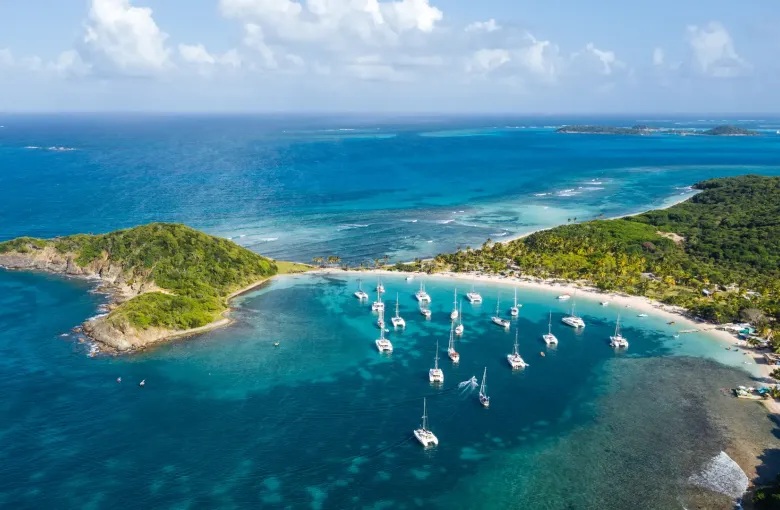
The emergency numbers, and why there is more than one.
This is the first thing to get right, and it is not the same as on the island to the north. The FCDO publishes three lines for this country:
- 911 or 999 for ambulance, fire and police;
- ambulance: 911;
- police: 999, or the landline 457 1211.
If you have traveled elsewhere in the Eastern Caribbean, do not assume one number covers everything. The health advice says plainly: in an emergency, call 911 and ask for an ambulance. For police, 999 is the number the advice gives, with a landline as a fallback. Save all three before you need them.
What the advice says about crime.
It is carried here in the source's own terms, neither softened nor inflated. The FCDO records incidents of crime including murder, armed robbery and assault, and an increase in gang-related murders involving guns.
The precautions the same page asks for are ordinary and specific: keep valuables secure and out of sight; make sure your accommodation is secure, including if you are staying on a yacht; take care when walking alone off main roads and when taking money from ATMs; use only licensed taxis; and do not carry large amounts of cash or jewelry. Leave valuables and travel documents in a safety deposit box or hotel safe where you can.
For the avoidance of doubt: the FCDO does not advise against travel to Saint Vincent and the Grenadines.
Two laws that catch visitors out.
It is illegal for anyone, including children, to dress in camouflage clothing. There is no exception for tourists and none for children, and it is the most commonly broken law on this list simply because nobody expects it.
There are also severe penalties for all drug offenses. Pack your own luggage and do not carry anything through customs for anyone else.
LGBT+ travelers.
The advice states that attitudes towards the LGBT+ community are mostly conservative throughout the Caribbean, that LGBT+ travelers may receive unwanted and negative attention when showing affection in public, and that some same-sex sexual activity is illegal. That is a legal fact about the country, and a traveler is entitled to know it before booking rather than after arriving.
In the water.
Some beaches may have strong undercurrents known as riptides, and not all beaches have lifeguards or flag warning systems. Follow any local advice. On a coastline where much of the swimming is away from a resort, asking someone who knows the beach is worth more than judging it by eye.
During carnival.
Vincy Mas takes place in early July and theft and opportunistic crime may increase during carnival. That is the reason the date appears in a safety document at all, and it travels with the date here.
Volcanic and seismic hazard.
The last explosive eruption of La Soufriere volcano on Saint Vincent was in 2021. The National Emergency Management Organization publishes what to do before a volcanic eruption and what to do during one; those pages are the authority to follow if the alert level changes while you are in the country. Separately, monitor the alert level of Kick 'em Jenny, an underwater volcano 5 miles off the coast of nearby Grenada, and keep out of maritime exclusion zones.
Health cover.
The main government hospital can cope with many types of treatment, but serious cases may need emergency evacuation. That single sentence is the argument for insurance that covers medical evacuation, not merely treatment. The FCDO's standing advice is to get appropriate travel insurance before you travel.
On prevention, the United States Centers for Disease Control and Prevention asks travelers to be up to date on all routine vaccines before every trip, and recommends hepatitis A vaccination for unvaccinated travelers one year old or older going to this country, with hepatitis B recommended for unvaccinated travelers of all ages. It also notes that dogs infected with rabies are not commonly found here, while adding the caution that matters more on a small island: rabies vaccines may only be available in larger suburban or urban medical facilities. Avoiding animal contact is better protection than counting on treatment afterwards. The UK advice asks travelers to check vaccine recommendations at least 8 weeks before the trip.
Sources
- UK Foreign, Commonwealth and Development Office: Saint Vincent and the Grenadines travel advice, getting help: that the emergency services can be reached on 911 or 999 for ambulance, fire and police; that the ambulance number is 911; and that the police can be reached on 999 or on the landline 457 1211. Accessed 21 September 2026.
- UK Foreign, Commonwealth and Development Office: Saint Vincent and the Grenadines travel advice, safety and security: that there have been incidents of crime including murder, armed robbery and assault, and an increase in gang-related murders involving guns; that visitors should keep valuables secure and out of sight, secure their accommodation including if staying on a yacht, take care walking alone off main roads and when taking money from ATMs, use only licensed taxis, and not carry large amounts of cash or jewelry; that the Vincy Mas carnival takes place in early July and that theft and opportunistic crime may increase during carnival; that there are severe penalties for all drug offenses; that it is illegal for anyone, including children, to dress in camouflage clothing; that attitudes towards the LGBT+ community are mostly conservative throughout the Caribbean and that some same-sex sexual activity is illegal; that some beaches may have strong undercurrents known as riptides and that not all beaches have lifeguards or flag warning systems; that a local temporary driving license must be obtained, that car hire companies will usually help with the process and that a valid home driving license must be shown to get it; that drivers should watch out for potholes and speed bumps, take care on minor roads where there can be very steep drops with no safety barriers, watch out for blind corners, and that taxi vans make random stops; that taxis are not metered, that there are set fares for most destinations, that the fare should be agreed in local currency with the driver before setting off and that payment can often be made in US dollars instead of East Caribbean dollars; that there was a lot of damage to tourist infrastructure on Mayreau and Union caused by Hurricane Beryl which struck the islands in July 2024, that smaller islands including the atolls of Palm Island and Petit St Vincent in Tobago Cays are also still affected, that this has affected hotel availability and other facilities including services at the airport, and that a traveler planning to visit Mayreau, Union or the smaller islands should confirm arrangements before traveling; that the last explosive eruption of La Soufriere volcano on St Vincent was in 2021; and that a traveler should monitor the alert level of the underwater volcano Kick em Jenny, located 5 miles off the coast of nearby Grenada, and keep out of maritime exclusion zones. Accessed 21 September 2026.
- UK Foreign, Commonwealth and Development Office: Saint Vincent and the Grenadines travel advice, health: that in an emergency a traveler should call 911 and ask for an ambulance; that at least 8 weeks before a trip a traveler should check the latest vaccine recommendations and where to get vaccines; that steps should be taken to avoid mosquito bites because of mosquito-borne viruses such as dengue and Zika virus; that the legal status and regulation of some medicines can differ from the country they were prescribed in; and that the main government hospital can cope with many types of treatment but serious cases may need emergency evacuation. Accessed 21 September 2026.
- United States Centers for Disease Control and Prevention: Travelers Health destination page for Saint Vincent and the Grenadines: that a traveler should be up to date on all routine vaccines before every trip; that hepatitis A vaccination is recommended for unvaccinated travelers one year old or older going to the country; that hepatitis B vaccination is recommended for unvaccinated travelers of all ages traveling to the country; that dogs infected with rabies are not commonly found in the country; and that rabies vaccines may only be available in larger suburban or urban medical facilities. Accessed 21 September 2026.
- National Emergency Management Organization, Saint Vincent and the Grenadines: the agency volcano hazard pages, which set out what to do before a volcanic eruption and what to do during a volcanic eruption, and which record the effusive eruption at La Soufriere. Accessed 21 September 2026.
Other Articles

Getting Around Saint Vincent and the Grenadines
Saint Vincent and the Grenadines Visa and Entry Requirements