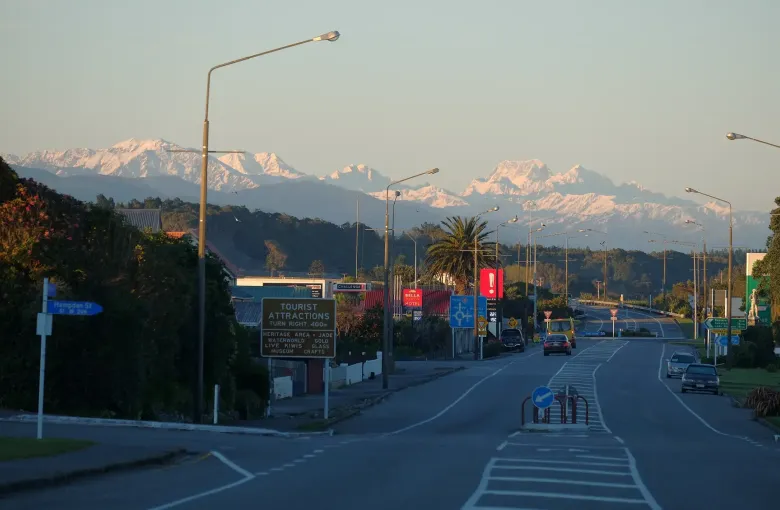
The short version.
The Department of Conservation states that Tongariro is New Zealand's oldest national park and a dual World Heritage area. Both halves of that sentence are the reason this guide exists.
It is a volcanic landscape in the middle of the North Island, it is walkable, and it carries a recognition that almost nowhere else does.
Why there are two dates.
The UNESCO World Heritage Centre record for New Zealand names Tongariro National Park with the dates 1990 and 1993. Two dates on one property is unusual and it is the substance of this page rather than a footnote.
The park was first inscribed for its natural values. It was then recognized for its cultural values as well, and the Department of Conservation records that Tongariro is a World Heritage site for its cultural values. That second recognition is what makes the property Mixed rather than Natural.
The shape of New Zealand's list makes this more significant than it first appears. The World Heritage Centre's record shows 3 properties inscribed on the World Heritage List, of which Natural 2 and Mixed 1, with 8 sites on the Tentative List. There is no purely cultural property. Tongariro is therefore the whole of New Zealand's cultural World Heritage recognition, carried by a single mixed listing.
Whose mountains these are.
The Department of Conservation writes that the mountains are sacred to Ngāti Hikairo ki Tongariro of Ngāti Tūwharetoa, and asks visitors to honor the requests of Ngāti Hikairo by staying safe and respecting their home.
That is the sentence to carry up the mountain. It is not a general appeal to respect nature. It is a named group of people asking visitors to a specific place to do two specific things, and the two are connected: being safe is part of respecting the home, because an unprepared visitor becomes somebody else's emergency.
Walking it.
The Tongariro Alpine Crossing is the best known route in the park and it is an alpine route in every month of the year. The Department publishes the conditions in which to reconsider: an average wind speed of 55 kph or greater, or a wind chill of minus 10 degrees Celsius or colder.
It also records that Manaaki Rangers greet visitors daily from November to April, and that bookings are recommended for all visitors. Between November and April there are people at the track who know what the mountain is doing that morning. Outside those months the route is open and the thresholds still apply, with nobody at the start to tell you they have been met.
The Department's general guidance asks visitors to take care of Aotearoa, and always be prepared for your trip. On this walk, preparation means a windproof and waterproof outer layer, warm layers underneath, more water than feels necessary, and a genuine willingness to turn around.
What this guide leaves out.
New Zealand has three World Heritage properties and this cluster writes about one of them. Te Wahipounamu, the South West New Zealand property inscribed in 1990, and the New Zealand Sub-Antarctic Islands, inscribed in 1998, are both left out here. That is a choice made on what the authorities publish rather than on merit: Tongariro has two detailed pages from its managing department, one of them written around the iwi whose mountains it crosses, and the other two do not have a comparable public record to write from. The Sub-Antarctic Islands are also not somewhere an ordinary itinerary can go.
Planning a visit.
Give the park more than a day if the Crossing is the goal, because the weather may take one of them. Book ahead. Check conditions on the morning rather than the week before, and treat the published thresholds as the decision rather than as an input to it. Tell us if this is the centerpiece of your trip and we will build the itinerary with a spare day in it.
Sources
- New Zealand Department of Conservation: states that Tongariro is New Zealand's oldest national park and a dual World Heritage area. Accessed 22 September 2026.
- New Zealand Department of Conservation: records that Tongariro is a World Heritage site for its cultural values, that the mountains are sacred to Ngāti Hikairo ki Tongariro of Ngāti Tūwharetoa and asks visitors to honor the requests of Ngāti Hikairo by staying safe and respecting their home, notes that Manaaki Rangers greet visitors daily from November to April and that bookings are recommended for all visitors, and gives an average wind speed of 55 kph or greater and a wind chill of minus 10 degrees Celsius or colder as conditions in which to reconsider. Accessed 22 September 2026.
- UNESCO World Heritage Centre: records 3 properties inscribed on the World Heritage List for New Zealand, of which Natural 2 and Mixed 1, with 8 sites on the Tentative List, and names Te Wahipounamu South West New Zealand inscribed 1990, the New Zealand Sub-Antarctic Islands inscribed 1998, and Tongariro National Park inscribed 1990 and 1993. Accessed 22 September 2026.
- New Zealand Department of Conservation: asks visitors to take care of Aotearoa and to always be prepared for a trip, and states that everyone who lives and travels here has a responsibility to look after it. Accessed 22 September 2026.
Other Articles

Māori Heritage and Visiting Responsibly
Culture and Etiquette in New Zealand