Start with what this page is not.
The content framework behind this cluster gives every destination a slot called diaspora reconnection. On most destinations that name is right: it holds a page for travelers with ancestral ties to a place returning to it.
Here it is wrong, and the page says so rather than quietly writing something else under the heading. Māori are tangata whenua, the people of the land. They are not a diaspora, this is not a return, and a visitor is not reconnecting with anything. The framework owns the URL; the page says what the page is.
What follows is about Māori heritage as living culture in the country where it belongs, and about what visiting it responsibly asks of you.
A request, made by a named group, about a specific place.
Almost all travel writing on this subject generalizes into advice about respect. The Department of Conservation does something better, and it is worth quoting exactly.
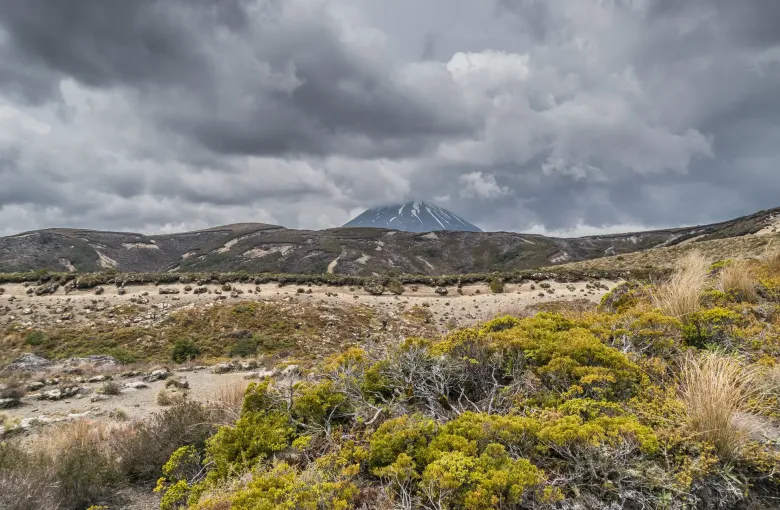
Writing about Tongariro, the Department records that the mountains are sacred to Ngāti Hikairo ki Tongariro of Ngāti Tūwharetoa, and asks visitors to honor the requests of Ngāti Hikairo by staying safe and respecting their home. It also records that Tongariro is a World Heritage site for its cultural values.
Three things are worth drawing out. The request comes from a named iwi rather than from an abstraction. It concerns particular mountains rather than the country. And what it asks for is concrete: be safe, and treat this as a home. That is a great deal more useful than a paragraph about respecting culture, because you can actually do it.
Why safety is a cultural request here.
The connection between staying safe and respecting a place is the part visitors most often read past. An unprepared walker on a sacred mountain is not only taking a personal risk. They are creating a situation that other people, including the people whose mountain it is, have to resolve.
The Department's wider guidance makes the same point about the whole country: take care of Aotearoa, and always be prepared for your trip, because everyone who lives and travels here has a responsibility to look after it. Responsibility is the operative word, and it is shared.
Meeting the culture where it is presented.
The Museum of New Zealand Te Papa Tongarewa is the national museum and holds major Māori collections. It states that entry is free for New Zealanders and people living in New Zealand, and that international visitor tickets are sold separately.
Visiting an institution that a culture has had a hand in shaping is a different act from photographing it in the street, and it is the right place to start. Guided experiences offered by iwi themselves are the other. In both cases the arrangement is that you are hosted, and the courtesies that follow from that are ordinary ones.
What this page will not do.
It does not quote or paraphrase the Treaty of Waitangi. The Treaty is the founding document of the modern country and its terms and their interpretation are contested and consequential. The obvious source for it published almost nothing readable when this cluster's sources were checked, and summarizing a constitutional document from memory is not something a travel page should do. Waitangi Treaty Grounds is where that subject belongs, and it is worth a day.
It also does not offer protocol instructions for a marae visit. Protocol varies between iwi and the right guidance comes from your hosts rather than from a page written elsewhere.
How to approach it.
Learn the name of the place you are going and who it belongs to. Take the safety request as seriously as the cultural one, because they were made together. Choose experiences run by the people whose culture it is. And tell us if this is central to your trip, so we arrange it through them rather than around them.
Sources
- New Zealand Department of Conservation: records that Tongariro is a World Heritage site for its cultural values, that the mountains are sacred to Ngāti Hikairo ki Tongariro of Ngāti Tūwharetoa and asks visitors to honor the requests of Ngāti Hikairo by staying safe and respecting their home, notes that Manaaki Rangers greet visitors daily from November to April and that bookings are recommended for all visitors, and gives an average wind speed of 55 kph or greater and a wind chill of minus 10 degrees Celsius or colder as conditions in which to reconsider. Accessed 22 September 2026.
- New Zealand Department of Conservation: asks visitors to take care of Aotearoa and to always be prepared for a trip, and states that everyone who lives and travels here has a responsibility to look after it. Accessed 22 September 2026.
- Museum of New Zealand Te Papa Tongarewa: states that museum entry is free for New Zealanders and people living in New Zealand and that international visitor tickets are sold separately. Accessed 22 September 2026.
- New Zealand Department of Conservation: states that Tongariro is New Zealand's oldest national park and a dual World Heritage area. Accessed 22 September 2026.
Other Articles
Tongariro National Park: A Visitor and Heritage Guide
Culture and Etiquette in New Zealand