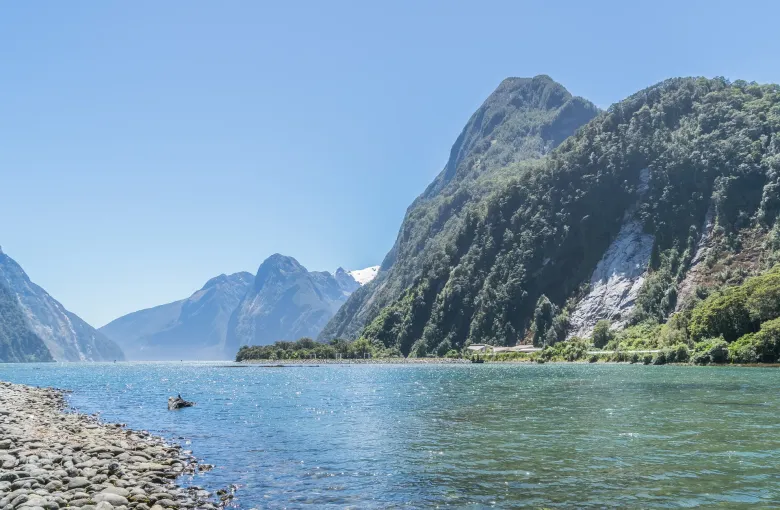
The short version.
Two narrow islands in a big ocean, with a mountain spine running most of the length of the South Island and a good deal of the North. Weather arrives off the Tasman Sea with nothing to slow it down, crosses the mountains, and is a different thing on the other side. The practical consequence is that conditions change fast and vary enormously over short distances.
That is not a warning against visiting. It is an argument for carrying a layer you do not think you need, and for treating a forecast as information about the next few hours rather than the next few days.
The two numbers worth memorizing.
The Department of Conservation publishes thresholds for the Tongariro Alpine Crossing, and they are the most useful weather figures in this entire cluster because they are decision points rather than descriptions. An average wind speed of 55 kph or greater, or a wind chill of minus 10 degrees Celsius or colder, is the condition in which to reconsider.
Hold two things about those numbers. First, they are about an exposed alpine route and they do not describe a city street. Second, they apply in every month. A summer date at sea level says very little about what a mountain saddle is doing at nine in the morning.
Preparation is the local expectation, not a personal preference.
The Department of Conservation's own guidance asks visitors to take care of Aotearoa, and to always be prepared for your trip, and states that everyone who lives and travels here has a responsibility to look after it. That is worth reading as culture rather than as boilerplate. Being unprepared in the outdoors is regarded here as something you have done to other people, because somebody comes to get you.
The hazards the safety advice attaches to landscape.
The UK Foreign, Commonwealth and Development Office records that New Zealand is in a major earthquake zone, that tsunamis can happen along the coastlines, and that there are several active volcanoes on the North Island. It also notes that highways can be narrow, winding and hilly, which is a weather fact as much as a driving one: the same road in rain, in low cloud or after a slip is a different road.
The safety guide in this cluster takes those in full, including what the advice says to do during an earthquake.
What this page will not print.
No source in this cluster's research register carries a monthly temperature or rainfall table for New Zealand, so this page does not print one. A figure from memory would be indistinguishable on the page from a checked one and impossible for you to verify. The New Zealand MetService publishes forecasts and climate summaries and is where that question belongs.
What this page can tell you is the shape of the problem: maritime, fast moving, and much more variable with altitude than with month.
How to plan around it.
Build slack into any itinerary that depends on a single good day outdoors, and put the fixed commitments in the cities. Carry a windproof layer in every season. Check the forecast the morning of an alpine walk rather than the week before, and if the published thresholds are met, treat that as the answer rather than as a challenge. Tell us which parts of the trip are weather dependent and we will build them where a bad day costs you least.
Sources
- New Zealand Department of Conservation: records that Tongariro is a World Heritage site for its cultural values, that the mountains are sacred to Ngāti Hikairo ki Tongariro of Ngāti Tūwharetoa and asks visitors to honor the requests of Ngāti Hikairo by staying safe and respecting their home, notes that Manaaki Rangers greet visitors daily from November to April and that bookings are recommended for all visitors, and gives an average wind speed of 55 kph or greater and a wind chill of minus 10 degrees Celsius or colder as conditions in which to reconsider. Accessed 22 September 2026.
- New Zealand Department of Conservation: asks visitors to take care of Aotearoa and to always be prepared for a trip, and states that everyone who lives and travels here has a responsibility to look after it. Accessed 22 September 2026.
- UK Foreign, Commonwealth and Development Office: records that New Zealand is in a major earthquake zone, that tsunamis can happen along the coastlines, that the advice in the event of an earthquake is to Drop, Cover, Hold, that the National Emergency Management Agency publishes guidance, that there are several active volcanoes on the North Island, that highways can be narrow, winding and hilly, and that a photocard driving license can be used to drive in New Zealand for up to 18 months. Accessed 22 September 2026.
Other Articles
What to Pack for New Zealand
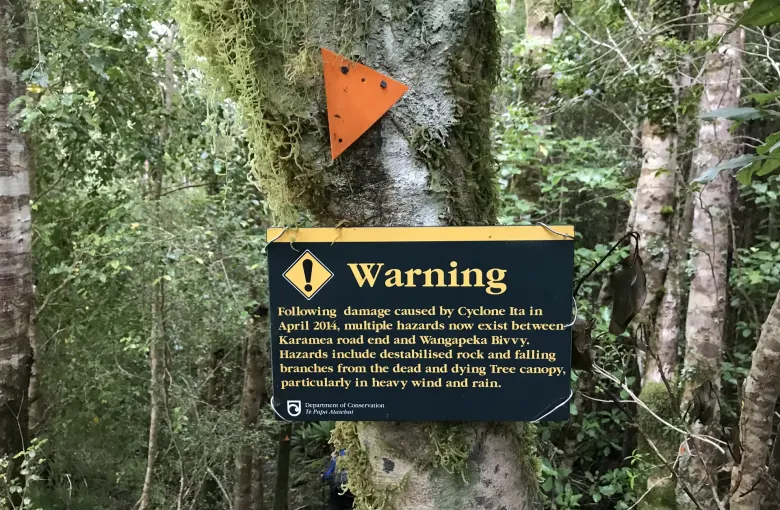
Staying Safe in New Zealand