The short version.
The emergency number in New Zealand is 111. The UK Foreign, Commonwealth and Development Office gives it for ambulance, fire and police, and its health advice puts the instruction in the plainest possible form: call 111 and ask for an ambulance.
Learn that number before you go, because the one you already know does not work here. Every other destination in this marketing region uses something different, and two of the most common alternatives are correct in countries close enough to be confusing. In New Zealand they reach nobody. It is 111.
Four words for an earthquake.
The FCDO records that New Zealand is in a major earthquake zone, and states that the advice in the event of an earthquake is to Drop, Cover, Hold. That is the whole instruction and it is worth committing to memory in exactly that order: get down, get under or beside something solid, and hold on to it until the shaking stops.
The same advice names the National Emergency Management Agency as the source of official guidance, and records that tsunamis can happen along the coastlines. The connection between the two is the part travelers miss. Strong or long shaking near the coast is itself the warning, and moving inland or uphill without waiting to be told is the response.
Volcanoes.
The FCDO records that there are several active volcanoes on the North Island. This is not an abstraction in Tongariro National Park, where the route this cluster writes about crosses volcanic terrain. Treat published alert levels and track closures as instructions rather than as opinions, because they are issued by people watching instruments.
The outdoors is where most incidents happen.
The Department of Conservation gives an average wind speed of 55 kph or greater, and a wind chill of minus 10 degrees Celsius or colder, as conditions in which to reconsider the Tongariro Alpine Crossing. It notes that Manaaki Rangers greet visitors daily from November to April, and that bookings are recommended for all visitors.
Rangers at the trailhead are a safety resource and not a formality. If somebody who has been on that mountain all season suggests today is not the day, that is the most current information available to you. The Crossing is an alpine route in every month, and preparation is what makes it reasonable rather than the season.
Roads.
The same safety advice notes that highways can be narrow, winding and hilly. Fatigue on an unfamiliar road with a gradient and frequent bends is an ordinary hazard rather than an exotic one, and it is the one most likely to affect a visitor who has planned a day that is too long.
Health and insurance.
The FCDO advises holding travel insurance for local treatment or unexpected medical evacuation, and its general advice states plainly that no travel can be guaranteed safe and that you should take out appropriate travel insurance before departure. It names Healthline for free medical advice.
On the reciprocal agreement, be precise about who it reaches. The advice states that British nationals who live in the UK and who are on a short-term visit to New Zealand are eligible for urgent healthcare treatment, and that this does not extend to routine, non-emergency medical treatment including prescriptions. If you are not a British national living in the UK, that paragraph is not about you.
New Zealand also operates a national accident compensation scheme that is frequently mentioned in connection with visitors. Its own authority published no readable text when this cluster's sources were checked, so this page does not describe what it does or does not cover. That is a gap and it is named rather than filled. Take the question to the scheme directly, and carry insurance regardless.
What to do first.
Put 111 in your phone. Learn Drop, Cover, Hold. Buy the insurance before you fly rather than after something happens. Check track and volcano status on the day. And if an itinerary we have built has a weather dependent day in it, ask us what the alternative is, because there should be one.
Sources
- UK Foreign, Commonwealth and Development Office: records that New Zealand is in a major earthquake zone, that tsunamis can happen along the coastlines, that the advice in the event of an earthquake is to Drop, Cover, Hold, that the National Emergency Management Agency publishes guidance, that there are several active volcanoes on the North Island, that highways can be narrow, winding and hilly, and that a photocard driving license can be used to drive in New Zealand for up to 18 months. Accessed 22 September 2026.
- UK Foreign, Commonwealth and Development Office: gives the emergency services number in New Zealand as 111 for ambulance, fire and police. Accessed 22 September 2026.
- UK Foreign, Commonwealth and Development Office: instructs a caller to dial 111 and ask for an ambulance, advises seeking health advice at least 8 weeks before a trip, states that British nationals who live in the UK and who are on a short-term visit to New Zealand are eligible for urgent healthcare treatment under a reciprocal agreement that does not extend to routine, non-emergency medical treatment including prescriptions, names Healthline for free medical advice, and advises holding travel insurance for local treatment or unexpected medical evacuation. Accessed 22 September 2026.
- UK Foreign, Commonwealth and Development Office: states that no travel can be guaranteed safe and advises taking out appropriate travel insurance before departure. Accessed 22 September 2026.
- New Zealand Department of Conservation: records that Tongariro is a World Heritage site for its cultural values, that the mountains are sacred to Ngāti Hikairo ki Tongariro of Ngāti Tūwharetoa and asks visitors to honor the requests of Ngāti Hikairo by staying safe and respecting their home, notes that Manaaki Rangers greet visitors daily from November to April and that bookings are recommended for all visitors, and gives an average wind speed of 55 kph or greater and a wind chill of minus 10 degrees Celsius or colder as conditions in which to reconsider. Accessed 22 September 2026.
Other Articles
Understanding New Zealand Weather
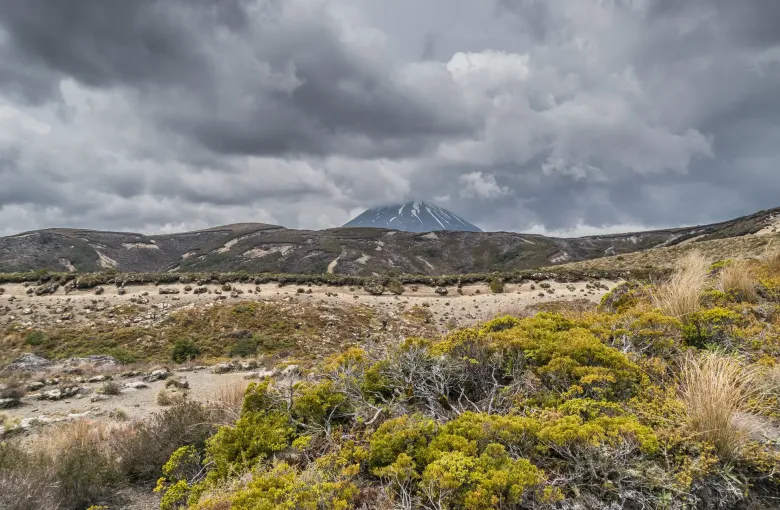
Tongariro National Park: A Visitor and Heritage Guide