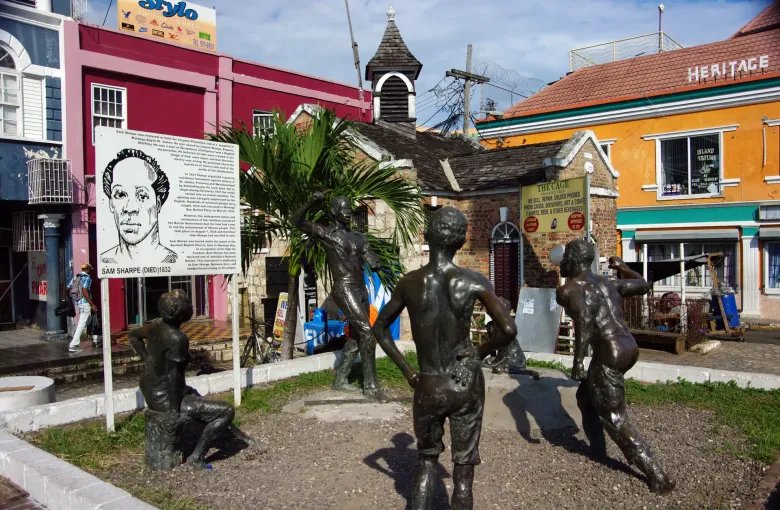
Jamaica's public calendar is built on three things: music, national commemoration, and carnival. Any of them will transform a trip that happens to coincide, and each of them fills accommodation for miles around.
⚠ This guide names no dates. Festival dates move from year to year, some are set only months in advance, and a date printed in a travel guide is the single most reliable way to send somebody to the wrong week. Confirm with the organizers before you book anything around an event.
Carnival
Jamaica's carnival season culminates in a road march, and it is a genuine spectacle: costumed bands, music trucks, and a slow moving crowd that fills a road for hours. It is participatory rather than something watched from a barrier, and joining a band means registering and paying for a costume in advance.
If you are going to watch rather than take part, plan the practicalities: roads close, taxis become difficult, the sun is relentless and the day is long. Water, sun protection and an agreed plan for getting back matter more than they sound like they should.
Emancipation and Independence
The national commemorations are the most significant dates in the Jamaican year and the most meaningful to attend. Emancipation marks the end of slavery; Independence marks the end of British rule. Together they anchor a period of parades, church services, cultural performance and family gathering.
These are national occasions rather than tourist events, and that is the reason to go. Attend respectfully, and understand that you are a guest at somebody else's commemoration.
Music
Jamaica's contribution to global music is out of all proportion to its size, and the festival calendar reflects it. Large reggae and dancehall events run at several points in the year, and alongside them is a continuous, much less formal live scene: sound systems, street dances and small venues, which is where most of the interesting listening actually happens.
Ask locally rather than searching online. The events worth going to are frequently advertised by word of mouth and by posters, and a hotel concierge or a bar owner will know what is on this week in a way that no website does.
Planning around an event
- Book accommodation and transport early. Festival weeks fill and prices rise.
- Confirm the date with the organizer, not with a travel article.
- Expect road closures and heavy traffic, and build slack into anything time sensitive.
- Check current safety advice before a large public event, since the official guidance can change at short notice.
If you would rather avoid the crowds
The same dates that draw people are the dates to avoid if you want an empty beach and a lower bill. Both are legitimate trips. What is not a good plan is arriving in the middle of one by accident, which is easily done and easily prevented by checking the calendar before booking.
Sources
- UK Foreign, Commonwealth and Development Office: Jamaica travel advice: the index to the entry, safety and health pages this cluster draws on, and the standing guidance that no travel can be guaranteed safe. Accessed 18 September 2026.
- UK Foreign, Commonwealth and Development Office: Jamaica safety and security: the record that homicide rates are high, that gang violence and shootings mostly occur in inner city areas, that "Tourist areas are not usually affected by gang-related crime and violence", the named places to be cautious in and around including Kingston, Spanish Town, Savanna-la-Mar and parts of Montego Bay, the absence of any recent history of terrorism alongside the standing note that attacks cannot be ruled out, and the government's power to impose enhanced security measures in response to outbursts of violence, including a State of Emergency or a Zone of Special Operations. Accessed 18 September 2026.
Other Articles
Jamaica Culture and Etiquette Guide
Best Time to Visit Jamaica