Jamaica is warm every month of the year, so unlike most destinations the question is not when it will be pleasant. It is which trade offs you would rather make. Four things move through the calendar independently: rainfall, visitor numbers, prices, and the Atlantic hurricane season.
The dry months
The northern winter is Jamaica's driest and busiest stretch. Rain is least likely, the sea is calm, and the north coast resorts around Montego Bay, Ocho Rios and Negril are at their fullest. This is also when prices are highest and when the things that need booking need booking earliest.
If your trip is built around the coast and you want the best odds of uninterrupted beach weather, this is the window, and you should treat it as a window you compete for rather than one you drop into.
The green months
Later in the year the island is greener, the interior is at its most spectacular, and there are fewer people everywhere. Rain in these months tends to arrive as a heavy afternoon burst rather than a full day of gray, so a morning in the Blue Mountains or on the water is usually undisturbed.
The trade off is the roads. Jamaica's interior roads climb and switchback, and heavy rain makes the unpaved sections slow and the paved ones slippery. A drive that took ninety minutes in February can take considerably longer after a downpour.
⚠ The hurricane season is a separate question from the rainy season
The Atlantic hurricane season runs through the second half of the year and overlaps the wetter months without being the same thing. Keeping the two apart matters when you plan. An ordinary wet afternoon is an inconvenience you work around. A tropical system is a reason to have flexible bookings, a way of receiving official warnings while you are there, and travel insurance that covers disruption and not only medical costs.
Most trips in these months are entirely uneventful. The point is not to avoid the season, it is to book it differently from the way you would book February.
Altitude changes the answer
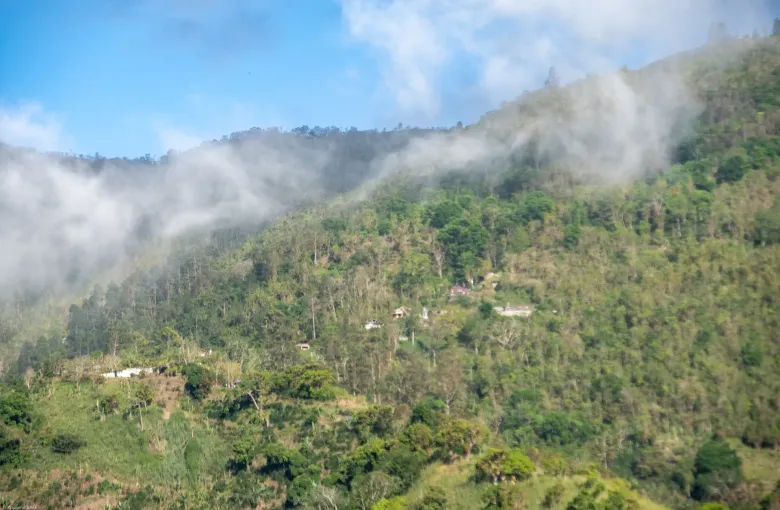
The Blue and John Crow Mountains rise steeply behind Kingston, and the temperature falls as you climb. A day that is hot on the coast can be genuinely cool at altitude, and cloud sits on the ridges for much of the year. If your trip includes the mountains, pack for two climates rather than one, whatever month you choose.
Choosing
- Coast, calm sea, lowest chance of rain. The dry winter months, booked early.
- Green landscape, fewer people, lower prices. The summer and autumn months, booked flexibly.
- Mountains and hiking. Drier months for the trails, and warm layers in any month.
Sources
- UK Foreign, Commonwealth and Development Office: Jamaica travel advice: the index to the entry, safety and health pages this cluster draws on, and the standing guidance that no travel can be guaranteed safe. Accessed 18 September 2026.
- UNESCO World Heritage Centre: Blue and John Crow Mountains, Date of Inscription 2015, a mixed cultural and natural property in eastern Jamaica. Accessed 18 September 2026.
Other Articles
Jamaica Weather Guide
Blue and John Crow Mountains: Visitor and Heritage Guide