Jamaica is a destination and it is also, for a great many people, an origin. Visitors of Jamaican descent arrive to find a specific parish, a family name or a church register. Visitors tracing the wider history of the Atlantic slave trade arrive to find the places where it happened. Neither trip is well served by an itinerary built around beaches.
Sam Sharpe Square, Montego Bay
The square at the center of Montego Bay is named for Samuel Sharpe, a National Hero of Jamaica, who led the rebellion of enslaved people that began in December 1831 and who was executed in 1832. A monument to him stands in the square.
Beside it stands the Cage, a small brick building used to hold enslaved people and others detained in the town. It is unremarkable to look at and that is part of its effect: a structure the size of a shed, in the middle of a busy modern square, with a plaque explaining what it was.
The Maroons
Jamaica's Maroon communities were formed by people who escaped enslavement and established free settlements in the island's interior, holding their independence through sustained conflict. Their descendants live in those communities today, with their own traditions, leadership and relationship to the Jamaican state.
⚠ These are living communities, not heritage attractions. Visits happen, and they happen properly when they are arranged in advance and on the community's terms, with a guide the community recognizes. Turning up to look around is not appropriate.
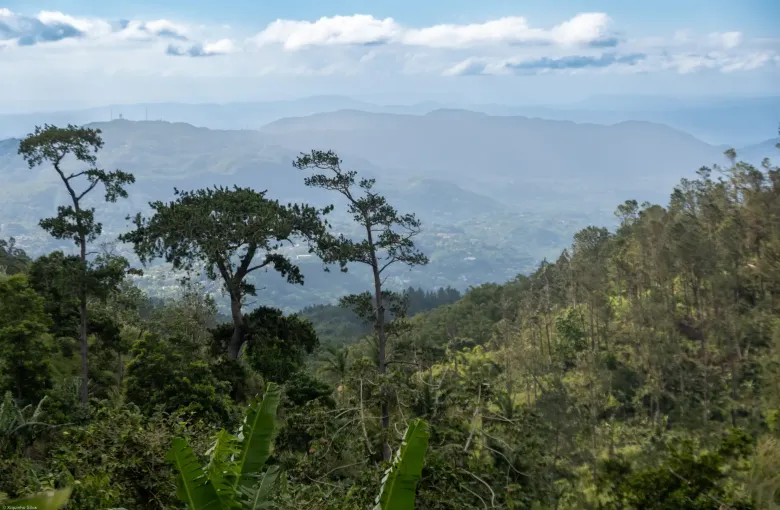
The Blue and John Crow Mountains, inscribed on the World Heritage List in 2015, were inscribed as a mixed property precisely because the landscape carries that history as well as its biodiversity. The mountains were refuge, and the cultural significance is not separable from the terrain.
Port Royal
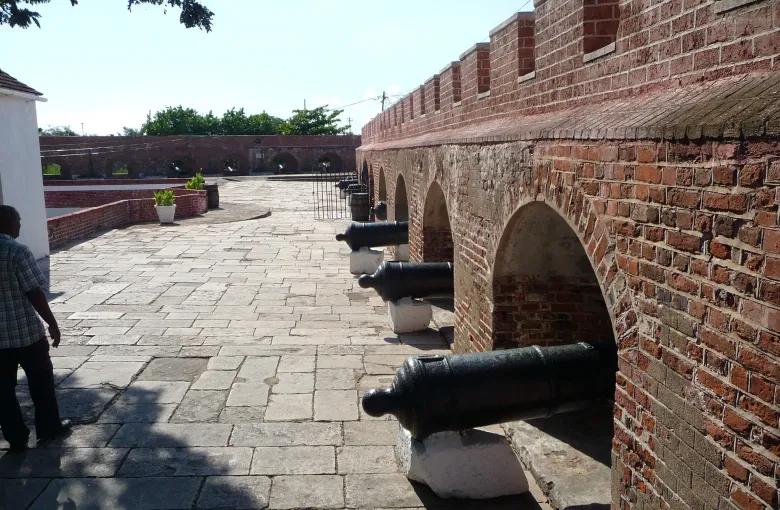
Port Royal, at the mouth of Kingston Harbour, was one of the richest and most notorious ports of the seventeenth century Caribbean, built on privateering and on the trade that moved through it. Most of the seventeenth century town is beneath the water after the earthquake of 1692, and it was inscribed on the World Heritage List in 2025 as the Archaeological Ensemble of 17th Century Port Royal.
It is worth visiting for what it explains about how wealth moved through this region, and about who paid for it.
Tracing a family
Jamaica's records are better than many visitors expect. Parish registers, civil registration and church records survive in quantity, and the island's archives and parish churches are used to inquiries from abroad.
Practical advice that applies to almost everyone who tries this:
- Start before you travel. Write ahead, and arrive with names, approximate dates and a parish rather than hoping to begin from nothing.
- Allow far more time than you think for a single record office.
- Talk to people. In small communities, the oldest residents frequently know more about local families than any index does.
- Be prepared for gaps, and for records that use the names of enslavers rather than of families. That absence is itself the history.
Traveling to sites of memory
These places are not photo opportunities and several of them are places where people died. Go quietly, read the interpretation, ask before photographing anyone, and give yourself somewhere to go afterwards that is not another site. Emotional preparation is a real part of planning this kind of trip, particularly for travelers whose own family history is in it.
Sources
- UNESCO World Heritage Centre: Blue and John Crow Mountains, Date of Inscription 2015, a mixed cultural and natural property in eastern Jamaica. Accessed 18 September 2026.
- UNESCO World Heritage Centre: Port Royal, Date of Inscription 2025, inscribed as The Archaeological Ensemble of 17th Century Port Royal, a town at the mouth of Kingston Harbour in southeastern Jamaica. Accessed 18 September 2026.
- UNESCO World Heritage Centre: Jamaica States Party record: the country's inscribed properties on the World Heritage List. Accessed 18 September 2026.
Other Articles
Port Royal: Visitor and Heritage Guide
Jamaica Culture and Etiquette Guide