Jamaican cooking travels better than almost any other Caribbean cuisine, which is exactly why it is worth eating at home. What reaches a restaurant in London or New York is a narrow selection, usually turned down in heat and simplified in technique.
The national dish
Ackee and saltfish is the one to start with. Ackee is a fruit whose cooked flesh is soft, pale and faintly buttery, and cooked with salted cod, onion, peppers and thyme it looks remarkably like scrambled egg and tastes nothing like it. It is a breakfast dish, and it usually arrives alongside fried dumpling, boiled green banana, callaloo or breadfruit.
⚠ Ackee has to be prepared correctly, and it is. This is not a reason for anxiety, it is a reason to eat it where people have been cooking it all their lives rather than experimenting with it at home.
Jerk
Jerk is a method before it is a flavor: seasoning built on scotch bonnet and pimento, and slow smoking over pimento wood. Done properly it is smoky and complex, and the heat sits underneath rather than on top.
The best jerk is usually not in a restaurant. It is at a roadside pan or a jerk center, sold by weight, chopped through the bone and handed over with festival, hard dough bread or breadfruit. Follow the smoke and the line.
Patties
The patty is the everyday food of Jamaica: a turmeric colored flaky pastry around a spiced filling, eaten standing up, at any hour. Beef is the standard, chicken and vegetable are everywhere, and a patty inside coco bread is the cheap and entirely correct way to eat one.
What else to look for
- Curry goat, slow cooked and served with rice and peas.
- Rice and peas, made with coconut milk and kidney beans, the standard accompaniment to almost everything.
- Escovitch fish, fried whole and dressed with vinegar, onion and hot pepper.
- Brown stew chicken, and its fish equivalent.
- Festival, a slightly sweet fried dumpling that belongs with jerk and fish.
- Bammy, a flatbread made from cassava, usually served with fish.
- Soursop, June plum, naseberry and otaheite apple, at markets and juice stands.
Blue Mountain coffee
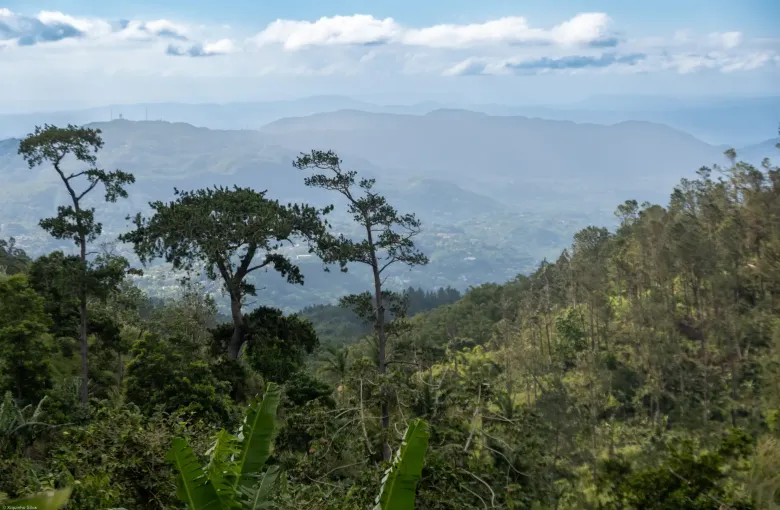
The coffee grown on the slopes of the Blue Mountains behind Kingston is among the most expensive in the world, and the mountains it comes from are the same ones inscribed on the World Heritage List in 2015. It is grown high, picked selectively and processed carefully, and it is mild rather than intense, which surprises people expecting something powerful for the price.
Buy it from a roaster or an estate rather than from an airport shelf, and check the packaging says Jamaica Blue Mountain rather than a blend.
Eating beyond the resort
All inclusive hotels serve a version of Jamaican food that is real but narrow. The gap between that and a cook shop, a jerk pan or a market stall is the gap between knowing of a cuisine and eating it. Ask staff where they eat, go at the time they tell you, and expect to pay a fraction of what the same meal costs inside the gate.
Eat where there is a line of local customers and a fast turnover, drink bottled or filtered water, and treat street food the way you would anywhere: busy stalls, hot food, made in front of you.
Sources
- UNESCO World Heritage Centre: Blue and John Crow Mountains, Date of Inscription 2015, a mixed cultural and natural property in eastern Jamaica. Accessed 18 September 2026.
- UK Foreign, Commonwealth and Development Office: Jamaica travel advice: the index to the entry, safety and health pages this cluster draws on, and the standing guidance that no travel can be guaranteed safe. Accessed 18 September 2026.
Other Articles
Jamaica Culture and Etiquette Guide
Blue and John Crow Mountains: Visitor and Heritage Guide