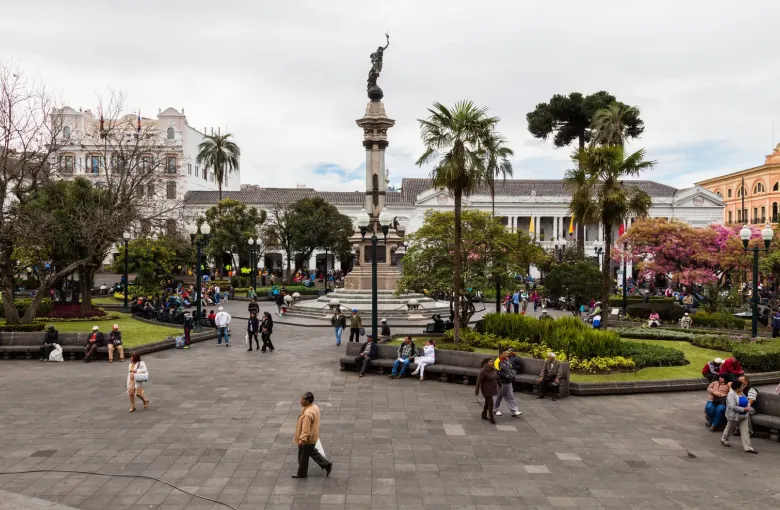
The Galapagos Islands were inscribed on the World Heritage List in 1978, in the first group of properties the List ever contained, and they were extended in 2001 to take in the marine reserve around them. They carry World Heritage reference number 1. Quito carries number two. Ecuador is the only country on earth that can say that, and almost nobody knows it.
What the islands are
An archipelago of volcanic islands about a thousand kilometers off the mainland, formed over a hotspot and carried slowly eastward, so that the western islands are young and still erupting and the eastern ones are old and worn down. The isolation is the whole story. Species arrived rarely, by air or on rafts of vegetation, and then diverged island by island in ways that are visible to a visitor rather than only to a specialist.
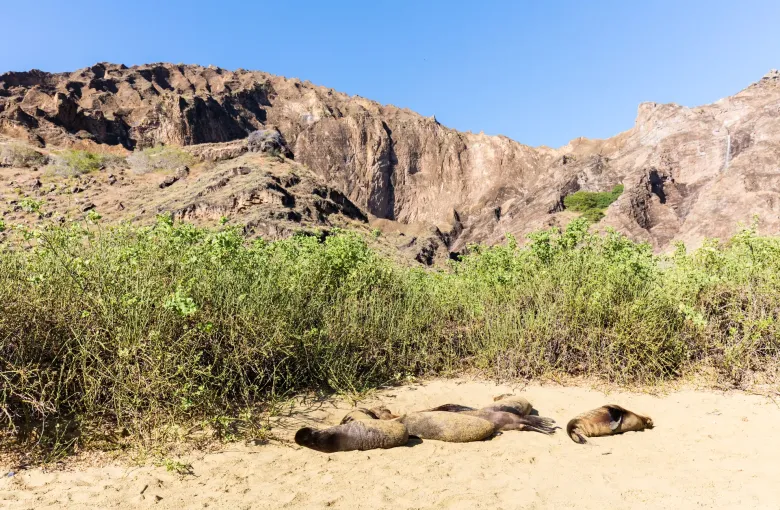
Marine iguanas, the only sea-going lizards anywhere, feed on algae in cold water and then haul out to warm up. Giant tortoises differ in shell shape between islands according to what they have to reach to eat. Flightless cormorants gave up flying because nothing on the islands hunted them. Sea lions, blue-footed boobies, frigatebirds and Galapagos penguins, which live further north than any other penguin, are all routine sightings rather than lucky ones.
⚠ How you get there, and why the routing matters
Flights leave from Quito and from Guayaquil, and most Quito departures stop in Guayaquil on the way. That puts a large share of Galapagos visitors through a city in a province the cited advisory advises against all but essential travel to.
The exemption is precise and it is in your favor: it covers airside transit within Guayaquil Airport. Connecting through without leaving the secure area is exempt. An overnight in the city is not, and if your schedule needs one, the honest answer is to change the schedule. The travel safety guide sets out both instruments in full.
The islands themselves are in no restricted area at all.
How a visit is organized
Two shapes, and they suit different people.
- A live-aboard boat. You sleep on the water and wake somewhere new, which is the only way to reach the outer islands. Itineraries are fixed in advance because the park allocates routes, so you choose the boat by where it goes as much as by what it is like.
- Island-based. You stay in a town on Santa Cruz, San Cristobal or Isabela and take day boats out. Cheaper, more flexible, more time on land, and a smaller radius.
Either way a licensed naturalist guide accompanies every visitor site. That is a park rule rather than an upsell, and the guiding is genuinely good.
The rules, which are not decorative
- Stay on the marked trail and within the group. The trails exist to keep feet off nesting ground.
- Keep two meters from any animal. They will not move, so it falls to you.
- No food, no flash, nothing taken away, nothing left behind. Biosecurity checks on departure and between islands are real and are enforced.
Two practical facts that change a plan
⚠ First, the cited health source records that medical facilities on the islands are limited and that insurance should include air ambulance evacuation. Check the policy, not the brochure.
Second, the same source records no malaria transmission on the Galapagos Islands and no yellow fever recommendation for them, because the vaccine recommendation applies below 2,300 m east of the Andes and the islands are neither. Prophylaxis is not part of a Galapagos trip.
Park entry fees and a transit control card are payable and are separate from the flight. Your operator will handle both; the money guide covers what to carry.
Sources
- UNESCO World Heritage Centre: Galapagos Islands, inscribed 1978 and extended in 2001, carrying World Heritage reference number 1 as one of the first properties ever placed on the List. Accessed 17 September 2026.
- UNESCO World Heritage Centre: Ecuador States Party record: five properties inscribed on the World Heritage List, three cultural and two natural, together with a tentative list of fifteen further sites. Accessed 17 September 2026.
- Centers for Disease Control and Prevention: Ecuador traveler health: yellow fever vaccine recommended for travelers aged nine months and over going below 2,300 m east of the Andes in Morona-Santiago, Napo, Orellana, Pastaza, Sucumbios, Tungurahua and Zamora-Chinchipe, generally not recommended west of the Andes and not recommended above 2,300 m; malaria transmission below 1,500 m in Cotopaxi, Esmeraldas, Morona-Santiago, Orellana, Pastaza and Sucumbios with rare cases below 1,500 m elsewhere, no transmission in the cities of Guayaquil or Quito, and no transmission on the Galapagos Islands. Accessed 17 September 2026.
- UK Foreign, Commonwealth & Development Office: Ecuador health: the emergency medical number 911, the limited medical facilities in the Galapagos Islands, and the advice that travel insurance should include air ambulance evacuation. Accessed 17 September 2026.
- UK Foreign, Commonwealth & Development Office: Ecuador regional risks: the Coastal Region provinces the FCDO advises against all but essential travel to, the exemption for airside transit within Guayaquil Airport in Guayas province, the twenty kilometer Colombian border strip with its named exceptions in Carchi province, and the note that Esmeraldas city and San Lorenzo both sit inside that strip. Accessed 17 September 2026.
Other Articles
Best Time to Visit Ecuador

What to Pack for Ecuador