Ecuador legislates well on disability and delivers unevenly, and the gap between the two is where a trip succeeds or fails. What follows is written to be useful rather than encouraging.
⚠ Altitude is an access question before anything else
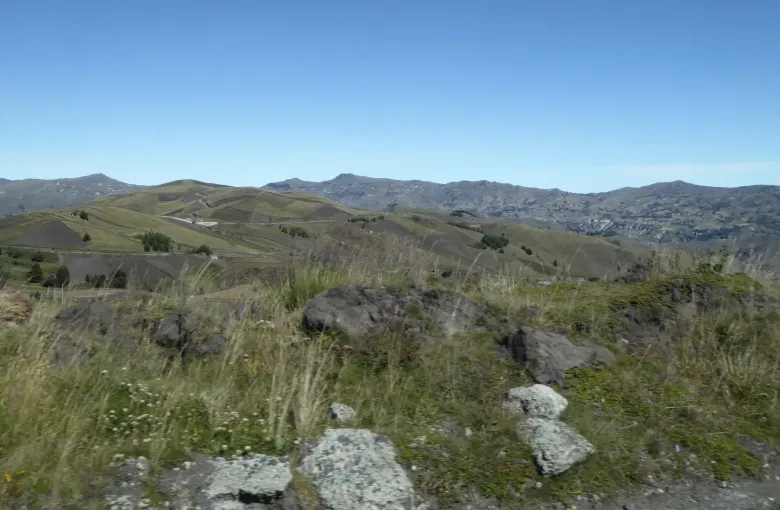
Quito sits at about 2,850 m and much of the country's sightseeing is higher. Thin air affects anyone with a cardiac or respiratory condition, and it compounds the effort of moving on uneven ground. If you use a manual chair, the gradient and the altitude together will cost more than either alone.
Altitude sickness is a real risk in Ecuador. Acclimatize before you go higher, never during. Discuss the itinerary with your own clinician well before departure; this page publishes no medication and no dose. The emergency medical number is 911, and one number covers police, fire and ambulance.
What the terrain is actually like
- Quito's historic center. Cobbled, steep and often without dropped curbs. The squares themselves are level and pleasant; the streets between them are not. The modern north of the city is far easier than the old town.
- Cuenca. The most accessible of the colonial cities by some distance. The grid is flat inside the old town, the paving is better maintained and the distances are short. If one Ecuadorian city is going to work, it is this one.
- Otavalo and the market towns. Uneven, crowded on market day, and worth doing early in the morning when there is room to move.
- Amazon lodges. Reached by boat and built on boardwalks. A few have thought about access seriously; most have not. Ask for photographs of the actual walkways.
The Galapagos
The islands are more accessible than most visitors assume and less than the brochures imply. Several larger vessels have accessible cabins and lifts, and a number of operators run wheelchair-adapted trips with hoists for water entry. The limiting factor is the landing: a wet landing means stepping off a small inflatable into surf, and a dry landing means a jetty and a step. Ask, per site, which kind each one is.
⚠ The cited source records that medical facilities on the islands are limited and that insurance should include air ambulance evacuation. For a traveler with a medical condition this is the single most important line in the policy.
Transport
- Accessible taxis are scarce. Book through a specialist operator rather than hoping.
- Intercity buses are not accessible in any systematic way. Drivers and other passengers will help willingly and enthusiastically, which is not the same as a ramp.
- Quito's metro is the newest transport in the country and was built with step-free access.
- Internal flights are short and the aircraft are small. Confirm assistance at both ends, and confirm that the aircraft type can take a powered chair.
Questions worth asking before you book
- Is the entrance step free, and how many steps are there to the room and to the restaurant?
- What is the door width, and is there a roll-in shower or a bath?
- Is there a lift, and does it run during a power cut?
- For the islands, is every landing on this itinerary dry, and what is the transfer procedure?
- Can the operator send photographs rather than a description? An accessible room means different things to different people and a photograph settles it.
Traveling with a group
A group with mixed mobility does better in Ecuador with a base and day trips than with a moving itinerary. Cuenca and the Quito modern north both work well as bases. LABUSA Travel can build the trip around the pace rather than the map; the planning page is the place to start that conversation.
Sources
- UK Foreign, Commonwealth & Development Office: Ecuador health: the emergency medical number 911, the limited medical facilities in the Galapagos Islands, and the advice that travel insurance should include air ambulance evacuation. Accessed 17 September 2026.
- UK Foreign, Commonwealth & Development Office: Ecuador travel advice: the standing warning that the FCDO advises against all but essential travel to parts of Ecuador, the Coastal Region province list, the twenty kilometer strip along the Colombian border, and the state of emergency declared on 15 September 2026 for sixty days in eight provinces including Pichincha. Accessed 17 September 2026.
- Centers for Disease Control and Prevention: Ecuador traveler health: yellow fever vaccine recommended for travelers aged nine months and over going below 2,300 m east of the Andes in Morona-Santiago, Napo, Orellana, Pastaza, Sucumbios, Tungurahua and Zamora-Chinchipe, generally not recommended west of the Andes and not recommended above 2,300 m; malaria transmission below 1,500 m in Cotopaxi, Esmeraldas, Morona-Santiago, Orellana, Pastaza and Sucumbios with rare cases below 1,500 m elsewhere, no transmission in the cities of Guayaquil or Quito, and no transmission on the Galapagos Islands. Accessed 17 September 2026.
Other Articles
Ecuador for Senior Travelers
The City of Quito