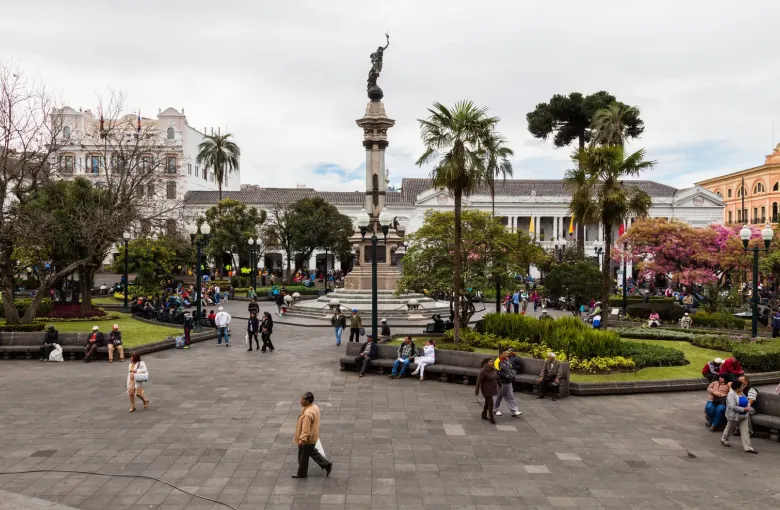
Ecuador is one of the better South American destinations for an older traveler, for a reason that has nothing to do with infrastructure: the distances are short. You can see a great deal without long overland days, and the country rewards staying put more than it rewards covering ground.
⚠ Altitude sets the pace, and it is not negotiable
Quito at about 2,850 m is higher than almost anywhere most North American visitors have slept. Altitude sickness is a real risk in Ecuador, and Quito is where most visitors meet it first. Acclimatize before you go higher, never during.
- Give the first two days to Quito or Cuenca with nothing booked.
- Sleep low and visit high, rather than the other way round.
- Leave the cable car, the volcano viewpoints and anything above 3,500 m until the end of the first week.
- Drink more water than feels necessary and go easy on alcohol for the first few days.
Talk to your own clinician several weeks before departure, particularly about any cardiac or respiratory condition and about how altitude interacts with your regular medication. This page publishes no medication and no dose. Carry everything you take in original labeled packaging with a copy of the prescription, in your hand luggage.
The statutory discounts, which are real
Ecuadorian law gives people aged sixty five and over substantial reductions on domestic transport, on cultural admissions and on some utilities, and in practice those benefits are often extended to foreign visitors who can show a passport. It is not universal and it is not guaranteed, but it is asked for far less often than it is granted. It is worth asking at a bus terminal, a museum desk or an airline counter.
Healthcare
Private clinics in Quito, Guayaquil and Cuenca are good and are used by the large North American retiree community that has settled in Cuenca and the Cotopaxi valley. Outside the cities, provision thins quickly. The emergency medical number is 911.
⚠ Facilities in the Galapagos are limited and the cited source says travel insurance should include air ambulance evacuation. On a trip that spends days several hundred kilometers offshore, confirm that your policy carries it, that it covers any pre-existing condition you have declared, and that the declared age limit is above yours.
An itinerary that works
- Quito, four nights, walking the historic center slowly and using taxis on the hills.
- Otavalo for a market day, as a day trip rather than a move.
- Cuenca, four nights. Flat, handsome, and the easiest walking in the country.
- The Galapagos, on a land-based itinerary with day boats rather than a live-aboard, unless you are confident on water.
- The Amazon only if the lodge transfer is short and the boardwalks are confirmed.
Small things that make a difference
- Ecuadorians are courteous to older visitors immediately and unforcedly. Ask for help; it is given readily.
- Lunch is the large meal and is served early. Plan around it rather than against it.
- Build a rest day into every week. At this altitude it is not indulgence, it is maintenance.
- Book ground-floor rooms and confirm lifts. Colonial buildings are beautiful and are full of stairs.
The accessibility guide covers terrain in more detail, and LABUSA Travel can pace a group itinerary to suit; start at the planning page.
Sources
- UK Foreign, Commonwealth & Development Office: Ecuador health: the emergency medical number 911, the limited medical facilities in the Galapagos Islands, and the advice that travel insurance should include air ambulance evacuation. Accessed 17 September 2026.
- UK Foreign, Commonwealth & Development Office: Ecuador travel advice: the standing warning that the FCDO advises against all but essential travel to parts of Ecuador, the Coastal Region province list, the twenty kilometer strip along the Colombian border, and the state of emergency declared on 15 September 2026 for sixty days in eight provinces including Pichincha. Accessed 17 September 2026.
- Centers for Disease Control and Prevention: Ecuador traveler health: yellow fever vaccine recommended for travelers aged nine months and over going below 2,300 m east of the Andes in Morona-Santiago, Napo, Orellana, Pastaza, Sucumbios, Tungurahua and Zamora-Chinchipe, generally not recommended west of the Andes and not recommended above 2,300 m; malaria transmission below 1,500 m in Cotopaxi, Esmeraldas, Morona-Santiago, Orellana, Pastaza and Sucumbios with rare cases below 1,500 m elsewhere, no transmission in the cities of Guayaquil or Quito, and no transmission on the Galapagos Islands. Accessed 17 September 2026.
Other Articles
Accessible Travel in Ecuador
Getting Around Ecuador