The quick answer
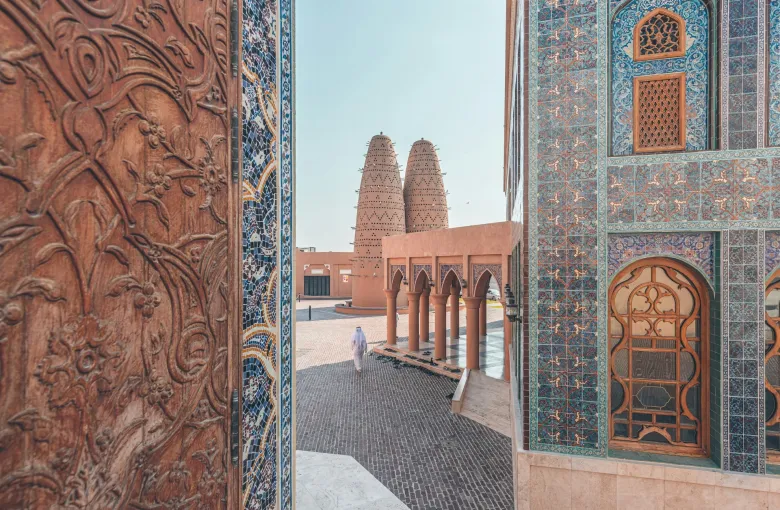
Souq Waqif is Doha's old market, and it is the most enjoyable place in the city. Go in the evening, when the heat has gone and the whole population seems to be there, and give it several hours rather than an hour.
History, honestly told
There has been a market on this site for a very long time: waqif means standing, and traders stood to sell to Bedouin who came in to trade livestock and goods where the wadi met the sea. It was the commercial heart of Doha before oil.
By the late twentieth century it had decayed badly and much of it had been rebuilt in concrete. In the 2000s Qatar undertook a major restoration: later additions were removed, surviving buildings were repaired with traditional mud render, exposed timber and gypsum, and the newer parts were rebuilt in that style. So a good deal of what you walk through is a careful reconstruction rather than an ancient building, and that is worth knowing rather than glossing over. What matters is that it is not a stage set: this is a working market that Qataris use.
What you will see
- The spice and textile alleys, where the smell arrives before you do.
- The gold souq, sold by weight against the daily price plus workmanship.
- The falcon souq, which is the extraordinary part. Falconry is central to Gulf culture, the birds are enormously valuable, and there is a falcon hospital nearby. Ask before photographing a bird or its owner.
- The animal market, which some visitors find uncomfortable; it is part of the place.
- The horse stables of the Emiri guard, whose Arabians are sometimes led out.
- The restaurant terraces, which are where Doha eats out.
⚠ It is not a World Heritage Site
Souq Waqif is not inscribed on the UNESCO World Heritage List. Qatar has exactly one inscribed property, Al Zubarah Archaeological Site, a pearling and trading town on the northwest coast roughly a hundred kilometers from Doha, inscribed in 2013. If World Heritage is what you are after, that is the day trip, and it is a very different and much quieter experience.
Visiting
Free and always open, with individual shops keeping their own hours; many close in the afternoon and reopen in the evening. The Metro serves it. Bargaining is expected in the smaller stalls and is friendly. Accept the tea if it is offered.
Go twice if you can: once in the evening for the atmosphere, and once in the morning for the falcon souq and the animal market, when the trade rather than the tourism is happening.
Visiting respectfully
Ask before photographing people, and particularly before photographing women or falconers with their birds. Dress as you would anywhere in public here. Remember that the alleys are somebody's workplace, and step aside for the handcarts. And if you are offered hospitality by a shopkeeper, accepting a cup of tea costs you ten minutes and is the best part of the visit.
Planning with LABUSA Travel
We will time your Souq Waqif visit properly and, if you want it, arrange the Al Zubarah day trip that most itineraries leave out.
Sources
- Visit Qatar: the national tourism authority, including entry guidance, attractions and seasonal events. Accessed 11 August 2026.
- UK Foreign, Commonwealth & Development Office: Qatar travel advice, including local laws, customs and entry requirements. Accessed 11 August 2026.
Other Articles
Best Time to Visit Doha
Doha Packing List