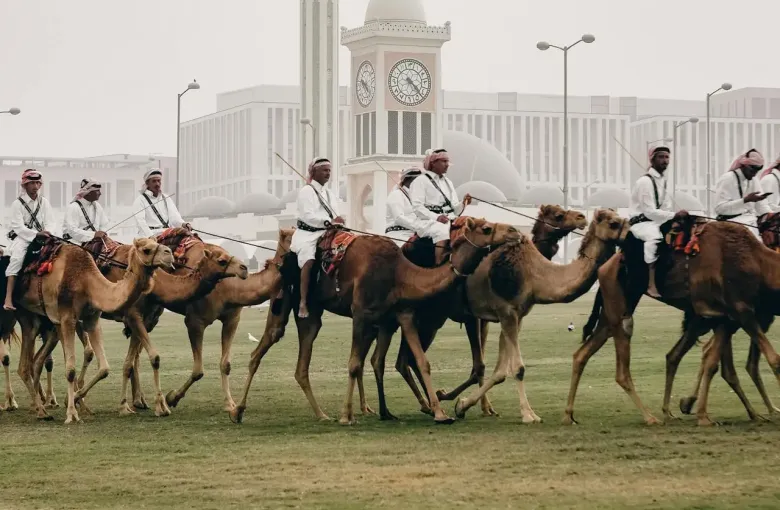
What this page is
The framework item this page fills is about diaspora and reconnection, and in the Gulf that means something different from what it means in West Africa or Italy. Qatar is not a place people left. It is a place people came to, in enormous numbers, within living memory.
Qatari nationals are a minority in their own country, and by a very wide margin. The overwhelming majority of the people you will meet in Doha, in the hotel, the taxi, the restaurant, the museum and the shop, are not Qatari. Understanding that is the single most useful thing a visitor can carry around this city.
Who is here
- South Asians form the largest group by far: Indians, Nepalis, Bangladeshis, Pakistanis and Sri Lankans, in construction, services, retail, transport, hospitality and the professions.
- Filipinos, in hospitality, healthcare, retail and domestic work.
- Other Arabs, from Egypt, Jordan, Lebanon, Syria, Sudan and Palestine, many in teaching, medicine, engineering and media.
- Africans, from Kenya, Uganda, Ethiopia, Ghana, Nigeria and elsewhere.
- Iranians and Turks, with long trading histories on this coast.
- Western expatriates, a small and visible minority in energy, finance, education and sport.
This is why the food is what it is, why English works everywhere, and why Doha feels simultaneously conservative and extremely international.
Labor, stated plainly
Much of this migration is temporary contract work, and conditions for low-paid migrant workers in Qatar have been the subject of sustained international scrutiny, particularly around construction. Qatar has made legal changes in recent years, including to the sponsorship system and to a minimum wage, and international bodies and rights organizations continue to assess how far practice has followed law.
This page states no figure and settles no argument, because both are contested and a travel guide is not the place to adjudicate them. What a visitor can reasonably do is know that the question exists, read a current source rather than a decade-old one, and treat every person they deal with as a person rather than as service.
Older connections
Trade across this water is ancient, and so is the movement of people with it. Dhows carried goods and people between the Gulf, East Africa, India and Persia for centuries, and that included the Indian Ocean slave trade, whose descendants form part of the population of every Gulf state including this one. The National Museum touches on the pearling economy that all of this served. It is a quieter and less-told history than the Atlantic one, and it is part of the fabric here.
For Black and Muslim travelers
Doha is a comfortable city for Black travelers by most accounts, in a region where that is not uniformly true, and Black professionals, students and visitors are an unremarkable part of daily life. For Muslim travelers it is straightforward in the way only a Muslim-majority country is: prayer spaces everywhere, halal by default, and the rhythm of the day built around the call to prayer.
For everyone, the practical advice is the same and it is not complicated. Be courteous to the person serving you. Learn where they are from and ask about it, which people are almost always pleased to be asked. Eat in their restaurants. And do not mistake the polished surface of the city for the whole of it.
Planning with LABUSA Travel
We build Doha itineraries that include the city people actually live in, not only the one on the postcards.
Sources
- Visit Qatar: the national tourism authority, including entry guidance, attractions and seasonal events. Accessed 11 August 2026.
- UK Foreign, Commonwealth & Development Office: Qatar travel advice, including local laws, customs and entry requirements. Accessed 11 August 2026.
- US Department of State: Qatar International Travel Information and the current travel advisory. Accessed 11 August 2026.
Other Articles
National Museum of Qatar: A Visitor Guide
Doha Culture and Etiquette