A country, not a colony, and the difference is constitutional.
Get this right and much else follows. The Government of the Netherlands states that each country within the Kingdom has its own government, and that Aruba, Curaçao and St Maarten each have their own Governor, who represent the King in their respective governments.
The office is defined tightly. The Governor is appointed by the King for six years, after which he or she may be reappointed for one more term, which means a Governor can serve for a maximum of 12 years. And the Governor has no ministerial responsibility and does not participate in the day-to-day business of the government.
Above that sits a shared layer: Curaçao has a Minister Plenipotentiary in The Hague who, with the Dutch ministers, makes up the Council of Ministers for the Kingdom. So this is a country with its own government and its own parliament, inside a kingdom it shares. It is not a dependency, not a colony and not part of the Netherlands Antilles, which no longer exists.
For a visitor the practical upshot is simple: do not treat the island as a piece of Europe that happens to be warm, and do not assume a Dutch rule applies here. Its entry rules are its own, as the visa guide sets out.
Papiamentu.
The island's own language is a creole built from Portuguese, Spanish, Dutch, West African languages and Arawak, and it is spoken across daily life rather than preserved as heritage. Dutch is official, English and Spanish are widely used, and Papiamentu is the one people actually live in.
Learning to greet in it is the single highest-return thing a visitor can do. Bon bini is welcome; bon dia, bon tardi and bon nochi carry a day. Nobody expects fluency. The attempt is what is noticed.
This paragraph is description, not citation. No source in this cluster's register documents Papiamentu, so nothing here is offered as a sourced linguistic fact.
What the built environment is telling you.
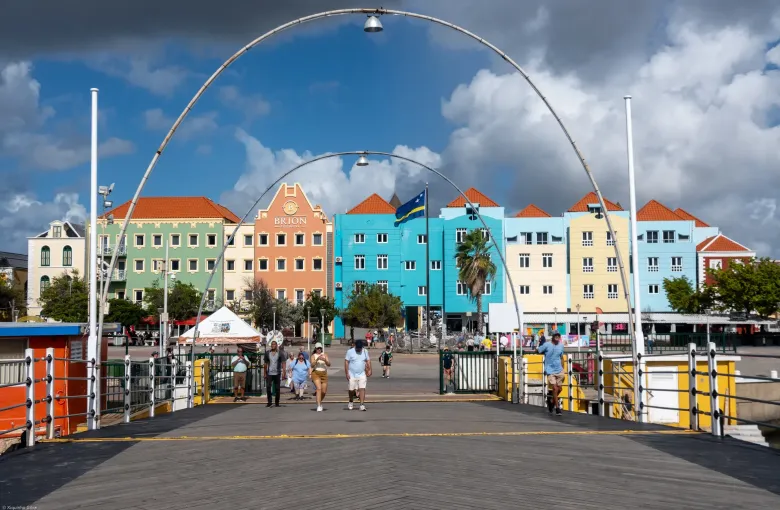
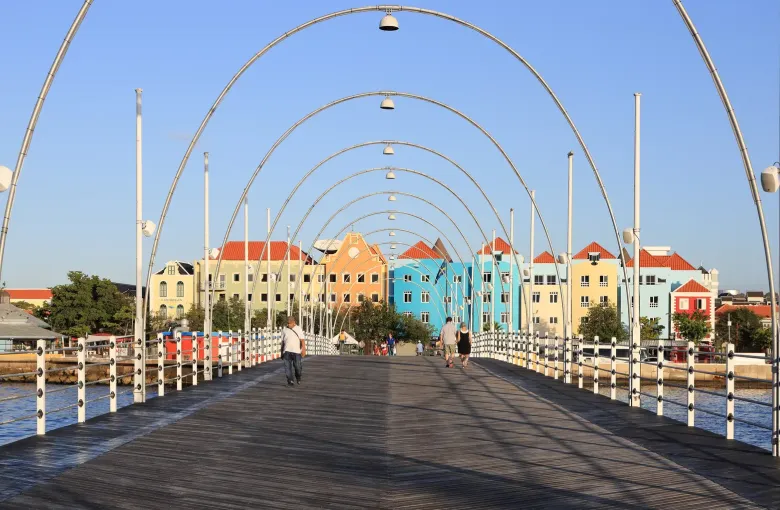
UNESCO inscribed the Historic Area of Willemstad, Inner City and Harbour, Curaçao on the World Heritage List in 1997, under the Netherlands, because there is no separate Curaçao state party. What was inscribed is not one building but a working harbor town: Punda and Otrobanda facing each other across the water, gabled Dutch forms in Caribbean color, four centuries of a trading port that is still a port.
Walk it as a place people live in. The painted facades on the Handelskade are shops and offices, not a set.
Behaving well.
Greet before you ask. Shops, taxis, offices: the conversation starts with a greeting, and starting it with a request reads as brusque. Dress for town in town, which means covering up between the beach and the street. And ask before photographing people, particularly at the market.
The law asks you to carry a document: you must always carry a copy of the photo page of your passport with you. Treat a request to produce it as routine rather than as suspicion.
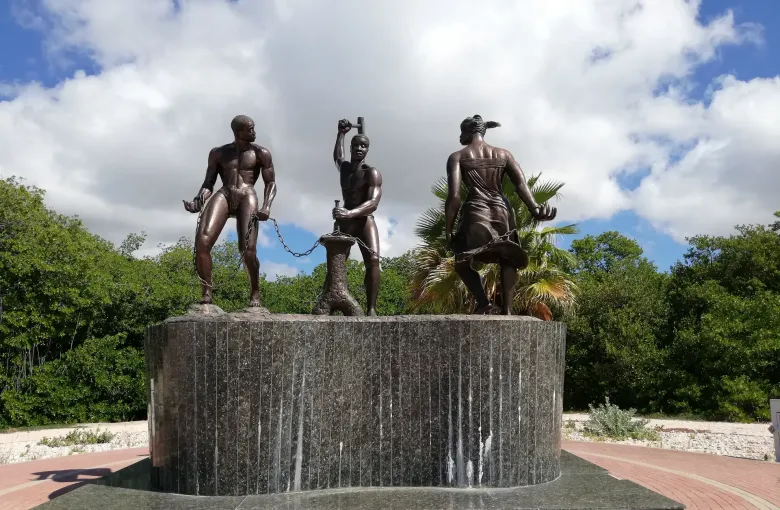
The island's history includes enslavement, revolt and emancipation, and those places are visitable. The diaspora guide covers how to be in them.
Tell us what you want to understand and we will build the trip so that you do.
Sources
- Government of the Netherlands: the governance of Aruba, Curaçao and St Maarten: that each country within the Kingdom has its own government; that Aruba, Curaçao and St Maarten each have their own Governor who represents the King in their respective governments; that the Governor is appointed by the King for six years, after which he or she may be reappointed for one more term, so that a Governor can serve for a maximum of 12 years; that the Governor has no ministerial responsibility and does not participate in the day-to-day business of government; and that Aruba, Curaçao and St Maarten each have a Minister Plenipotentiary in The Hague who, together with the ministers of the Dutch government, make up the Council of Ministers for the Kingdom. Accessed 21 September 2026.
- UNESCO World Heritage Centre: the Netherlands States Parties page, under which Curaçao's properties are filed because Curaçao is a country within the Kingdom of the Netherlands: that the Historic Area of Willemstad, Inner City and Harbour, Curaçao was inscribed on the World Heritage List in 1997; and that the Netherlands tentative list includes Plantations in West Curaçao, submitted in 2011, alongside Bonaire Marine Park, also submitted in 2011, which is a different island of the same kingdom. Accessed 21 September 2026.
- UK Foreign, Commonwealth and Development Office: Curaçao travel advice, safety and security: that although there is no recent history of terrorism in Curaçao attacks cannot be ruled out; that petty theft and street crime are a concern and that there are violent crimes related to the illegal drugs world but the main tourist areas are generally safe; the listed precautions of avoiding isolated areas including beaches after dark, keeping valuables secure and out of sight, and being on the look-out for bag snatchers; that criminals continue to use the islands of the Dutch Caribbean to smuggle illegal drugs from South America to Europe and North America, that luggage should never be left unattended when departing the country, that a traveler should not discuss or agree to carry a package for anyone, that a body scan may be asked for at some airports and that Dutch authorities generally screen all baggage and passengers from the Dutch Caribbean; that a copy of the photo page of a passport must always be carried; that a UK photocard driving license may be used to drive in Curaçao and that a paper license may need updating or the correct version of an international driving permit; that hire car companies often have stricter requirements such as a year of driving experience and a higher minimum age; that a taxi should be checked as registered and the price agreed before the ride, that most taxis do not have meters and that registered taxis have number plates starting with TX; and that the hurricane season in the Dutch Caribbean normally runs from June to November, that most hurricanes pass well to the north of Curaçao which has no record of a recent major hurricane, and that there are occasional tropical storms. Accessed 21 September 2026.
Other Articles
The Historic Area of Willemstad: Visitor and Heritage Guide
Curaçao and Diaspora Reconnection