Rapa Nui is the island's own name, and it is the one to use. UNESCO inscribed Rapa Nui National Park on the World Heritage List in 1995 under cultural criteria, and the property covers 6,666 hectares in what Chile administers as the Easter Island province of the Valparaiso Region.
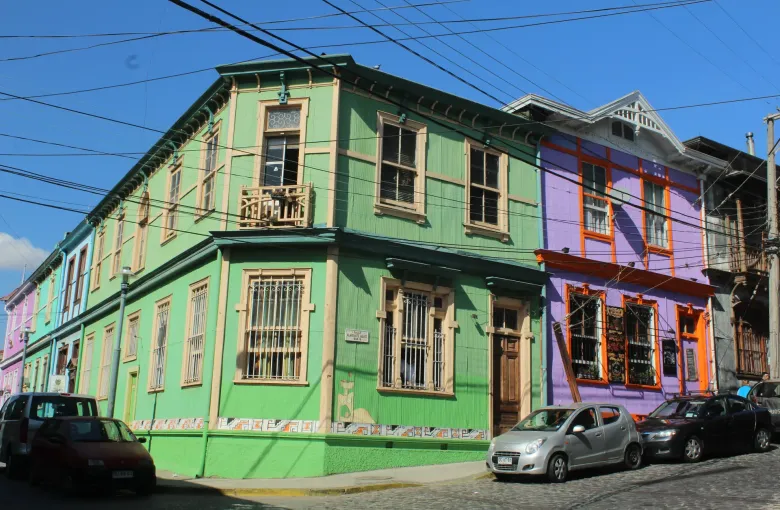
That one line already contains the two things most visitors get wrong. It is a cultural inscription, not a natural one. And it belongs, administratively, to a region whose other World Heritage property is a port city more than three thousand kilometers away.
What UNESCO actually records
The description is unusually direct. A society of Polynesian origin settled the island around A.D. 300 and established a tradition of monumental sculpture and architecture that UNESCO describes as powerful, imaginative, original, and free from any external influence. From the tenth to the sixteenth century that society built ceremonial shrines, the ahu, and erected the enormous stone figures known as moai.
The phrase about external influence is the point of the inscription. This is a body of monumental art that developed in isolation, on the most remote inhabited island on earth, and owes nothing to anywhere else. UNESCO's description also records a form of pictographic writing, rongorongo, which has not been deciphered.
What you actually see
- Rano Raraku. The quarry. Almost every moai on the island was cut here, and several hundred remain in place at every stage of completion, including some still attached to the rock. If you see one thing, see this.
- Ahu Tongariki. Fifteen moai standing on a single platform against the ocean. Toppled in the island's own history and swept inland by a tsunami in 1960, it was re-erected in the 1990s. Sunrise is the reason people set an alarm here.
- Ahu Akivi. Seven moai, and the only major group facing the sea rather than inland toward the settlement they watched over.
- Orongo. The ceremonial village on the rim of the Rano Kau crater, associated with the birdman tradition that followed the moai period.
- Anakena. The one easy beach, with moai behind it, and by tradition the landing place of the first settlers.
The rules, and why they are not formalities
Rapa Nui is a living culture. The people are here, the platforms are burial sites, and the archaeology extends under ground you might otherwise walk across.
- Never climb, stand on or touch an ahu. They hold the dead.
- Do not touch the moai. Skin oil damages the stone.
- Stay on the marked paths, including where the ground looks like ordinary grass.
- Take nothing away, not even a stone.
- Ask before photographing people, ceremonies or private land.
- A park ticket is required and is checked at the main sites. Several of the principal sites can be entered only once on a single ticket, so plan the order of your days rather than doubling back.
Most of the major sites are best visited with a local guide, and on Rapa Nui that is not an upsell: a guide from the community tells you whose ancestors you are standing in front of.
Getting there, and staying healthy
Flights go from Santiago, and they are the constraint on any itinerary. Treat the island as a minimum of three full days on the ground, not a stopover.
Two health points from the cited advisory. There are confirmed cases of dengue fever on the island, so repellent and covered evenings matter whatever the season. And there is only one hospital on Rapa Nui and its facilities are limited; people with serious illness or injury are evacuated. Travel insurance covering medical evacuation is not a box to tick here, it is the plan.
Where it sits among Chile's seven
Chile has seven properties on the World Heritage List, and every one of them is inscribed for cultural rather than natural value. Rapa Nui is the one everybody knows; Valparaiso and the Chinchorro sites are the two this cluster covers next, and the other four are the Churches of Chiloe, the Humberstone and Santa Laura saltpeter works, Sewell mining town, and Chile's stretch of the Qhapaq Nan Andean road system.
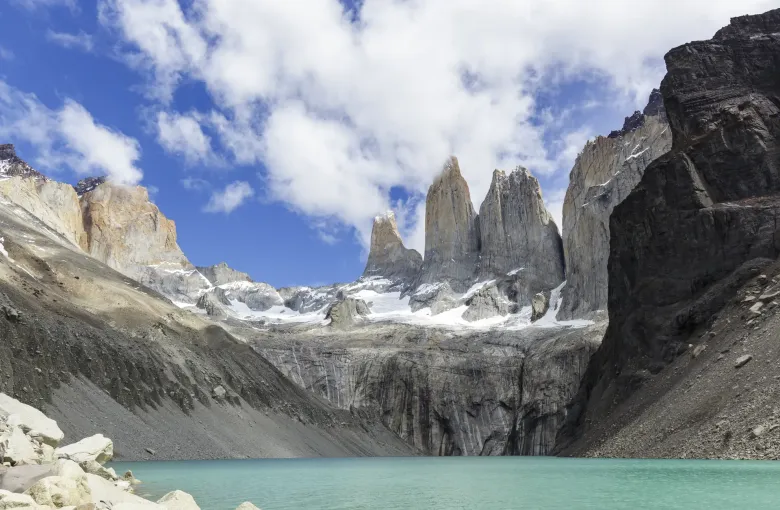
The country whose landscapes are its global image has no natural World Heritage site at all. Torres del Paine, the place most people picture, is not inscribed: it has sat on Chile's Tentative List since 1994, paired with Bernardo O'Higgins National Park. The seasonal guide explains what that means in practice.
Sources
- UNESCO World Heritage Centre: Rapa Nui National Park, inscribed 1995 under criteria (i), (iii) and (v), a property of 6,666 hectares in the Easter Island province of the Valparaiso Region. Accessed 16 September 2026.
- UNESCO World Heritage Centre: Chile States Parties record: seven inscribed properties, all of them cultural, and a Tentative List of nineteen sites which includes Torres del Paine and Bernardo O'Higgins National Parks, Region of Magallanes, submitted in 1994. Accessed 16 September 2026.
- UK Foreign, Commonwealth & Development Office: Chile health: the emergency ambulance number 131, the eight week lead time for vaccine advice, altitude sickness as a risk in parts of Chile, confirmed cases of dengue fever on Rapa Nui, and hantavirus as present in Chile. Accessed 16 September 2026.
Other Articles
Best Time to Visit Chile
What to Pack for Chile