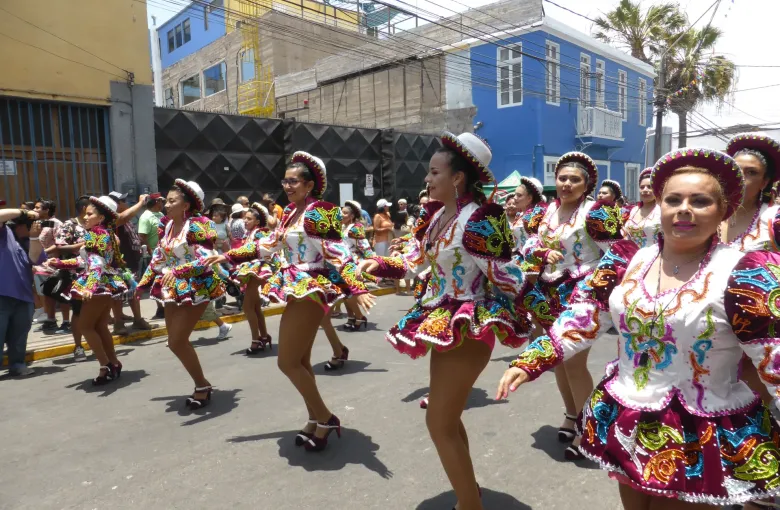
Chile has a national story it tells confidently, and the story is European. It is not a fabrication, and it is not the whole record. This guide is about the rest of it, and about how a visitor who has come looking for that rest should go about finding it.
Two things are worth saying before anything else. This page publishes no population figures, because the sources this cluster cites carry none and an invented number about a community is worse than silence. And what follows points at regions and institutions rather than naming families or private places, because a heritage visit that arrives unannounced is a different and less welcome thing.
The far north, and the Afro-Chilean coast
Chile's Afro-descendant population is concentrated in the far north, in the Arica and Parinacota Region and the valleys inland from the coast. It is a small community relative to the country and a long established one, and for most of Chile's modern history it was simply absent from the official account of who lives here. In recent years that has begun to change, through the community's own organizing rather than through anybody's generosity.
Practically, this means the north is where a reconnection itinerary starts. Arica is the base. The Azapa valley inland from it is where the agricultural history sits. Community and cultural organizations in the city are the right first contact, and they are the ones to ask about commemorations, dance groups and whether a visit is welcome at a particular moment, rather than arriving and hoping.
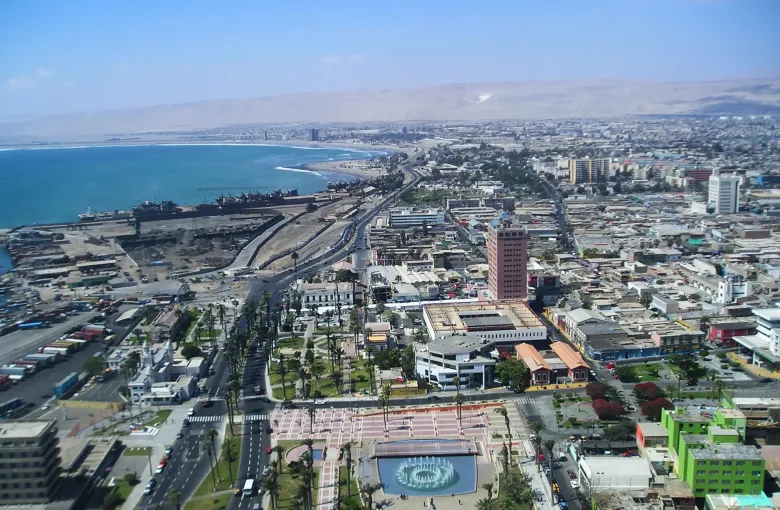
The region's deep record is the same coast. The Chinchorro sites, inscribed in 2021, protect the settlements and cemeteries of marine hunter-gatherers who lived on this shore from roughly 7400 years before the present. That is a different history from the Afro-descendant one and it occupies the same ground, which is worth holding in mind: the far north has been continuously inhabited for longer than almost anywhere else in the hemisphere.
The Aymara north
Above the coast, the altiplano is Aymara country, and the villages, churches, terraces and herding routes there are living rather than preserved. Visits are straightforward and are best made with local guides from the communities themselves.
Two cautions. The altitude is real, and the weather guide explains what acclimatizing properly means. And a village is not a site: ask before photographing people or interiors, buy from the people who made the thing, and accept that some ceremonies are not open.
The Mapuche south
The Mapuche are the largest Indigenous nation in Chile, and the southern regions are their territory. Cultural tourism run by Mapuche communities themselves exists and is the right way in: food, weaving, language, the round of the agricultural year, told by the people whose year it is.
It also has to be said plainly that the relationship between the Chilean state and Mapuche communities is unresolved and currently contested. The cited advisory records ongoing civil unrest in the Araucania Region, especially around Temuco, and a state of emergency in the provinces of Biobio, Arauco, Cautin and Malleco. Check which region and province each stop on your itinerary falls in rather than assuming, and read the safety guide before planning a southern route. A community-run visit arranged in advance through the community is a different proposition from independent travel through the area.
Rapa Nui
For Polynesian visitors, and for anyone tracing Pacific connections, Rapa Nui belongs in this guide rather than only in the heritage one. It is a living Polynesian culture within the Chilean state, with its own language, land questions and a continuing conversation about autonomy. The Rapa Nui guide covers the conduct that follows from that.
Approaching any of it
- Go through the community's own organizations. Cultural centers, museums and community tourism collectives exist in all three regions and are the appropriate first contact.
- Pay the people whose heritage it is. A local guide, a community lodge, an artisan directly.
- Learn the names. Rapa Nui, not Easter Island. Aymara, Mapuche, Afro-Chilean, as people name themselves.
- Ask, and accept a no. Some places, songs and ceremonies are not for visitors, and being told so is information, not a rebuff.
- Allow time. This is not an itinerary that works as a half day between sights.
If you are planning a trip of this kind, say so when you plan it. The culture and etiquette guide covers the register to expect, and a good local operator can open doors that a booking engine cannot.
Sources
- UNESCO World Heritage Centre: Settlement and Artificial Mummification of the Chinchorro Culture in the Arica and Parinacota Region, inscribed 2021 under criteria (iii) and (v), recording a society of marine hunter-gatherers on the northern coast of the Atacama Desert from approximately 7400 BP to 2840 BP. Accessed 16 September 2026.
- UNESCO World Heritage Centre: Chile States Parties record: seven inscribed properties, all of them cultural, and a Tentative List of nineteen sites which includes Torres del Paine and Bernardo O'Higgins National Parks, Region of Magallanes, submitted in 1994. Accessed 16 September 2026.
- UK Foreign, Commonwealth & Development Office: Chile regional risks: ongoing civil unrest in the Araucania Region, especially around Temuco, including attacks by groups of demonstrators against people and property, and an ongoing state of emergency in the provinces of Biobio, Arauco, Cautin and Malleco with the military assisting regional police. Accessed 16 September 2026.
Other Articles
The Chinchorro Sites of Arica and Parinacota
Chilean Culture and Etiquette