What is actually inscribed
The Historic Centre of Salvador de Bahia was inscribed in 1985 under criteria (iv) and (vi). The citation is short and it does not soften anything.
Salvador was the first capital of Brazil, from 1549 to 1763. It was where European, African and Amerindian cultures met and blended. It was, from 1558, the first slave market in the New World, with enslaved people arriving to work the sugar plantations. And the city has preserved a remarkable number of Renaissance buildings, with the brightly colored houses of the old town, often finished in fine stucco work, singled out as a special feature.
Those sentences are in the same paragraph of the same citation. The architecture and the trade are not two subjects. The first was paid for by the second.
The Pelourinho
The heart of the inscribed area, and a name that means whipping post. It is the most photographed street scene in northeastern Brazil: steep cobbles, facades in ochre, blue and green, church towers above the roofline.
It is worth knowing what the name means before you photograph it, and worth taking a guide from the city who will tell you what happened in the square as well as what color the houses are. The difference between those two visits is entirely down to who is walking you through it.
The churches
Salvador's colonial churches are among the most elaborate in the Americas, and the wealth that gilded them came from sugar, which came from forced labor. The great interiors are worth seeing and are best seen with that fact in your head rather than discovered afterwards.
They are also working places of worship. Cover shoulders and knees, keep your voice down, and do not photograph a service.
Living Salvador, which is the real reason to come
The inscribed center is a fraction of the city and arguably not the most important part of a visit. Salvador is the center of Afro-Brazilian culture in a country with the largest population of African descent outside Africa.
- Candomble. A religion of African origin, practiced openly. A terreiro is a religious house and a ceremony is a service. Go only with somebody connected to the house, ask before photographing, and accept a refusal.
- Capoeira. Developed by enslaved people, now taught everywhere. A street performance for tips and an academy roda are different things.
- The food. Bahian cooking is the least diluted African kitchen in Brazil. Acaraje sold by baianas in white is bound up with religious practice, not simply street food. See our Brazil food guide.
- Bonfim. The church whose railings carry thousands of colored ribbons, and whose washing festival draws one of the largest crowds in the northeast.
Getting around the old city
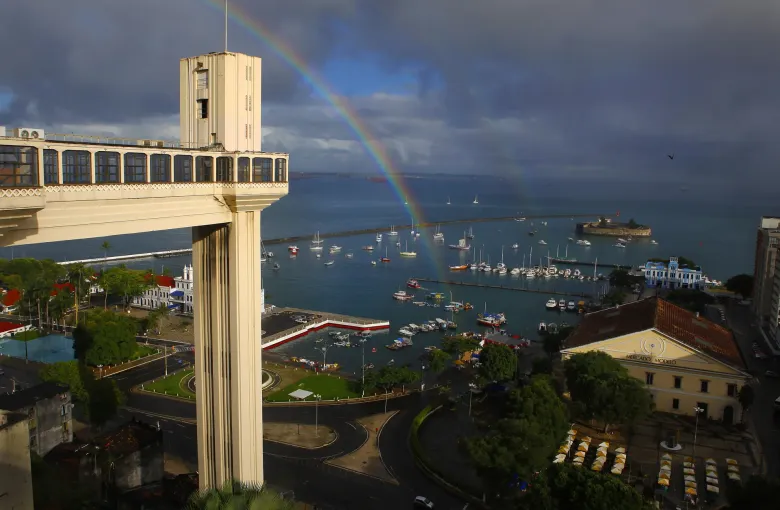
Salvador is built on two levels, and the Elevador Lacerda connects the lower city and the harbor to the upper city and the historic center. It is a public lift, it is cheap, and it saves a steep climb. For many visitors it is also the most accessible piece of infrastructure in the old city, which is otherwise cobbled and steep: see our Accessible travel in Brazil guide.
Practical notes
- The historic center is steep and cobbled. Wear shoes with grip.
- Carry a copy of your passport rather than the document, and take very little of value into the old town at night.
- Salvador's Carnival is a street festival rather than a stadium parade, and it is enormous. If you are not coming for it, check the dates so you do not arrive in the middle of it by accident: see our Brazil festivals and celebrations guide.
Verify before you travel
Museum hours, guided access to religious houses and festival dates all change. Confirm close to travel, and read the UNESCO citation itself. It is four sentences long and it is the clearest short statement of what this city is.
Sources
- UNESCO World Heritage Centre: the inscription of the Historic Centre of Salvador de Bahia in 1985 under criteria (iv)(vi), recording the city as the first capital of Brazil from 1549 to 1763 and, from 1558, the first slave market in the New World. Accessed 16 September 2026.
- UNESCO World Heritage Centre: Brazil's State Party record: twenty six properties inscribed on the World Heritage List, sixteen cultural, nine natural and one mixed, including the Valongo Wharf Archaeological Site in 2017 and Lencois Maranhenses National Park in 2024. Accessed 16 September 2026.
- UK Foreign, Commonwealth & Development Office: Brazil safety and security: the police number 190, favelas and favela tours, robbery on buses and the four in the afternoon to nine at night window for phone theft, arrastoes on beaches, express kidnapping, ATM card cloning and pink marked notes, methanol in spirit drinks, the illegality of vaping devices, shark attacks around Recife, carjacking, taxi and ride hailing practice, and the LGBT+ legal position. Accessed 16 September 2026.
Other Articles
Best Time to Visit Brazil
Accessible Travel in Brazil