The short version
Brazilians are, as a rule, physically warm with strangers and quick to close social distance. Greetings involve contact. Conversation starts easily. An invitation is meant.
Alongside that, and not in contradiction of it, Brazilian society is quite conservative, particularly outside the larger towns and cities. That is the cited assessment and it is worth taking seriously, because the version of Brazil that reaches the rest of the world is Carnival and Ipanema, and the country is much larger than either.
Language
Brazil speaks Portuguese, and the single most common mistake a visitor makes is arriving with Spanish and assuming it will do. It will sometimes be understood and it is not the same language, and the assumption reads badly. English is not widely spoken outside tourism and business.
Bom dia, boa tarde, boa noite, por favor, obrigado if you are male and obrigada if you are female: that gendered ending is the small detail that signals you have made an effort at all. Brazilians are generous about bad Portuguese in a way that is genuinely disarming.
Greetings and personal space
A handshake for a first business meeting. Otherwise, cheek kisses between women, and between a woman and a man, with the number varying by region: one in some places, two in others, three in parts of Minas Gerais. Men shake hands or embrace. Watch and follow rather than deciding in advance.
Conversational distance is closer than in North America and touching a forearm during conversation is ordinary rather than familiar. Backing away from it is legible and reads as coldness.
Time
Social time in Brazil runs later than the clock. Arriving exactly on time to a private dinner is slightly early. Business is more punctual, and the more formal the setting the more the clock means what it says. If it matters, ask whether the time is hora britanica, which is the joke Brazilians make about themselves and also a way of asking the real question.
Dress
Brazilians dress with care and notice whether you have. Beachwear belongs on the beach and the street just behind it, and nowhere else. Churches expect covered shoulders and knees, and the colonial churches of Ouro Preto, Salvador and Congonhas that make up so much of the country's heritage list are working places of worship as well as monuments.
Religion, and what is a place of worship
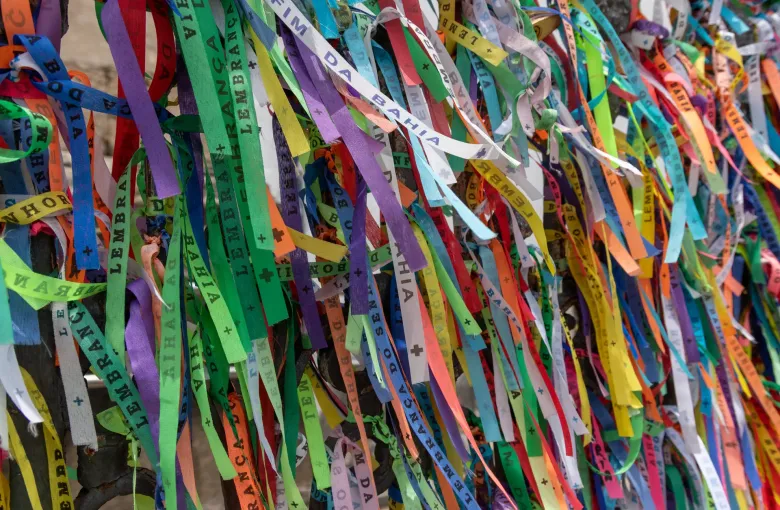
Brazil is predominantly Catholic and also home to Candomble and other religions of African origin, which are most visible in Bahia. A terreiro is a religious house, a ceremony is a service rather than a performance, and the ribbons, dress and music a visitor sees belong to a living practice. Ask before photographing, accept a refusal, and do not treat a religious site as a backdrop.
Race, and a conversation that is not the American one
Brazil has the largest population of African descent of any country outside Africa, and its history is not the United States' history. The inscription of Salvador records that the city was, from 1558, the first slave market in the New World. That past is present in the country's music, food, religion and demography, and it is discussed in Brazil in terms and categories that do not map onto North American ones.
The useful posture for a visitor is to listen to how people describe themselves rather than to arrive with a framework. Our Brazil and diaspora reconnection guide goes into this properly.
LGBT+ visitors
The legal position is clear and worth stating first. There is no legislation against same sex sexual activity in Brazil, same sex marriage is legal, and LGBT+ couples have equal rights in law. Sao Paulo, Rio de Janeiro and other cities hold large Pride events, which are usually very peaceful.
The social position is more uneven than the legal one. The same source records reports of discrimination, violence and harassment, and notes that urban areas are usually more accepting than elsewhere. Both halves of that are true simultaneously, and a visitor is best served by knowing both rather than only the one that matches their expectations.
Small things that go a long way
- Do not photograph people without asking, and that goes double at a religious ceremony or in a poor neighborhood.
- Accept the coffee. A cafezinho offered is a gesture and refusing it is a small rejection.
- Do not discuss Brazilian politics as an opening topic. Brazilians will, at length, once they know you.
- Learn the difference between the country's regions. Treating Brazil as interchangeable with Rio is the error a Brazilian will notice first.
Verify before you travel
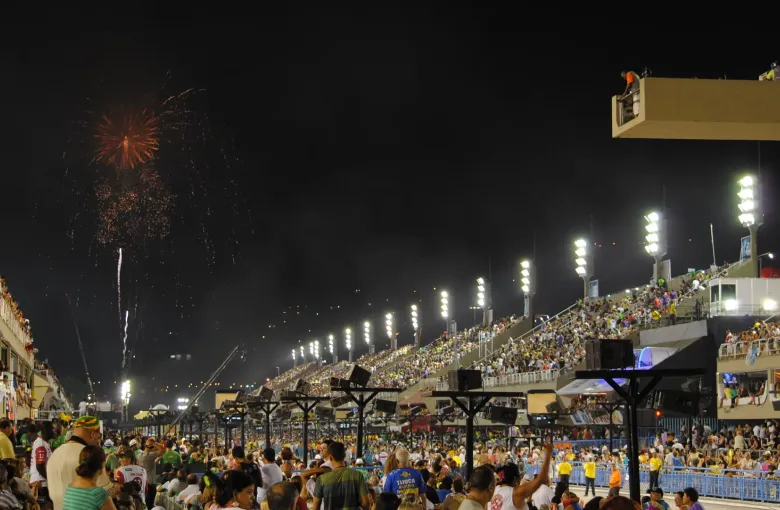
Read our Brazil festivals and celebrations guide before you travel in February, and our Brazil travel safety guide for the practical rules that sit underneath some of the etiquette above.
Sources
- UNESCO World Heritage Centre: the inscription of the Historic Centre of Salvador de Bahia in 1985 under criteria (iv)(vi), recording the city as the first capital of Brazil from 1549 to 1763 and, from 1558, the first slave market in the New World. Accessed 16 September 2026.
- UK Foreign, Commonwealth & Development Office: Brazil safety and security: the police number 190, favelas and favela tours, robbery on buses and the four in the afternoon to nine at night window for phone theft, arrastoes on beaches, express kidnapping, ATM card cloning and pink marked notes, methanol in spirit drinks, the illegality of vaping devices, shark attacks around Recife, carjacking, taxi and ride hailing practice, and the LGBT+ legal position. Accessed 16 September 2026.
- UNESCO World Heritage Centre: Brazil's State Party record: twenty six properties inscribed on the World Heritage List, sixteen cultural, nine natural and one mixed, including the Valongo Wharf Archaeological Site in 2017 and Lencois Maranhenses National Park in 2024. Accessed 16 September 2026.
Other Articles
Brazil and Diaspora Reconnection
Brazil Festivals and Celebrations