The short version
Brazil covers most of a continent, so the question is not when to visit Brazil. It is when to visit the part of Brazil you are going to, and the honest answer for a two-region trip is often that one leg will be in its better season and the other will not.
Three things settle most itineraries:
- The seasons are inverted. Brazil is overwhelmingly in the southern hemisphere. December, January and February are summer. June, July and August are winter.
- The northeast does not follow the southeast. The coast from Bahia northward runs on its own rhythm, and so does the Amazon, which has a high water season and a low water one rather than a hot season and a cold one.
- Carnival moves. It is tied to Easter, so it lands anywhere from early February to early March depending on the year. Booking a February trip without checking which February week Carnival falls in is the most common planning error on this country.
Summer, and what it actually means
Southern summer is the high season on the coast and the season most people picture when they picture Brazil: the beaches busy, the cities loud, the heat serious. It is also when Carnival falls, when domestic travel peaks, and when prices and crowds are at their worst.
Two practical consequences. High UV is a named health consideration for Brazil, and in summer it is not a formality. And theft rises with the crowd: the cited safety source records that criminals work large scale celebrations deliberately, and that beach theft including arrastoes is a warm weather problem. Neither is a reason to avoid summer. Both are reasons to go into it prepared, which is what our Brazil travel safety guide is for.
Winter, which is not winter as you know it
Southern winter in Rio and along the southeast coast is mild, drier and markedly less crowded. For a visitor whose main interest is cities, museums, colonial towns and walking, it is arguably the better trip. The sea is cooler and the beach culture quieter, which is either the drawback or the entire point depending on what you came for.
Go far enough south, into the states below Sao Paulo, and winter is genuinely cold by Brazilian standards. Go north instead and the word means almost nothing.
The Amazon runs on water, not temperature
In the Amazon basin the meaningful distinction is high water and low water rather than summer and winter. When the rivers are high, boats reach further into flooded forest and the igapo and varzea systems that UNESCO names in the Central Amazon Conservation Complex are at their most navigable. When the water drops, beaches and trails appear and walking becomes the way to see things.
Neither is better. They are different trips, and an operator who tells you one of them is the only time to come is selling you their own calendar.
The northeast, and one place that has to be timed
The northeastern coast around Salvador, Recife and Fortaleza is hot year round and its wetter months do not line up with the southeast's. This is the part of the country where a traveler used to the Rio calendar most often gets caught out.
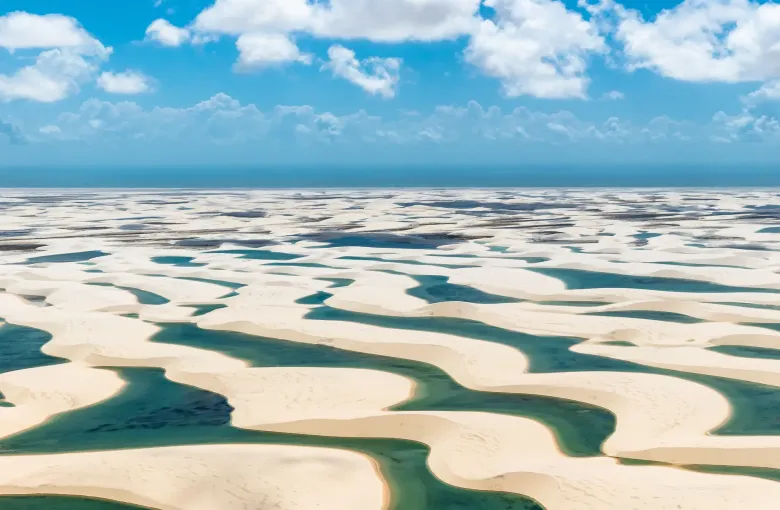
One site in the region genuinely cannot be visited at any time of year and expect the same thing. Lencois Maranhenses National Park, inscribed on the World Heritage List in 2024, is a field of white dunes whose lagoons are filled by the rains. When they are full it is one of the strangest landscapes in the Americas. When they are not, it is dunes. If that is the reason you are going to Maranhao, check the season before you book anything else.
Timing against the heritage list
Brazil has twenty six properties on the World Heritage List, sixteen cultural, nine natural and one mixed, and they are spread across the whole country. A few timing notes that follow from what they are:
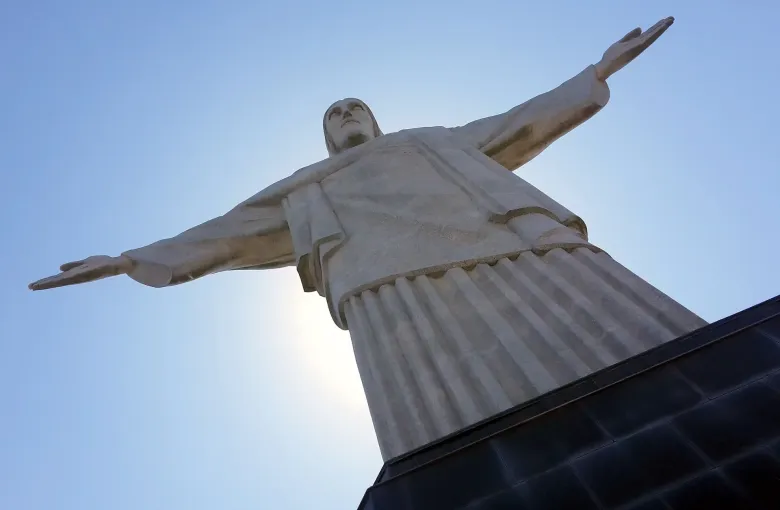
- Rio's inscription is a landscape, from the Tijuca massif down to the sea. Its best hours are early, before the cloud settles on Corcovado and before the queues.
- Salvador's historic center is a city, and cities are all weather. Carnival there is a different event from Rio's and draws its own enormous crowd.
- The Central Amazon is the water question above.
- Iguacu is spectacular in high water and more walkable in low. Note that yellow fever vaccination is recommended for Iguacu Falls, which is a clinic appointment weeks ahead rather than a decision you can make at the airport.
What to decide first
Pick the one thing the trip is really for, put that in its right season, and let the rest of the itinerary arrange itself around it. Brazil is too big to optimize as a whole, and every attempt to do it produces a trip that is slightly wrong everywhere.
Then read our Brazil weather guide for the regional patterns in more detail, and our Brazil festivals and celebrations guide before you commit to any date in February.
Sources
- UNESCO World Heritage Centre: Brazil's State Party record: twenty six properties inscribed on the World Heritage List, sixteen cultural, nine natural and one mixed, including the Valongo Wharf Archaeological Site in 2017 and Lencois Maranhenses National Park in 2024. Accessed 16 September 2026.
- UK Foreign, Commonwealth & Development Office: Brazil safety and security: the police number 190, favelas and favela tours, robbery on buses and the four in the afternoon to nine at night window for phone theft, arrastoes on beaches, express kidnapping, ATM card cloning and pink marked notes, methanol in spirit drinks, the illegality of vaping devices, shark attacks around Recife, carjacking, taxi and ride hailing practice, and the LGBT+ legal position. Accessed 16 September 2026.
- US Centers for Disease Control and Prevention: Travelers' Health, Brazil: the yellow fever recommendation by state and the record that the vaccine is not an entry requirement, the malaria transmission map including the absence of transmission in Brasilia, Rio de Janeiro, Sao Paulo and at Iguacu Falls, and the hepatitis A, hepatitis B, measles and rabies guidance. Accessed 16 September 2026.
Other Articles
Brazil Weather Guide
Rio de Janeiro: Visitor and Heritage Guide