The short version
Brazil is a good country for older travelers and a punishing one for an over-scheduled itinerary. The three things that actually make the difference are choosing the right season, flying between regions instead of driving, and accepting that some historic centers are steep cobbled hills and planning the day around that rather than against it.
Heat, and the case for winter
Southern winter, roughly June through August, is the strongest recommendation on this page. In Rio and the southeast it is mild and drier, the crowds are smaller, prices are lower, and the walking is far more pleasant than in a humid February.
High UV is a named health consideration for Brazil year round. Hat, sunglasses, high factor sunscreen and shade in the middle of the day, and more water than feels necessary. Plan the outdoor part of the day for the morning and treat the early afternoon as rest.
Distance: fly
The single most common mistake on a first Brazilian itinerary is underestimating internal distances. Rio to Salvador or Manaus is not a drive and not a comfortable bus ride. Fly between regions. The domestic network is dense, and it converts a punishing day into a short one.
Request airport assistance when you book rather than at the desk. The major airports have it and Brazilian carriers are used to arranging it.
Cobbles, steps and the old cities
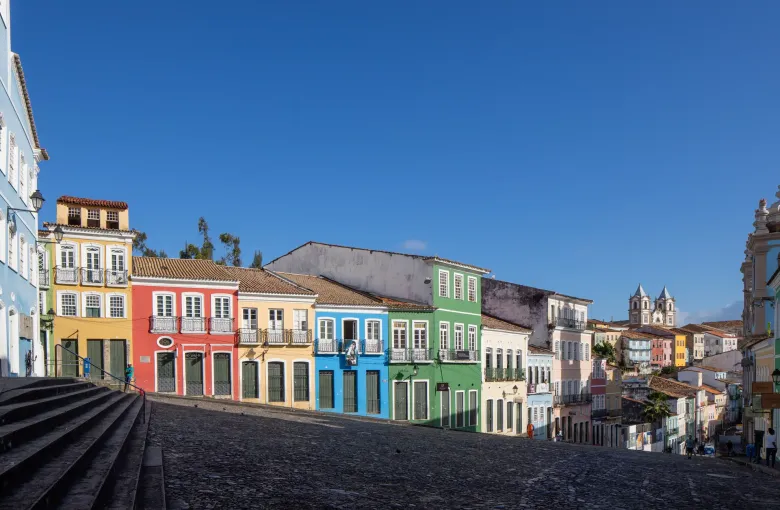
Salvador's historic center, Ouro Preto and Paraty are the most beautiful urban places in Brazil and they are built on steep, irregular, original cobbles. Shoes with grip matter more than anything else in your case.
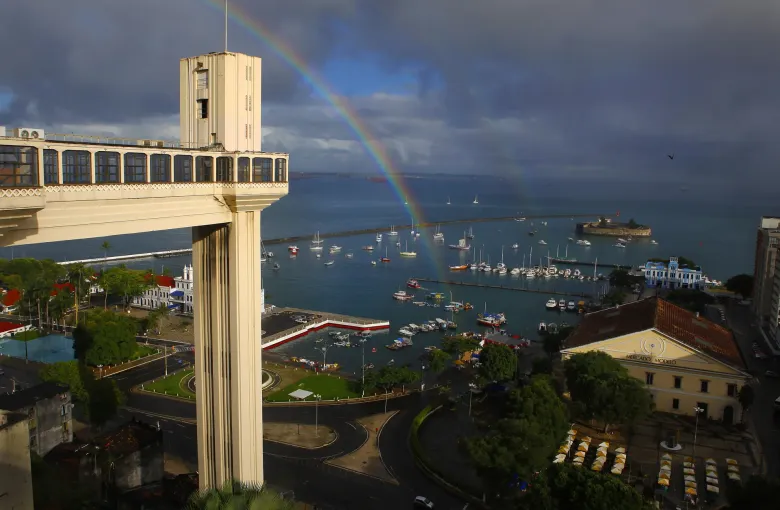
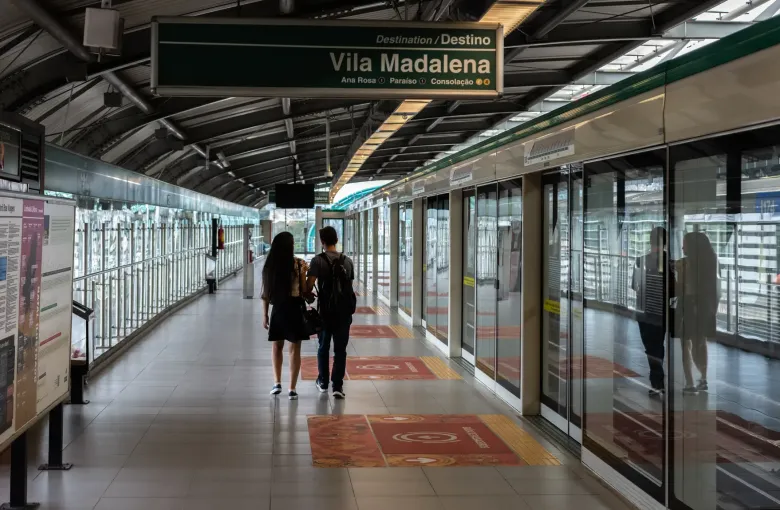
Two things help. In Salvador, the Elevador Lacerda connects the lower city to the upper and removes the worst climb for the price of a bus ticket. And in Rio and Sao Paulo the metro is level, quick and the way to avoid both traffic and unnecessary walking. Our Accessible travel in Brazil guide goes into provision in more detail, and much of it applies to anybody who simply wants fewer steps.
Healthcare and insurance
Foreign nationals are entitled to emergency treatment in Brazilian public hospitals. Those hospitals are frequently crowded, with long waits and shortages, and a private hospital will not admit you unless you can show that you can pay or that you are insured.
So travel insurance is not a formality here. Get cover that includes treatment and medical evacuation, declare pre-existing conditions honestly, and carry the policy number somewhere you can reach it without your phone.
Bring enough medication for the whole trip, in original labeled packaging, with a doctor's letter. Counterfeit medicines are a documented problem and replacing something locally is not a plan.
The emergency numbers are 192 for an ambulance and 190 for the police.
Vaccination lead time
Start this early. The guidance is to check vaccination recommendations at least eight weeks before travel, and yellow fever vaccination is recommended for much of Brazil including Rio de Janeiro and Sao Paulo and for Iguacu Falls. If your trip includes the Amazon, prescription antimalarial medication is recommended for the affected states and needs to be started before you leave. None of that can be arranged in the last week.
Pacing, and the thing nobody schedules
- One base per region, with day trips out, rather than a new hotel every two nights.
- One major thing a day. Corcovado and a boat trip and a museum is three days, not one.
- Book a driver for the day rather than piecing together taxis. It solves the safety guidance about not hailing cars in the street and it removes the walking between things.
- Lunch is the main meal. Eating the big meal in the middle of the day and something light in the evening fits Brazilian rhythm and suits most people better anyway.
Priority access
Brazil has a legal framework of priority service for older people, and it is often honored in practice at banks, airports, ticket offices and public buildings. The phrase to look for is atendimento prioritario. Ask rather than queueing; it is normal and nobody will be surprised.
Safety, briefly
The guidance in our Brazil travel safety guide applies unchanged, and two parts of it matter most: hand over your possessions if you are threatened rather than resisting, and carry a copy of your passport rather than the document. Neither is about age. Both are easier to follow when you are carrying almost nothing, which is the right way to travel here anyway.
Verify before you travel
Confirm insurance cover, vaccination timing and airport assistance well before departure, and check current health guidance for the specific regions on your route.
Sources
- UK Foreign, Commonwealth & Development Office: Brazil health: the ambulance number 192, the eight week lead time before travel, the named health risks including yellow fever, dengue, chikungunya, oropouche and high UV, altitude sickness in parts of the country, and the entitlement of foreign nationals to emergency treatment in public hospitals. Accessed 16 September 2026.
- UK Foreign, Commonwealth & Development Office: Brazil safety and security: the police number 190, favelas and favela tours, robbery on buses and the four in the afternoon to nine at night window for phone theft, arrastoes on beaches, express kidnapping, ATM card cloning and pink marked notes, methanol in spirit drinks, the illegality of vaping devices, shark attacks around Recife, carjacking, taxi and ride hailing practice, and the LGBT+ legal position. Accessed 16 September 2026.
- US Centers for Disease Control and Prevention: Travelers' Health, Brazil: the yellow fever recommendation by state and the record that the vaccine is not an entry requirement, the malaria transmission map including the absence of transmission in Brasilia, Rio de Janeiro, Sao Paulo and at Iguacu Falls, and the hepatitis A, hepatitis B, measles and rabies guidance. Accessed 16 September 2026.
Other Articles
Accessible Travel in Brazil
Getting Around Brazil