A Tentative List entry is a proposal, not an inscription.
This distinction governs the whole page, so it comes first. UNESCO records that The Scotland District of Barbados was entered on the country's Tentative List in 2005. A Tentative List is an inventory of those properties which a State Party intends to consider for nomination.
So the Scotland District is not inscribed, and it is not a World Heritage Site. It is a place the island has formally identified as a candidate it may nominate. Barbados has exactly one inscribed property, covered in our Bridgetown and Garrison guide.
The name, and the confusion it causes.
The District is named for a supposed resemblance to the Scottish landscape, and it has nothing else to do with that country. Everything on this page refers to a region of the parish of Saint Andrew and its neighbors in the northeast of Barbados.
What the place actually is.
The District is the part of Barbados that does not look like the rest of it. Most of the island is a low, gently tilted cap of coral limestone; in the northeast that cap has been stripped away, exposing older rocks beneath and leaving broken, steep, unstable country of ridges and gullies, ending in an exposed Atlantic coast.
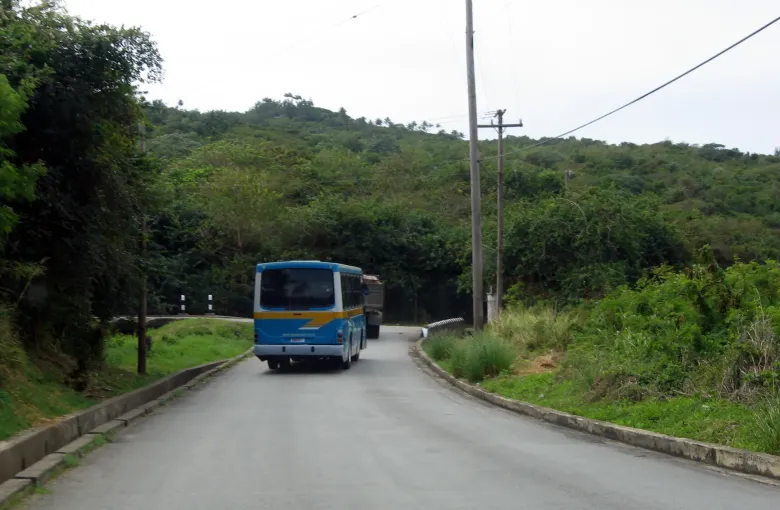
That geology is why the area is proposed as heritage: it is the one window into what lies under Barbados, and it produces a landscape and a settlement pattern unlike anything else on the island. The photograph at the head of this page looks east from Cherry Tree Hill in Saint Andrew, down cane fields to the Atlantic.
What this guide does not claim.
⚠ The UNESCO record gives the name of the entry and the year, and this register could read no further detail. So there is no boundary here, no list of component sites and no statement of what a nomination would be based on.
Nor does this page make a UNESCO claim of any kind about the District beyond the Tentative List entry itself. It is a candidate, recorded as one, and describing it as anything more would misrepresent the Convention's own vocabulary.
Visiting.
This is the windward side of Barbados, and the official swimming advice bears on it directly: currents can be deceptively strong and some beaches do not have lifeguards or warning flags. The Atlantic coast is for looking at rather than casual swimming.
The roads are narrow and steep by the standards of the rest of the island. Our transportation guide covers the visitor driving permit and the bus services, and our travel safety guide carries the rest of the water advice.
Sources
- UNESCO World Heritage Convention: Barbados States Party record: that one property is inscribed on the World Heritage List, the cultural property Historic Bridgetown and its Garrison, inscribed in 2011; that two sites stand on the Tentative List, The Scotland District of Barbados entered in 2005 and The Industrial Heritage of Barbados: The Story of Sugar and Rum entered in 2014; that a Tentative List is an inventory of those properties which a State Party intends to consider for nomination; and that two State of Conservation reports exist for Historic Bridgetown and its Garrison, from 2012 and 2014. Accessed 20 September 2026.
- UK Foreign, Commonwealth and Development Office: Barbados travel advice, safety and security: that although there is no recent history of terrorism in Barbados attacks cannot be ruled out; that there have been incidents of violent crime including armed robbery, sexual assault, gang-related shootings and carjackings, and that there has been an increase in gang-related murders involving guns, some in populated and public areas; that visitors should secure their accommodation, take care walking alone off busy main roads and taking money from ATMs, avoid isolated areas including beaches after dark, use only licensed taxis, take particular care around large gatherings including street and beach parties, and leave valuables in a safe; that it is illegal to possess drugs and that there are severe penalties for all drug offenses; that it is illegal for anyone, including children, to wear camouflage clothing; that attitudes toward the LGBT+ community in the Caribbean are mostly conservative; that currents can be deceptively strong including on some popular beaches on the south and west coasts and that some beaches have no lifeguards or warning flags; that taxis do not have meters, that there are standard fares for most destinations, that the fare should be agreed in Barbados dollars with the driver, and that drivers do not always accept card payments; that the hurricane season normally runs from June to November; that earthquakes are a potential risk with occasional tremors; and that the underwater volcano Kick em Jenny is located 5 miles off the coast of Grenada. Accessed 20 September 2026.
Other Articles
The Best Time to Visit Barbados
Accessible Travel in Barbados