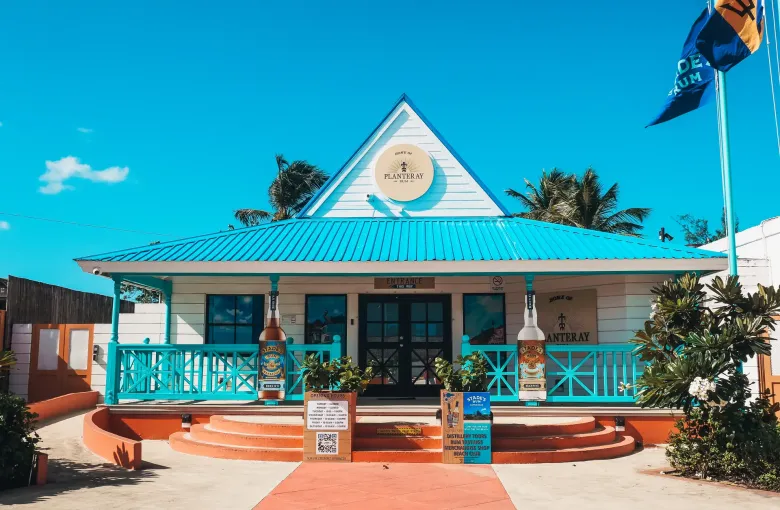
The chattel house, and why it looks the way it does.
The small timber house raised off the ground on blocks, symmetrical, with a steep roof and shuttered windows, is the domestic architecture of Barbados. The form follows from its history: a house built to be taken apart and moved, by people who owned the building but not the land under it.
They are still ordinary housing and they are also preserved. The photograph at the head of this page is a restored example at Tyrol Cot, part of a village of such houses that visitors can see. Recognizing the form is most of what it takes to read the older parts of the island, and the neat painted examples and the weathered ones in use are the same building type at different points in its life.
The clothing law is not a custom, it is the law.
The Foreign, Commonwealth and Development Office states that it is illegal for anyone, including children, to wear camouflage clothing. It is listed among laws rather than among customs, and it applies to visitors.
Our packing list covers the practical problem, which is that camouflage print arrives on children's clothing without anyone deciding to bring it.
Public conduct, in the official wording.
On public behavior between couples the advice is regional and plainly put: in the Caribbean attitudes toward the LGBT+ community are mostly conservative; it is uncommon for couples of any kind to show affection in public, for example holding hands or kissing; and doing so may attract unwanted and negative attention. The advice points LGBT+ travelers to its own fuller guidance.
It also asks visitors to take particular care around large gatherings, including street and beach parties, especially after dark or during the festival season. That is a safety note rather than an etiquette one, but the two meet at the same events. Our festivals guide covers what the government publishes about the calendar.
A city with a formal place in the island's account of itself.
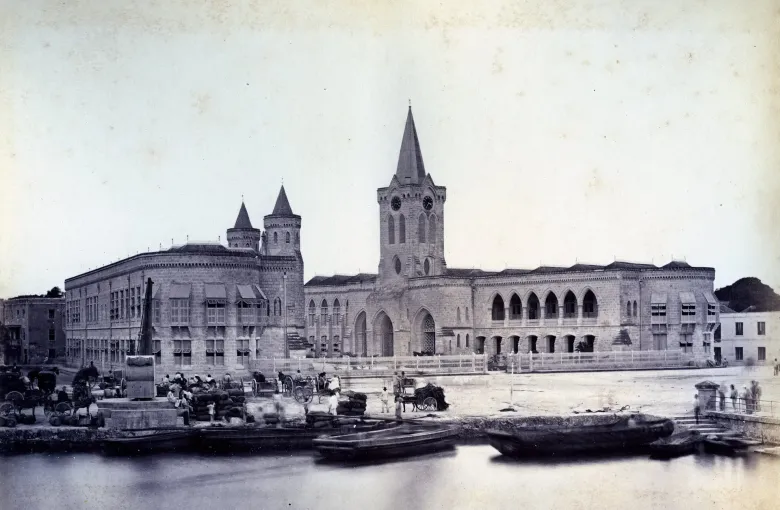
Bridgetown is not only the capital. Its historic center and the military garrison beside it are together inscribed on the World Heritage List, as a single cultural property, in 2011. That is the island's own framing of its past made formal, and it is the reason the Garrison buildings are conserved rather than merely old.
Our Bridgetown and Garrison guide sets out what UNESCO records, and our diaspora guide takes the longer history the inscription sits inside.
What this guide does not tell you.
No greeting formula, no dress code beyond the law above, no dish, and no note on tipping. No source in this register states any of them, and inventing social rules for a place is a fast way to make a visitor behave strangely. Watch what people around you do, which is better guidance than this page could give.
Sources
- UK Foreign, Commonwealth and Development Office: Barbados travel advice, safety and security: that although there is no recent history of terrorism in Barbados attacks cannot be ruled out; that there have been incidents of violent crime including armed robbery, sexual assault, gang-related shootings and carjackings, and that there has been an increase in gang-related murders involving guns, some in populated and public areas; that visitors should secure their accommodation, take care walking alone off busy main roads and taking money from ATMs, avoid isolated areas including beaches after dark, use only licensed taxis, take particular care around large gatherings including street and beach parties, and leave valuables in a safe; that it is illegal to possess drugs and that there are severe penalties for all drug offenses; that it is illegal for anyone, including children, to wear camouflage clothing; that attitudes toward the LGBT+ community in the Caribbean are mostly conservative; that currents can be deceptively strong including on some popular beaches on the south and west coasts and that some beaches have no lifeguards or warning flags; that taxis do not have meters, that there are standard fares for most destinations, that the fare should be agreed in Barbados dollars with the driver, and that drivers do not always accept card payments; that the hurricane season normally runs from June to November; that earthquakes are a potential risk with occasional tremors; and that the underwater volcano Kick em Jenny is located 5 miles off the coast of Grenada. Accessed 20 September 2026.
- UNESCO World Heritage Convention: Barbados States Party record: that one property is inscribed on the World Heritage List, the cultural property Historic Bridgetown and its Garrison, inscribed in 2011; that two sites stand on the Tentative List, The Scotland District of Barbados entered in 2005 and The Industrial Heritage of Barbados: The Story of Sugar and Rum entered in 2014; that a Tentative List is an inventory of those properties which a State Party intends to consider for nomination; and that two State of Conservation reports exist for Historic Bridgetown and its Garrison, from 2012 and 2014. Accessed 20 September 2026.
- Government of Barbados: Crop Over Gala: that there is a ceremonial delivery of the last cane indicating the end of the crop, or crop over; that the gala showcases aspects of the heritage of Barbados including exhibitions, entertainment, attractions for children, a folk show and a theater featuring local films; and that features include the Parade of the King and Queen of the Crop, an Urban Village with fashion, music and dance, a Farmers Market and a Craft Village. Accessed 20 September 2026.
Other Articles
Barbados and Diaspora Reconnection
Barbados Festivals and Celebrations