The island has made its own history formal, twice.
A visitor coming to Barbados to understand ancestry or the Atlantic past does not have to assemble that history from outside sources. The island has placed it on the record at UNESCO in two entries, and read together they describe the same centuries from two directions.
The first is inscribed: Historic Bridgetown and its Garrison, a cultural property, inscribed in 2011. The second is a proposal on the Tentative List from 2014, The Industrial Heritage of Barbados: The Story of Sugar and Rum. A port and a garrison; and the economy they existed to serve.
Why the pairing matters.
Bridgetown was a working Atlantic port and the garrison beside it was a military station of the British Empire in the Caribbean. The sugar and rum entry covers the plantations, mills and distilleries inland that the port shipped for. The labor that ran that economy was enslaved African labor, and the two UNESCO entries between them describe the machinery of that system: the point of export and the means of production.
This site does not publish figures for the Atlantic trade, because no source in this guide's register states one. That restraint is deliberate. Numbers in this subject are contested, frequently misquoted, and too serious to carry without a source behind them.
What you can actually see.
The Garrison district is standing and conserved, and the photograph at the head of this page is Bridgetown seen from the water in about 1880, from an album of that period. The town in that photograph is recognizably the town that is inscribed today.
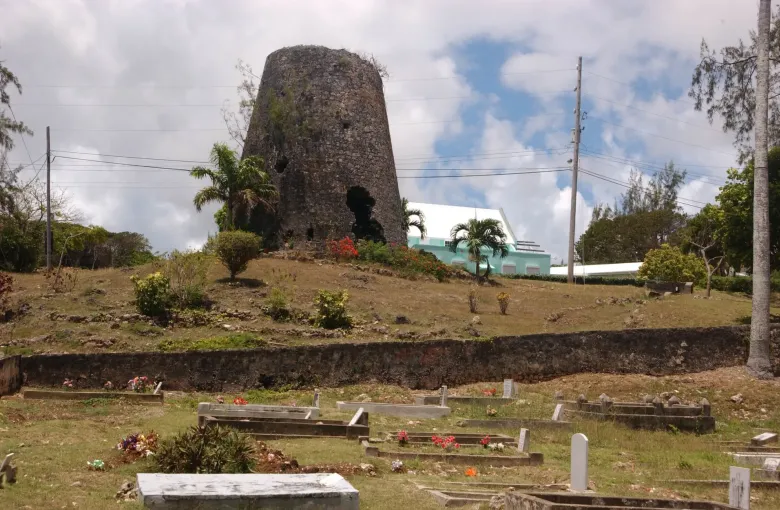
Inland, the sugar mills survive as stone towers in the cane, and distilling continues as a working industry. Our industrial heritage guide and our Bridgetown and Garrison guide take each in turn.
The chattel house is part of this history too.
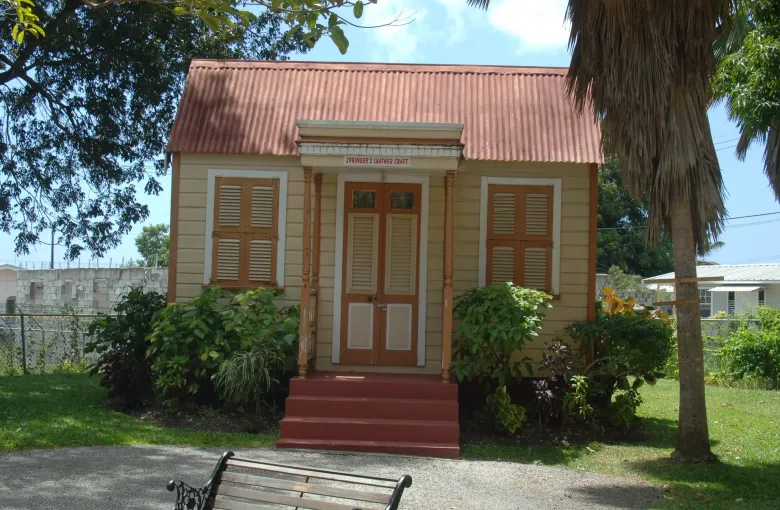
The small movable timber house is not incidental architecture. Its form follows directly from people owning a building and not the ground it stood on, which is a fact about post-emancipation land ownership expressed in carpentry. Our culture guide covers the form and where restored examples can be seen.
A note on how this guide is written.
This page names no genealogical service, no archive opening hours and no tour. It cites what the UNESCO record and the Government of Barbados publish, and stops there. For records research, the national institutions of Barbados are the place to begin, and a current inquiry to them will be worth more than a list on a travel page that could go out of date without anyone noticing.
Crop Over, which our festivals guide covers, begins by marking the end of the sugar harvest. It is worth knowing that the island's largest celebration takes its name and its opening ceremony from the crop this history was built on.
Sources
- UNESCO World Heritage Convention: Barbados States Party record: that one property is inscribed on the World Heritage List, the cultural property Historic Bridgetown and its Garrison, inscribed in 2011; that two sites stand on the Tentative List, The Scotland District of Barbados entered in 2005 and The Industrial Heritage of Barbados: The Story of Sugar and Rum entered in 2014; that a Tentative List is an inventory of those properties which a State Party intends to consider for nomination; and that two State of Conservation reports exist for Historic Bridgetown and its Garrison, from 2012 and 2014. Accessed 20 September 2026.
- Government of Barbados: Crop Over Gala: that there is a ceremonial delivery of the last cane indicating the end of the crop, or crop over; that the gala showcases aspects of the heritage of Barbados including exhibitions, entertainment, attractions for children, a folk show and a theater featuring local films; and that features include the Parade of the King and Queen of the Crop, an Urban Village with fashion, music and dance, a Farmers Market and a Craft Village. Accessed 20 September 2026.
Other Articles
The Industrial Heritage of Barbados: Sugar and Rum
Barbados Culture and Etiquette Guide