The quick answer
Zambia holds around eighty traditional ceremonies a year across its language groups — genuine community events rather than tourist spectacles. The best known is the Kuomboka, and it is also the one you cannot reliably plan a trip around.
⚠ Kuomboka: the most important thing on this page
The Kuomboka marks the moment the Litunga, king of the Lozi people, moves from the summer palace at Lealui on the Barotse Floodplain to higher ground at Limulunga, because the Zambezi has risen and the floodplain is going under. The word means, roughly, “to get out of the water”.
He travels aboard the Nalikwanda, a great black-and-white barge topped with a carved elephant, paddled by scores of drummers and oarsmen in ceremonial dress, watched by enormous crowds along the banks. It is one of the most striking events in Africa.
It has no fixed date, and we will not print one.
The Kuomboka happens when the flood says it happens. The decision rests with the Barotse Royal Establishment, which announces it when the water and the readiness of the ceremony allow — typically around the end of the rains, often near the beginning of April, and not always then. It has been canceled in some years altogether, for insufficient flood, for periods of mourning, and for reasons of cost.
So: do not book flights around a date you found online. If witnessing the Kuomboka matters to you, build a trip that is worth taking anyway, be in Zambia in the right general window, and treat the ceremony as a magnificent possibility rather than a fixture. Anyone who sells it to you as a guaranteed departure is selling you something they do not control.
Ncwala
The Ncwala is the first-fruits ceremony of the Ngoni people, held near Chipata in the Eastern Province, typically in late February. The paramount chief tastes the first produce of the season before it may be eaten generally, and the day is marked by massed warrior dancing that recalls the Ngoni migration north from southern Africa in the nineteenth century. It is loud, disciplined and genuinely thrilling.
Likumbi Lya Mize
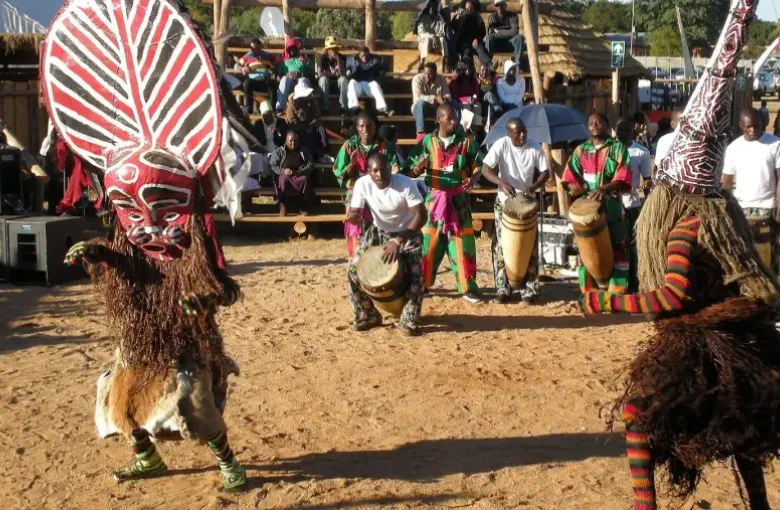
Held in August at Mize, near Zambezi town in the North-Western Province, this is the annual ceremony of the Luvale people at the palace of their senior chief. It is the great public occasion for the Makishi, the masked figures associated with the mukanda initiation, and it is the most accessible place to encounter them properly.
As our culture and etiquette guide explains, masquerade carries restrictions that are not decorative. Photograph only where you are told you may.
Zambia on UNESCO’s intangible heritage lists
Six Zambian elements appear on UNESCO’s Representative List of the Intangible Cultural Heritage of Humanity:
- Makishi masquerade — inscribed 2008
- Gule Wamkulu — inscribed 2008, shared with Malawi and Mozambique
- Mooba dance of the Lenje ethnic group of Central Province — inscribed 2018
- Budima dance — inscribed 2020
- Kalela dance — inscribed 2022
- Mangwengwe dance — inscribed 2024
⚠ One clarification, because the two are easy to confuse: the Kuomboka is not on a UNESCO list. The Barotse Cultural Landscape, the setting in which it takes place, appears on Zambia’s tentative list for World Heritage status, which is a different thing at a different stage. Both are worth knowing about; neither is the other.
Other ceremonies you may encounter
Among many: Umutomboko of the Lunda in Luapula, usually in July; Shimunenga of the Ila in the Kafue Flats; Lwiindi Gonde of the Tonga in the south. Ask locally — the calendar of smaller ceremonies is genuinely dense, and a Zambian host will usually know what is happening near you.
Attending well
- You are a guest at somebody’s tradition. Follow your host, dress modestly, and take your cue on where to stand and when to sit.
- Ask about photography and accept restrictions without argument.
- Expect crowds and heat, and few facilities. Water, a hat and patience.
- Dates for most ceremonies are announced locally and shift year to year. Confirm close to the time.
Planning with LABUSA Travel
If a ceremony is the reason for your trip, tell us early and we will be straight with you about what can and cannot be guaranteed — and we will build an itinerary that stands on its own whether or not the flood cooperates.
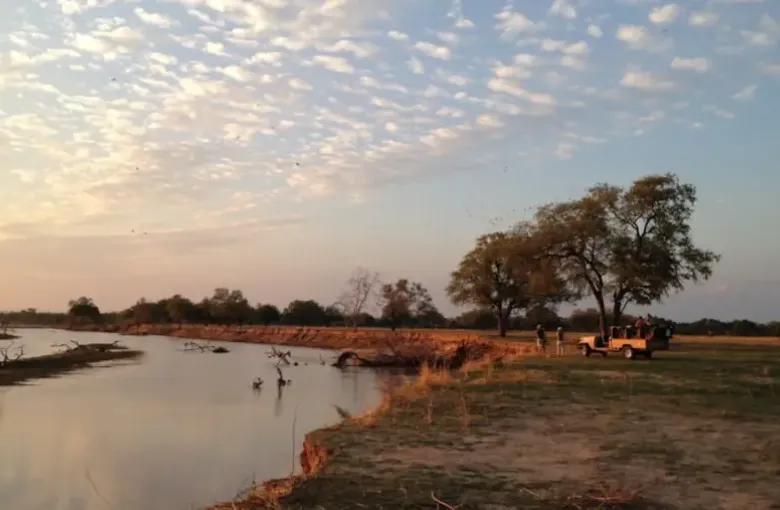
Banner photograph by Jae zambia, CC BY-SA 4.0, via Wikimedia Commons.
Other Articles
Zambia Culture and Etiquette Guide
Zambia and Diaspora Reconnection