The variables that actually matter.
Age is not one of them. What shapes a trip here is steep ground, the physical business of getting on and off boats, and heat, and each of those affects a traveler according to their own stamina rather than their birth year.
What is reachable without a scramble.
The National Park Service publishes this specifically, which is unusual and useful.
The Cinnamon boardwalk is wheelchair accessible and reaches the ruins of Cinnamon Bay Plantation, with accessible parking and restrooms. So a historic plantation site on St John can be seen properly on a level surface.
At Trunk Beach there are beach wheelchairs, accessible parking, restrooms, changing rooms and accessible paths to water.
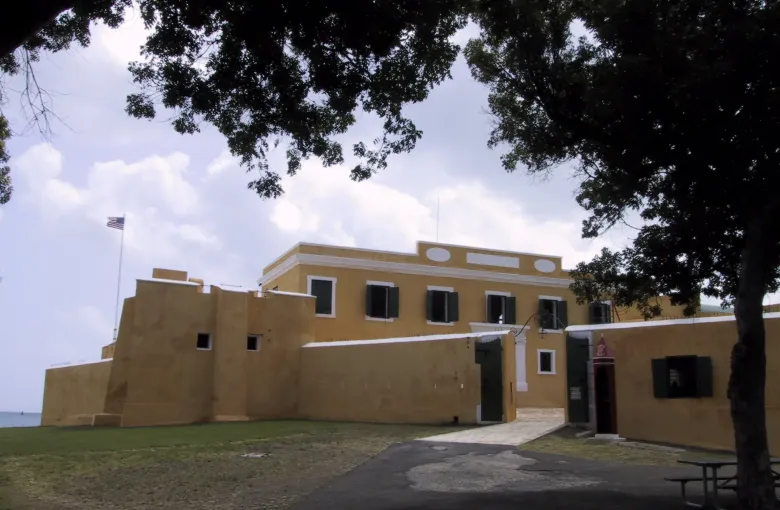
At Christiansted the picnic area, the Scale House and the book store and visitor center are accessible, while the historic Fort Christiansvaern is not. Knowing which is which turns a site that sounds unsuitable into an afternoon that works.
The step that moves.
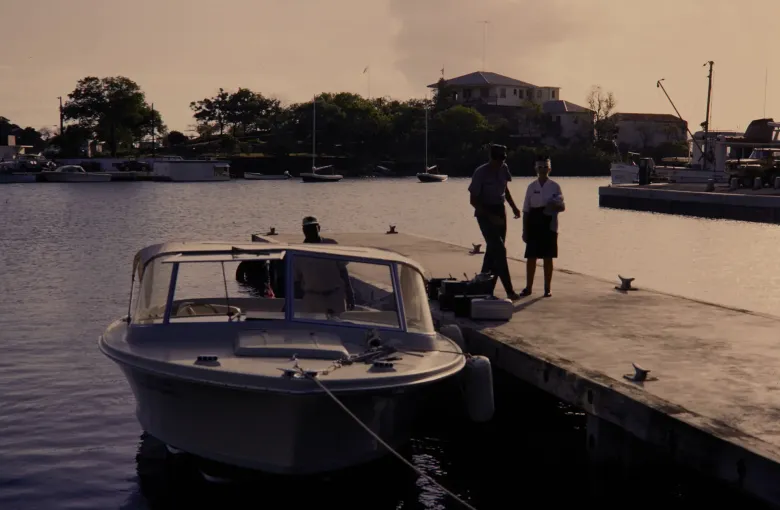
Days here often begin and end on a dock, because the islands are connected by water. The Park Service records that there are no airports on St. John and that a visitor crosses by car barge or the people ferry.
Tell the operator what you need before the day rather than at the gangway. The barge and the ferry board differently, and an operator who knows in advance can make the crossing straightforward.
The road rule, which is a real hazard for a walker.
The Park Service states that we drive on the left here in the Virgin Islands, and asks pedestrians to walk facing traffic, which would be the right side of the road.
For an American visitor that is the opposite of a lifetime's habit, on steep roads with blind corners and often no sidewalk. It is worth practicing deliberately for the first day rather than trusting instinct.
What a slower trip here looks like.
One island rather than three. A boardwalk and a beach with a path to the water rather than a hillside trail. An afternoon at a seven-acre waterfront park where most of the ground is level. Time on a boat that anchors rather than a schedule that connects three crossings in a day.
That itinerary uses the best of what the Park Service actually provides here, and it asks far less than the alternative.
The season, and the ordinary precautions.
The National Hurricane Center publishes that the Atlantic hurricane season runs from June 1 to November 30 and that tropical cyclone activity sometimes occurs before and after these dates. Inside that window a flexible booking and disruption cover are worth their price.
Bring all prescription medication for the full trip with a margin, in original labeled packaging. Carry water and sun cover, because the boats have little shade. In an emergency the Park Service instruction is to dial 911.
Sources
- National Park Service: Virgin Islands National Park accessibility: that the Cinnamon boardwalk is wheelchair accessible and provides access to the ruins of Cinnamon Bay Plantation, with a wheelchair-accessible entrance, parking and restrooms, and that Trunk Beach has beach wheelchairs, wheelchair-accessible parking, restrooms, changing rooms and accessible paths to water. Accessed 18 September 2026.
- National Park Service: Christiansted National Historic Site accessibility: that the historic Fort Christiansvaern is not wheelchair accessible, while the picnic area, the Scale House and the book store and visitor center are all accessible by wheelchair. Accessed 18 September 2026.
- National Park Service: Virgin Islands National Park basic information: the instruction that we drive on the left here in the Virgin Islands, that a visitor should pay extra attention when making turns, pulling out into traffic or crossing the road, and that a pedestrian should walk facing traffic, which here is the right side of the road; and that the park is comprised of 7,259 acres of terrestrial habitat, about 60 percent of the island land mass, together with 5,650 acres of adjacent submerged lands and some 800 species of plants. Accessed 18 September 2026.
- National Park Service: Getting to Virgin Islands National Park: that there are no airports on St. John, so a visitor flies to the Cyril E. King Airport on St. Thomas and travels on from there, renting a car or taking a taxi to the east end of St. Thomas and then taking either a car barge to St. John or the people ferry; and that the 1 mile long Lind Point Trail runs from the ferry terminal area to Salomon and Honeymoon beaches. Accessed 18 September 2026.
- National Hurricane Center: Tropical cyclone climatology: that the Atlantic hurricane season runs from June 1 to November 30, that based on a 30-year climate period from 1991 to 2020 an average season has 14 named storms, 7 hurricanes and 3 major hurricanes, and that tropical cyclone activity sometimes occurs before and after those dates. Accessed 18 September 2026.
Other Articles
Accessible Travel in the U.S. Virgin Islands
Getting Around the U.S. Virgin Islands