What is actually provided, named site by site.
Most accessibility guides on this site have to report an absence of sources. This one does not, because the National Park Service publishes provision per site, and the detail is specific enough to plan a day around.
On St John, the Park Service records that Trunk Beach has beach wheelchairs, wheelchair-accessible parking, restrooms, changing rooms and accessible paths to water. Beach wheelchairs and a path to the water are the two things that decide whether a beach is visitable, and both are published.
It also records that the Cinnamon boardwalk is wheelchair accessible, providing access to visitors with mobility issues to explore the ruins of Cinnamon Bay Plantation, with a wheelchair-accessible entrance, parking and restrooms. That is a historic site reachable rather than merely visible from a car park.
And what is not, which matters more.
The Park Service is equally plain about the limits, and those are the facts a traveler plans around.
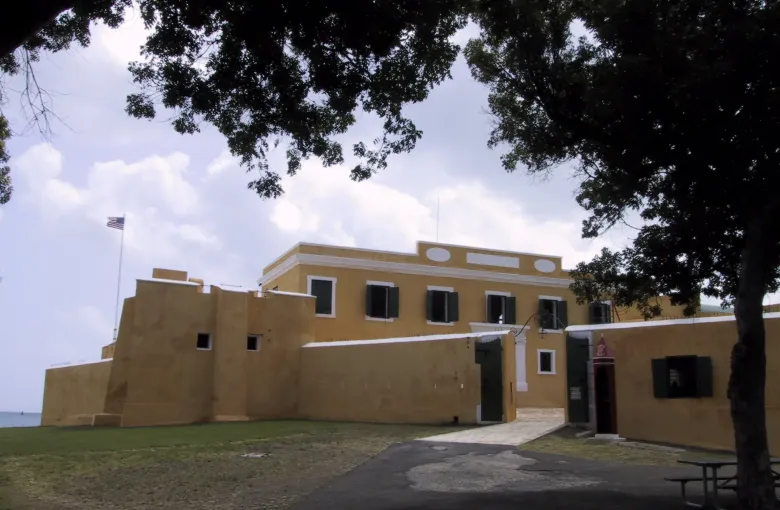
At Christiansted on St Croix, the historic Fort Christiansvaern is not wheelchair accessible. The picnic area, the Scale House and the book store and visitor center are all accessible by wheelchair. So the site is visitable and the fort itself is not, which is a far more useful thing to know in advance than a blanket answer either way.
Buck Island Reef National Monument is an offshore island surrounded by coral reef and is only reachable by boat, and there are no accessible facilities available. That is the Park Service's own wording and this guide does not soften it.
The journey itself, which is the harder part.
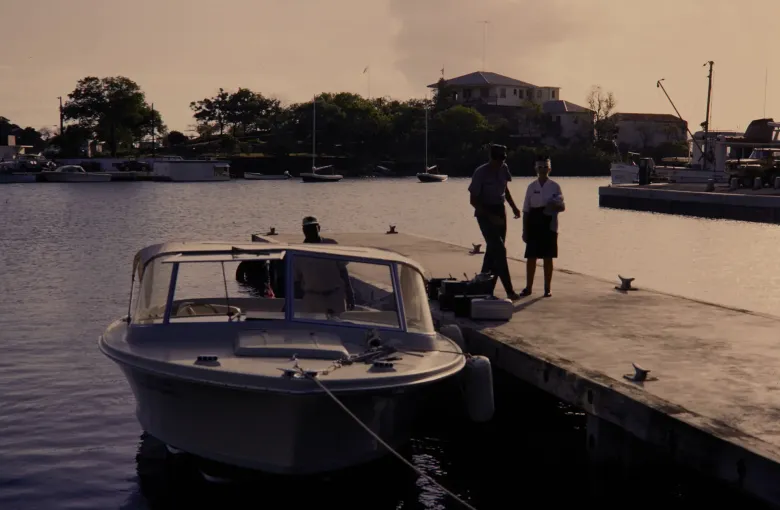
Getting between islands is a boat. The Park Service records that there are no airports on St. John, so reaching it means flying into St Thomas and crossing by car barge or the people ferry. Boarding a vessel from a fixed dock involves a step that moves, and that is the single most common physical challenge of a trip in this territory.
It is also manageable if you say so in advance. Contact the operator before the day, describe exactly what you need, and choose the crossing accordingly. The barge and the ferry are different vessels with different boarding arrangements.
Terrain, and why the left-hand rule is an access issue too.
These are steep islands. The Park Service asks pedestrians to walk facing traffic, which would be the right side of the road, because we drive on the left here in the Virgin Islands, and there are stretches with no sidewalk at all. For anyone walking slowly or using a mobility aid on a road shoulder, that rule is worth reading twice.
What no source here can tell you.
This guide publishes no list of accessible accommodation, no account of provision on the ferries, and no assessment of any venue outside the national parks. The federal park pages are the only accessibility sources in this guide's register, and the territorial tourism sites refuse every request from this environment.
Invented accessibility information is worse than none, because a traveler plans around it and arrives to find it untrue. Contact the specific hotel and the specific operator, describe what you need, and get the answer from the people who will be there.
Sources
- National Park Service: Virgin Islands National Park accessibility: that the Cinnamon boardwalk is wheelchair accessible and provides access to the ruins of Cinnamon Bay Plantation, with a wheelchair-accessible entrance, parking and restrooms, and that Trunk Beach has beach wheelchairs, wheelchair-accessible parking, restrooms, changing rooms and accessible paths to water. Accessed 18 September 2026.
- National Park Service: Christiansted National Historic Site accessibility: that the historic Fort Christiansvaern is not wheelchair accessible, while the picnic area, the Scale House and the book store and visitor center are all accessible by wheelchair. Accessed 18 September 2026.
- National Park Service: Buck Island Reef National Monument accessibility: that it is an offshore island surrounded by coral reef and is only reachable by boat, and that there are no accessible facilities available. Accessed 18 September 2026.
- National Park Service: Getting to Virgin Islands National Park: that there are no airports on St. John, so a visitor flies to the Cyril E. King Airport on St. Thomas and travels on from there, renting a car or taking a taxi to the east end of St. Thomas and then taking either a car barge to St. John or the people ferry; and that the 1 mile long Lind Point Trail runs from the ferry terminal area to Salomon and Honeymoon beaches. Accessed 18 September 2026.
- National Park Service: Virgin Islands National Park basic information: the instruction that we drive on the left here in the Virgin Islands, that a visitor should pay extra attention when making turns, pulling out into traffic or crossing the road, and that a pedestrian should walk facing traffic, which here is the right side of the road; and that the park is comprised of 7,259 acres of terrestrial habitat, about 60 percent of the island land mass, together with 5,650 acres of adjacent submerged lands and some 800 species of plants. Accessed 18 September 2026.
Other Articles
The U.S. Virgin Islands for Senior Travelers
Christiansted National Historic Site, St Croix