The short version
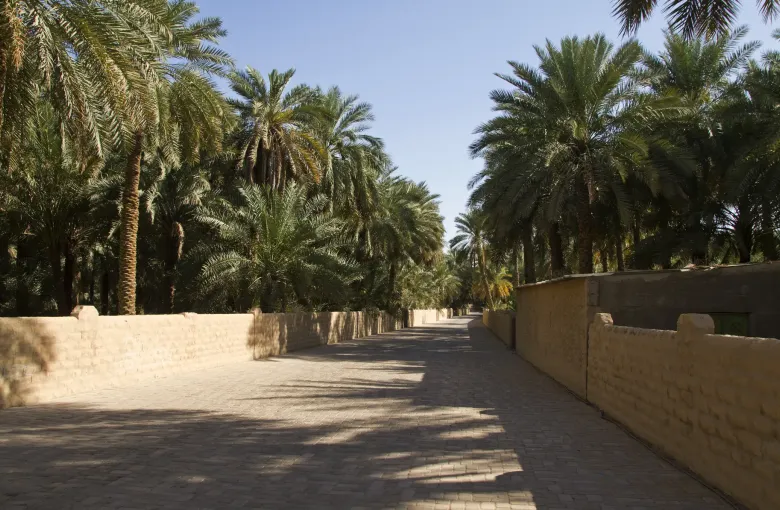
Three environments in a small country. The coast, where Dubai, Abu Dhabi and Sharjah are, is hot and humid. The interior, around Al Ain and the Liwa desert, is hotter by day, drier, and noticeably cooler at night. The Hajar mountains on the east side are the coolest ground in the country and the only place that gets meaningful rain.
The humidity is the part people underestimate
On the coast it is not the temperature that makes the difference, it is the moisture with it. The same reading feels considerably worse, sweat does not evaporate, and recovery in the shade is slower. Anyone who has been somewhere hot and dry and expects to cope the same way here is in for a surprise.
What that means for a day
Outside the cool season: early start, indoors through the middle, back out after the sun drops. Everything here already runs on that rhythm, which is why dinner is late and why the beaches and corniches fill after dark.
Dust, and rain when it comes
Dust is a regular feature rather than an event, and a windy day cuts visibility and makes the desert unpleasant. Rain is rare and, when it arrives, can be heavy enough to flood roads and fill the wadis quickly. That matters in the mountains: a dry wadi bed is a watercourse, and you do not camp or park in one when rain is forecast.
Verify Before You Travel
The FCDO health page for the UAE carries current health advice. Next: best time to visit and getting around.
Sources
- UK Foreign, Commonwealth & Development Office: United Arab Emirates travel advice: the FCDO issues no advisory against travel to any part of the UAE. Accessed 15 September 2026.
- UK Foreign, Commonwealth & Development Office: UAE health: vaccination advice for travellers. Accessed 15 September 2026.
Other Articles
Best Time to Visit the United Arab Emirates
What to Pack for the United Arab Emirates